
Adoption of gender-responsive approaches towards research on pest and disease management
January 22, 2021
Studies have shown that adopting a gender perspective while conducting agronomic research and extension work provides more efficient approaches to managing pests and diseases at the field level. This is because women and men farmers often play different roles in agricultural production. Women possess different knowledge levels about pests and diseases and are differently involved in its management practices. They also often have more limited resources to be able to execute these practices.
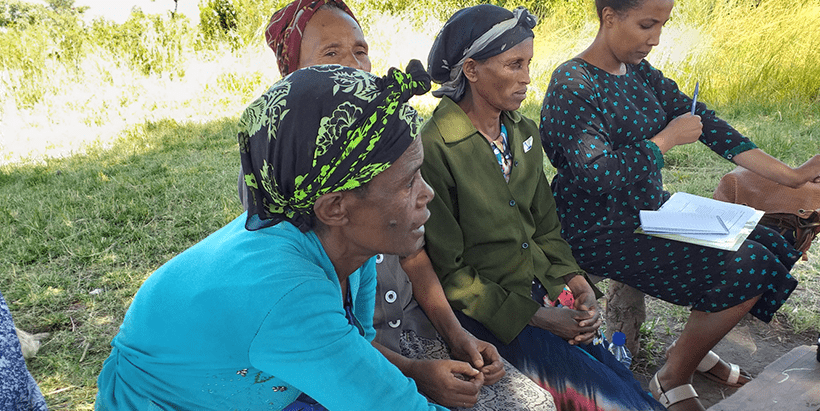 Despite these differences, research and training on pest and disease management often target “farmers”, neglecting the specific needs of women and men as well as the power relationships within households and communities. There is a need to address this neglect because providing gender-appropriate support to women and men farmers helps to increase the adoption of appropriate crop protection technologies and practices, reduce farmers’ exposure to pesticides, and improve environmental quality.
A synthesis of research cases carried out in Asia and sub-Saharan Africa was made to provide specific insights into how a gender perspective can contribute to enhancing agronomy research and extension practices. The research cases and synthesis were done by a team of researchers, including Béla Teeken, Cassava Breeding Unit & Social Science Group, IITA. The synthesis was led by Nozomi Kawarazuka, Social and Nutrition Sciences Division, International Potato Center (CIP). The focus was on Roots, Tubers and Bananas (RTB), which are important crops for poor people in the global south. The control of pests and diseases has increasingly become important for these crops in reducing losses and improving productivity in the face of climate change and to improve the quality of crops for the commercial market.
Several control measures are available to address these concerns, including pesticide application; cultural, biological, and mechanical control methods; the use of disease-resistant varieties of crops; botanicals; clean seed; crop rotation; mulching; intercropping; and timely planting. However, to facilitate the adoption of these control methods, it is critical to explore farmers’ practices, perceptions, and experiences from a gender perspective.
The research cases showed that in countries like Uganda, Rwanda, and Burundi, pesticides are frequently used to control major insect pests in potato farming systems. Yet women are usually not among the extension workers that are trained on the safe use of pesticides despite their prominent role in potato farming. In the East African highlands, banana production is primarily controlled by men, and extension services have often targeted men. This has proven to be challenging for many banana producing households since many men have migrated to mines and urban centers, while women have remained behind to manage banana production. During fieldwork on sweet potato plots in Ethiopia and Ghana, the researchers realized that men and women use different languages and have different views on pests. Hence, they adopt different control methods, which are in line with their gender roles.
Men are mainly in charge of ploughing and practice early planting to prevent infestation, while women hunt and kill pests in the field as they are responsible for routine management. In Ethiopia, mainly women farmers failed to regularly implement agreed practices, such as spraying their fields due to a lack of financial resources to purchase fungicides. This usually led to sanctions and monetary fines for these women farmers, who did not have much access to financial resources like men.
Considering the future threat of the cassava brown streak disease in Nigeria, it will also be crucial for breeders to consider important food product quality traits in developing disease-resistant varieties. This is because processing and marketing of these products is mainly done by women as they are important sources of income for women and food security for households. Fieldwork in Nigeria led by IITA showed that more often than men, women mention the need for cassava varieties as they are well suitable for food products.
These findings suggest that clear attention should be given to the different role and position of men and women within the farming of RTB crops. Women and men should be given targeted training on management measures, the safe use of pesticides, and other agro-chemicals considering their different gendered tasks, so that they can avoid pesticide poisoning while contributing to effective crop management. Extension workers should include more women and train both men and women on good agronomy practices for crop production. Importantly, the team concluded that understanding both gender’s knowledge of pests, and their control methods based on years of practical experience, is important in addressing their concerns and providing appropriate practices.
The team calls for gender-responsive participatory research and participatory approaches in extension work. “Agricultural research and extension should include a gender perspective, with a clear eye for the possible different opportunities, working conditions, tasks, knowledge, and skills of men and women as a result of gender norms,” Teeken said.
Despite these differences, research and training on pest and disease management often target “farmers”, neglecting the specific needs of women and men as well as the power relationships within households and communities. There is a need to address this neglect because providing gender-appropriate support to women and men farmers helps to increase the adoption of appropriate crop protection technologies and practices, reduce farmers’ exposure to pesticides, and improve environmental quality.
A synthesis of research cases carried out in Asia and sub-Saharan Africa was made to provide specific insights into how a gender perspective can contribute to enhancing agronomy research and extension practices. The research cases and synthesis were done by a team of researchers, including Béla Teeken, Cassava Breeding Unit & Social Science Group, IITA. The synthesis was led by Nozomi Kawarazuka, Social and Nutrition Sciences Division, International Potato Center (CIP). The focus was on Roots, Tubers and Bananas (RTB), which are important crops for poor people in the global south. The control of pests and diseases has increasingly become important for these crops in reducing losses and improving productivity in the face of climate change and to improve the quality of crops for the commercial market.
Several control measures are available to address these concerns, including pesticide application; cultural, biological, and mechanical control methods; the use of disease-resistant varieties of crops; botanicals; clean seed; crop rotation; mulching; intercropping; and timely planting. However, to facilitate the adoption of these control methods, it is critical to explore farmers’ practices, perceptions, and experiences from a gender perspective.
The research cases showed that in countries like Uganda, Rwanda, and Burundi, pesticides are frequently used to control major insect pests in potato farming systems. Yet women are usually not among the extension workers that are trained on the safe use of pesticides despite their prominent role in potato farming. In the East African highlands, banana production is primarily controlled by men, and extension services have often targeted men. This has proven to be challenging for many banana producing households since many men have migrated to mines and urban centers, while women have remained behind to manage banana production. During fieldwork on sweet potato plots in Ethiopia and Ghana, the researchers realized that men and women use different languages and have different views on pests. Hence, they adopt different control methods, which are in line with their gender roles.
Men are mainly in charge of ploughing and practice early planting to prevent infestation, while women hunt and kill pests in the field as they are responsible for routine management. In Ethiopia, mainly women farmers failed to regularly implement agreed practices, such as spraying their fields due to a lack of financial resources to purchase fungicides. This usually led to sanctions and monetary fines for these women farmers, who did not have much access to financial resources like men.
Considering the future threat of the cassava brown streak disease in Nigeria, it will also be crucial for breeders to consider important food product quality traits in developing disease-resistant varieties. This is because processing and marketing of these products is mainly done by women as they are important sources of income for women and food security for households. Fieldwork in Nigeria led by IITA showed that more often than men, women mention the need for cassava varieties as they are well suitable for food products.
These findings suggest that clear attention should be given to the different role and position of men and women within the farming of RTB crops. Women and men should be given targeted training on management measures, the safe use of pesticides, and other agro-chemicals considering their different gendered tasks, so that they can avoid pesticide poisoning while contributing to effective crop management. Extension workers should include more women and train both men and women on good agronomy practices for crop production. Importantly, the team concluded that understanding both gender’s knowledge of pests, and their control methods based on years of practical experience, is important in addressing their concerns and providing appropriate practices.
The team calls for gender-responsive participatory research and participatory approaches in extension work. “Agricultural research and extension should include a gender perspective, with a clear eye for the possible different opportunities, working conditions, tasks, knowledge, and skills of men and women as a result of gender norms,” Teeken said.
Uganda women potato farmers, explaining how they scout for pest. Photo credit: Sarah Mayanja/CIP
Contributed by
Recent stories
No items found