
A forest fire, probably from neighboring garbage and weed burning, burned down a section of the IITA Forest Reserve in February 2021. Though the IITA Security Unit and the forest night rangers curtailed the fire, many trees suffered severe damage. The IITA Forest Center, therefore, called on the Nigerian Conservation Foundation (NCF) to donate seedlings to replant the burnt area—a request they readily obliged.
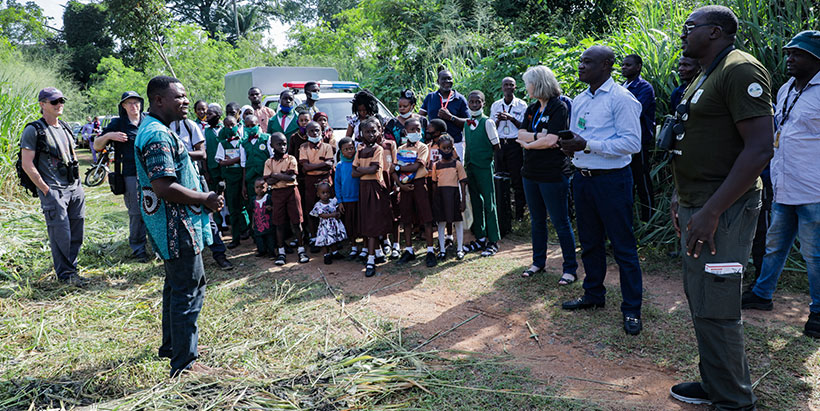
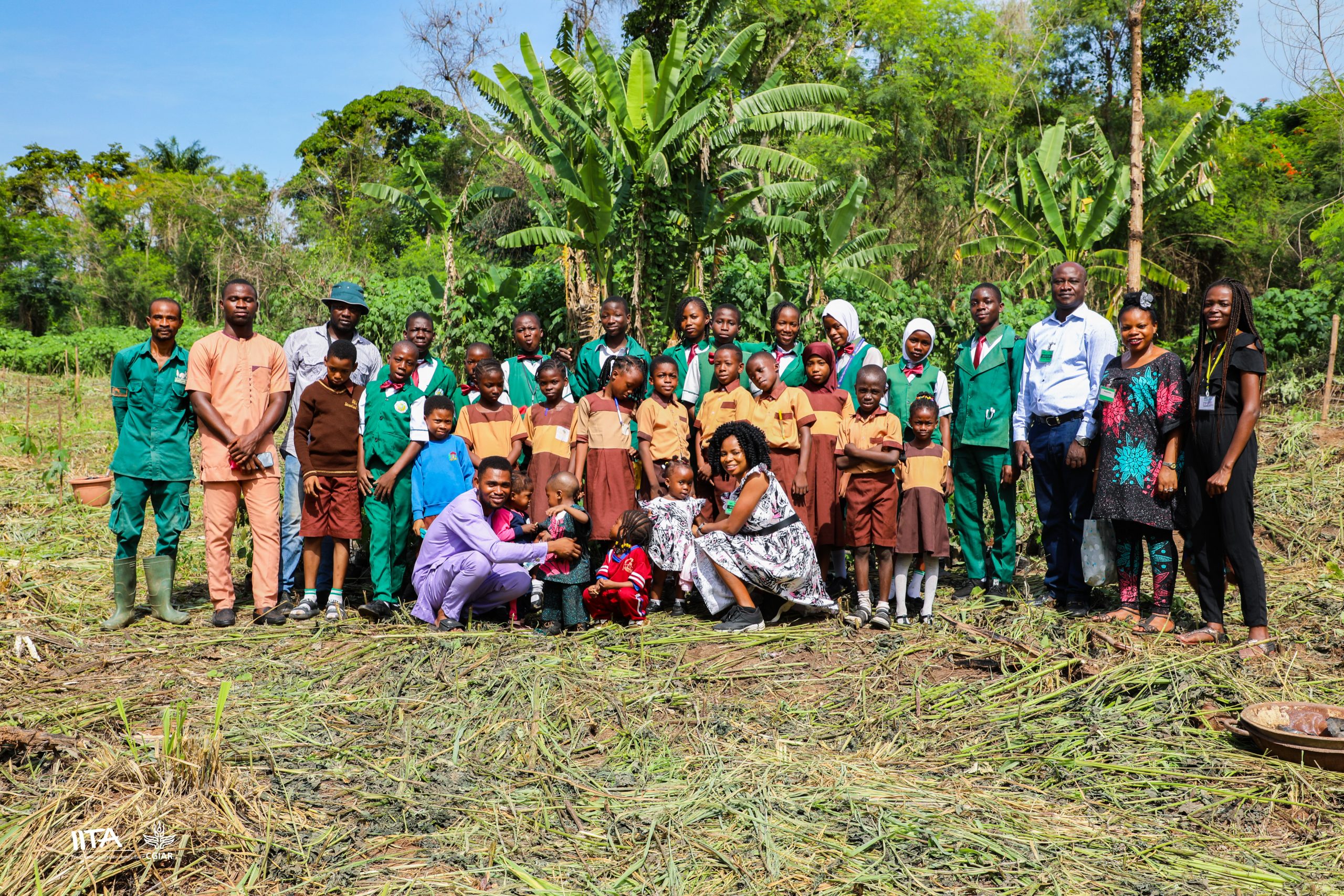
On 27 May, members of the Nigerian Conservation Foundation (NCF)—Dr Joseph Onoja, Wenceslas Gatarabirwa, Ian Barber, and Paul Insua-Cao—and student-members of IITA Forest Center’s Schools Conservation Club (SCC) converged at the IITA Forest Reserve to replant trees in the burnt area. The SCC members were students from two secondary schools in Ibadan, Nigeria.
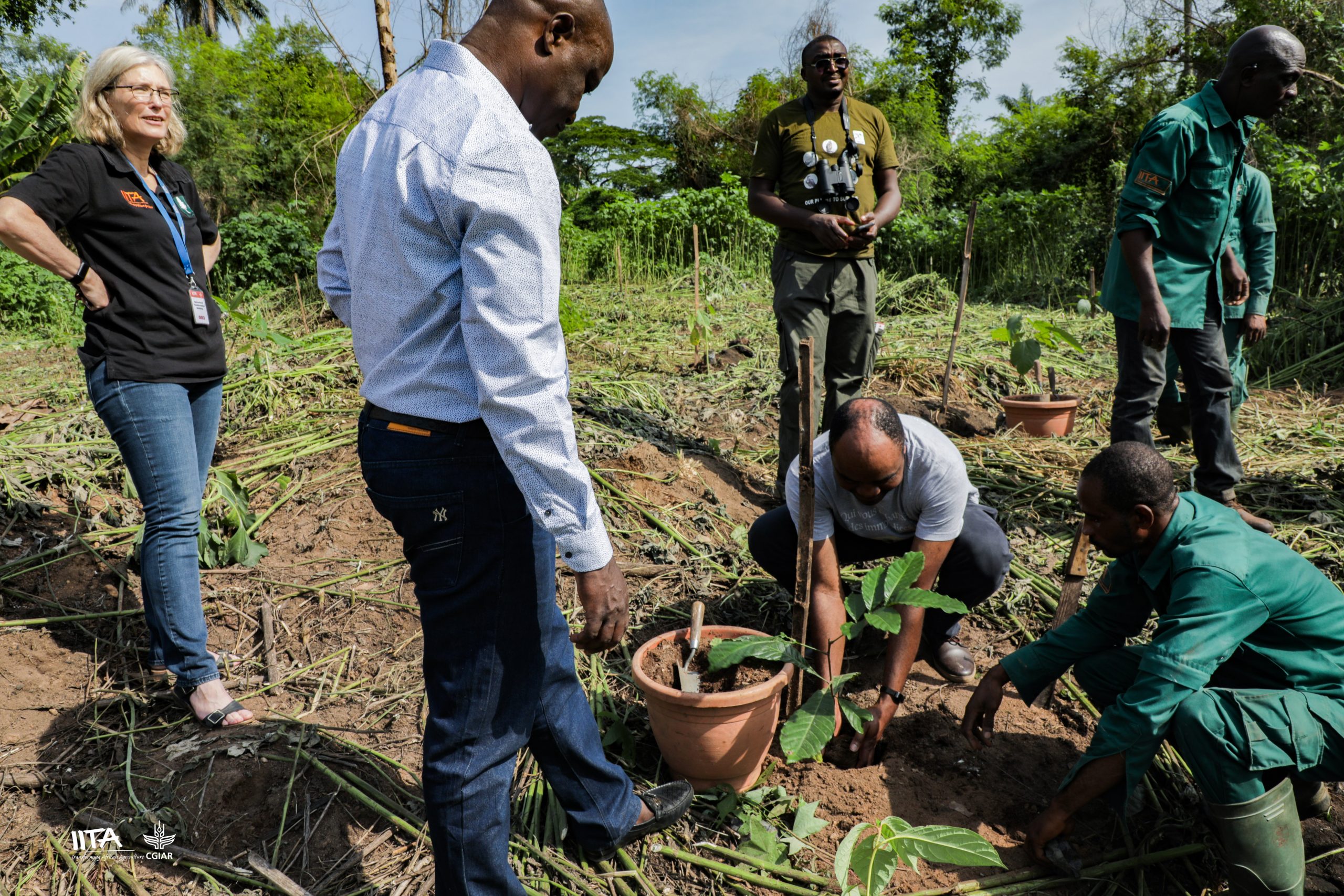
NCF partners with the IITA Forest Center to conserve tree seedlings and donated 2400 seedlings to restore the burnt area. Contributing to the tree replanting operation is a win-win for IITA and NCF, as the IITA Forest Reserve is one of the Important Bird Areas (IBAs) for NCF’s bird monitoring activities. The conservation of the trees at IITA Forest Reserve would consequently keep the bird’s habitat intact. NCF also sponsors IITA Forest Center’s School Conservation Clubs, where students learn to collect seeds, watch and identify birds and other wildlife, and find out how to conserve all types of flora and fauna.
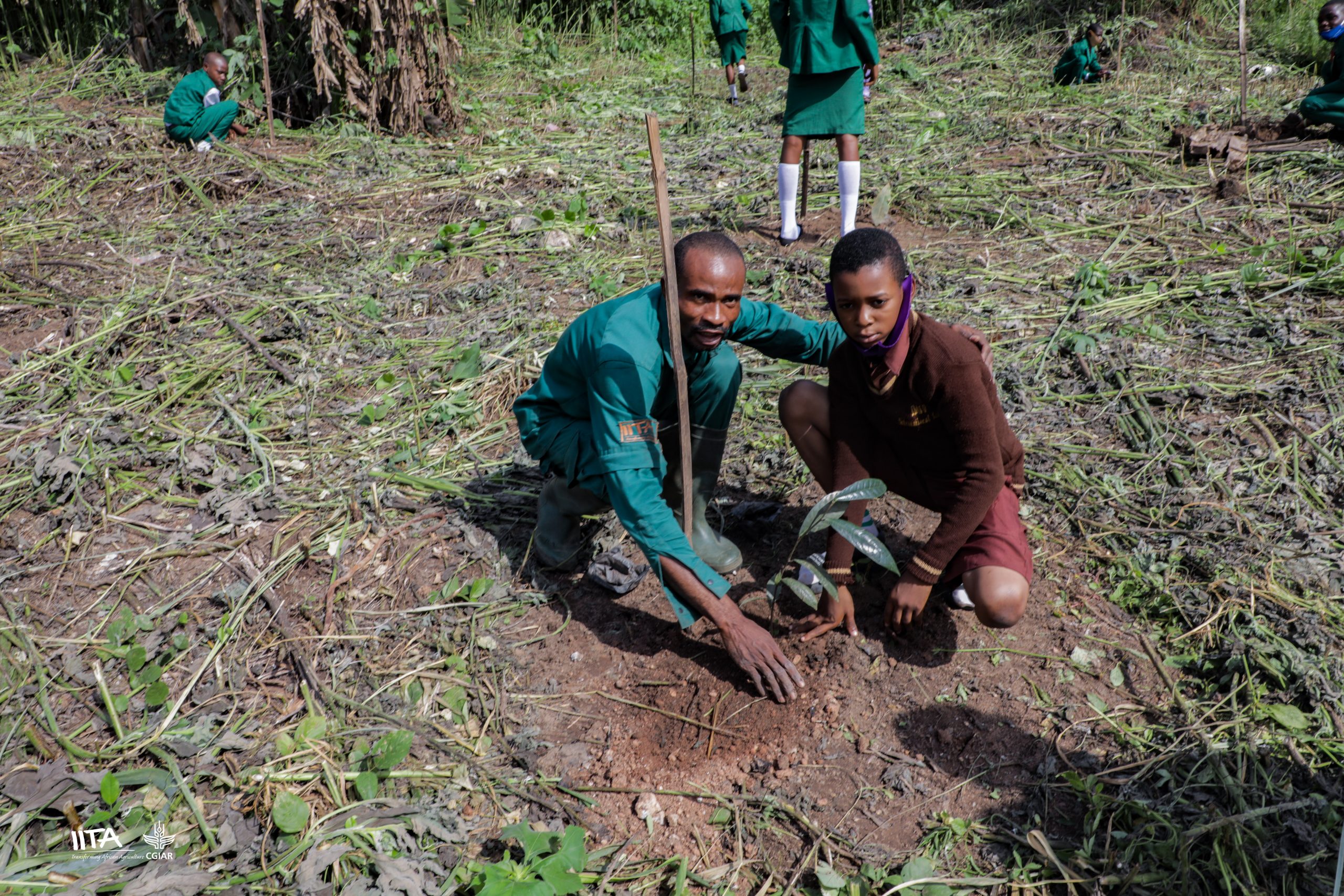
During the exercise, they planted over 11 species of indigenous trees. The diverse tree species planted would prevent spreading diseases peculiar to particular tree species—if such incidences occur.
Some of the trees planted were Erythrophleum suaveolens (Ordeal tree), African maple tree, Entandrophragma angolense, Cola gigantea, and Khaya ivorensis.
Olukunle Olasupo, IITA Forest Center Field Supervisor and 2018 winner of the March Christian Award of the prestigious Botanic Gardens Conservation, coordinated the planting session. The goal was to replenish indigenous trees to support other life forms native and adaptable to the environment.
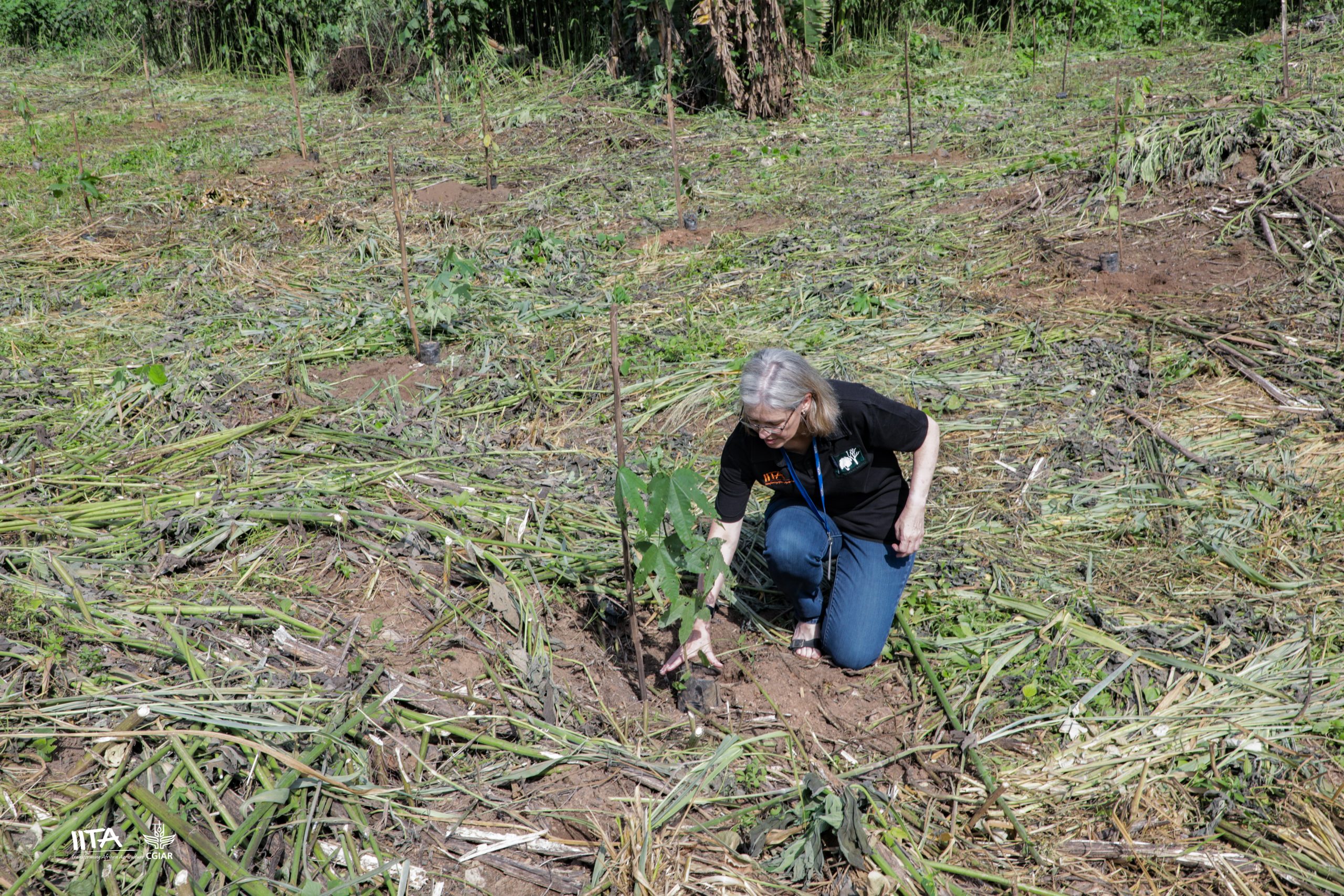
After the tree planting demonstration by Olasupo, the guests and students took to planting different trees already placed at the base of different stacks in the field. Hilde Koper, IITA Deputy Director General, Corporate Services, planted the African maple tree. This cultural tree hosts the African Silk Worm used in making the African native fabric Sanyon.
The leader of the NCF delegation, Onoja, planted Entandrophragma angolense, an excellent timber tree that takes about 35 years to bring out its first flower. Other invited conservationists planted Cola gigantea and Khaya ivorensis, choice timber trees already endangered and on the IUCN red list.
Contributed by Folake Oduntan
Contributed by
Recent stories