
The recent visit of Hidetsugu Hirata, Deputy General Manager, MITSUI & Co. Ltd, Tokyo, and Export Trading Group (ETG) team, to IITA-CGIAR headquarters in Ibadan highlighted the potential collaboration areas to enhance agricultural production in Nigeria.
Hirata, who joined the meeting virtually, further outlined the major areas of interest to the group – Aflasafe, cassava, soybean, and agricultural commercialization.
In his remarks, TAAT Program Management Unit Coordinator Chrysantus Akem introduced the team to the activities of the Institute. He mentioned the significant impact of the TAAT project implemented by IITA, underscoring its contribution to economic and welfare improvements.
ETG Portfolio Manager Zack Musonda commended IITA for serving as a substantial learning platform for its partners. He stated his interest: “I want to delve into soybean, its value chains, existing technologies to increase yield, and the potential to commercialize IITA’s technologies.”
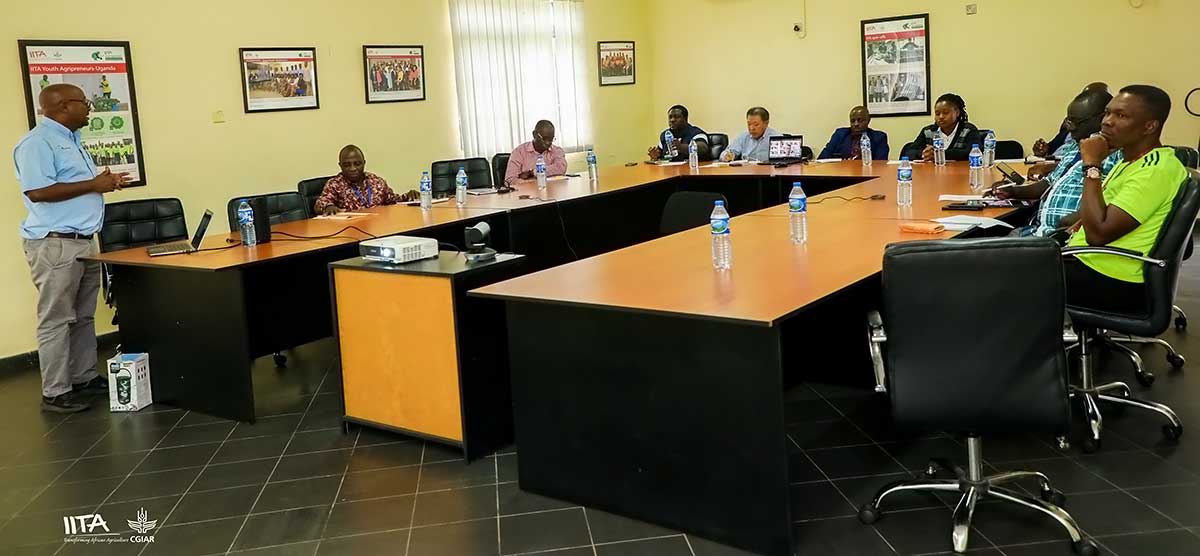
In his presentation, Abush Abebe, IITA Postdoctoral Fellow, Soybean Breeding Unit, gave an overview of IITA soybean primary breeding objectives for West Africa. He expatiated that the breeding objectives were driven by yield, maturity (early and medium), seed size, resistance to disease, and market- and processor-required traits.
Abebe stressed that soybean exhibits high genetic performance in environmental interaction, which makes it suitable for cultivation in various agroecological zones. He advised that it is better to carry out an adaptation test before embarking on large-scale production. This will ensure the accuracy and adaptability of the selected soybean variety.
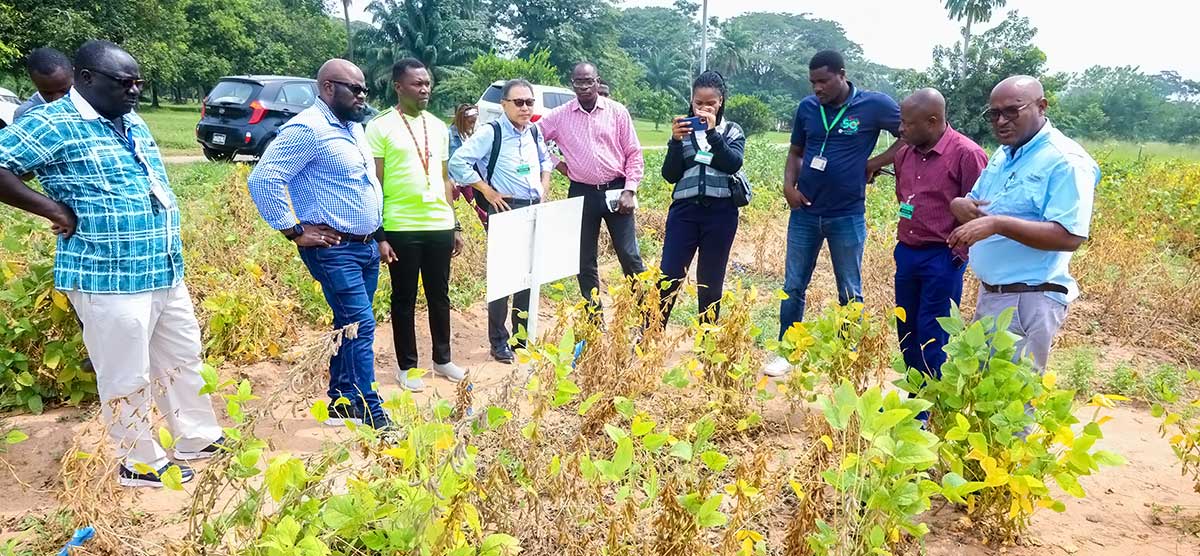
Concluding the visit, the team explored some of IITA’s facilities to expose them to the areas to be deployed in their programs to scale up agricultural innovations to enhance livelihoods.
ETG operates in 45 countries globally, with a presence in 29 African countries. MITSUI collaborates with ETG, a global organization primarily centered on field crops such as maize, soybeans, sunflower, groundnut, and sorghum.
Contributed by
Recent stories