
IITA NEWS

Transforming Nigerian female farmers’ lives through soybean and cowpea production to alleviate poverty
January 5, 2024

The impact of the Seed Equal Initiative (SEEDEQUAL), empowering female farmers and elevating agricultural productivity, has been remarkable.
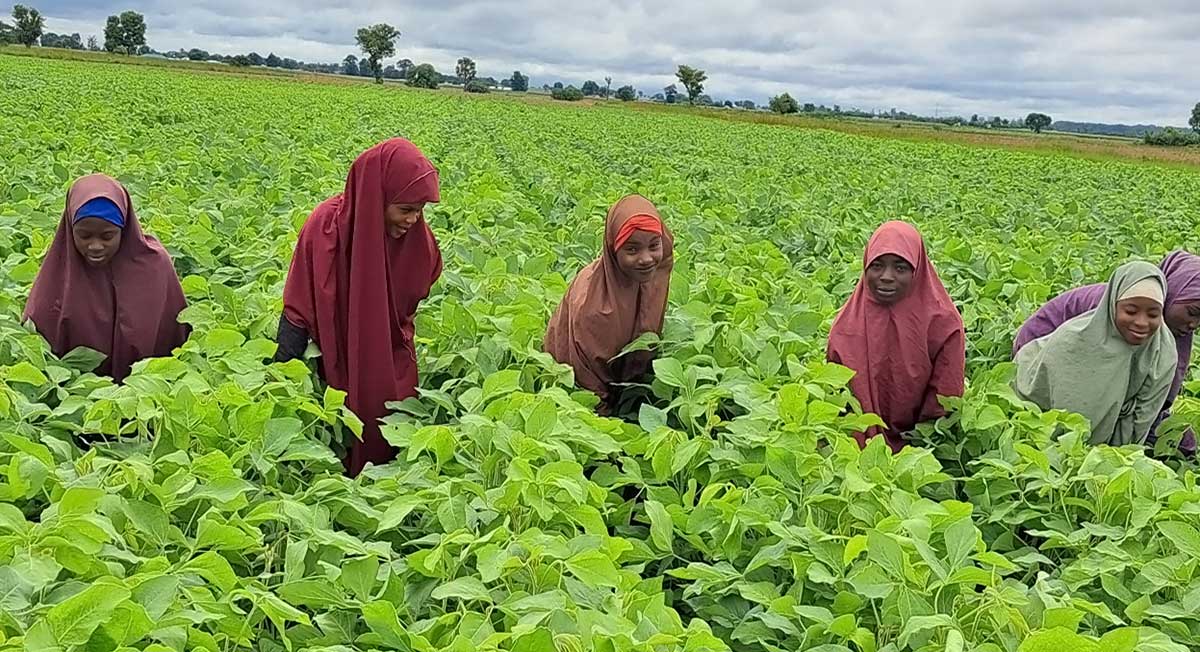
Female farmers in their soybean seed multiplication field in Zaria, Nigeria.

“Small-scale farming is the backbone of global food production, contributing to approximately 80% of the world’s food supply. This sector ensures food security and serves as a vital source of employment, especially for women. On average, women constitute 43% of the agricultural labor force in developing countries; in some nations, they form the majority. Across sub-Saharan Africa, women play a crucial role in agriculture. However, men dominate the agricultural labor force in Nigeria, accounting for over 70%. Unfortunately, female farmers often face productivity challenges compared to their male counterparts.

Several factors contribute to this disparity:
  1. Unequal access: Women encounter barriers in accessing quality seeds and other essential inputs. This inequality hampers their agricultural productivity.
  2. Knowledge gap: Limited access to information and training affects women’s ability to adopt modern farming techniques and best practices.
  3. Cultural norms: Sociocultural norms restrict women’s mobility and decision-making power, impacting their effectiveness in farming activities.
  4. Time constraints: Women primarily engage in post-harvest handling and processing of crops like cowpea and soybean. These responsibilities limit their time for direct cultivation.

To address some of these barriers, the SEEDEQUAL project made concerted efforts to reach more female farmers, encouraging women’s participation through gender-inclusive seed production (access to improved seed, planter, fertilizer, and chemical) and delivery systems that enhanced accessibility to seed varieties preferred by women. The project also ensured that women could access extension services through various capacity-strengthening activities and demonstration plots hosted by female community champions.

Female farmers believe they are just as efficient as men when they have access to productive resources. This was evident from the yield obtained from the on-farm demonstrations planted by women in 2023. Under the SEEDEQUAL Initiative, farmers were trained on good agricultural practices—using good quality seeds of varieties tolerant to drought, pests, and diseases; appropriate planting time; row spacing; planting density; and insect management.

The female farmers were happy with the yield (1100 kg/ha for cowpea and 2600 kg/ha for soybean) obtained in the 2023 season and desperate to improve their soybean and cowpea production hectarage in the coming seasons. The project has also committed to supporting them with quality inputs to improve production and productivity. Some female farmers also hosted demonstration plots on their farms to disseminate the knowledge they had acquired and help strengthen the capacities of other female farmers in their communities.

Linking female farmers with certification agency

The SEED EQUAL Initiative trained 650 female farmers in quality seed production and linked them to other actors in the seed value chain. With the newfound knowledge and confidence, female farmers have shown keen interest in seed production. The seed growers received comprehensive training and continuous support through extension services. Subsequently, they were connected to the National Agricultural Seed Council (NASC) to inspect their seed fields and certify the seeds they produced.

Notably, the farmers are highly satisfied with the improved verities they received. One female farmer from Bichi Local Government Area (LGA) in Kano State shared her experience: “The skills I acquired transformed my farm management. Prioritizing quality seed, optimal planting time, and effective insect management is crucial for achieving high cowpea yields. In fact, I nearly doubled the yield from last year.” When asked why she decided to grow seed instead of grain, she responded: “The value of seed is higher than grain, and I want to serve as a service provider within my community, so I prefer to invest in seed production.” Thanks to the SEEDEQUAL program, she now possesses the expertise to cultivate cowpea successfully, surpassing the yields of many men both locally and beyond.
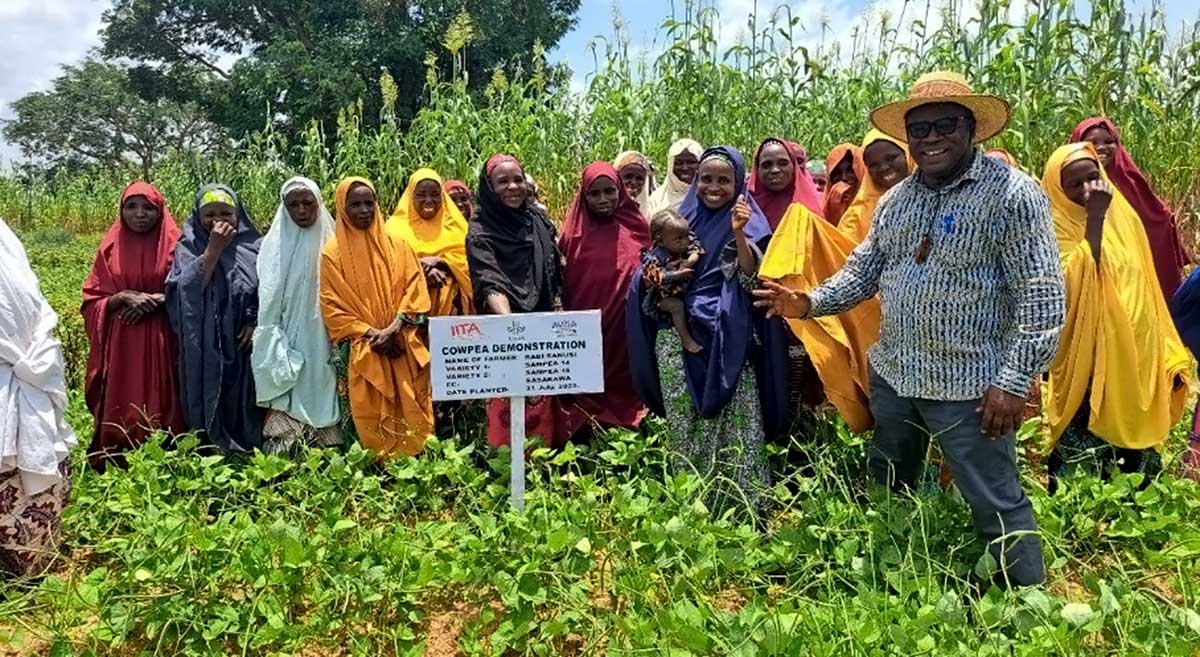
Happy cowpea farmers in Bichi LGA, Kano State.

Improving farmer access to labor-saving technologies and high-yielding varieties boosts female involvement in production

The female farmers received targeted training on cowpea planting, especially focusing on the utilization of improved planters. The training session organized by Smart Agribus demonstrated the use of a cowpea planter. Encouragingly, the female farmers expressed interest in adopting this technology for their planting operations.

According to IITA Seed Systems Specialist Lucky O. Omoigui, “These female farmers candidly shared their perspective: Due to labor shortages during the planting season, they often face discouragement from engaging in production. However, with the introduction of this technology, they firmly believe they can increase their production and achieve greater productivity. The availability of modern tools has ignited their confidence and determination to thrive in agricultural endeavors.”

Transforming Nigerian female farmers' lives through soybean and cowpea production to alleviate poverty
Transforming Nigerian female farmers’ lives through soybean and cowpea production to alleviate poverty

Introducing the brown-seeded cowpea variety, FUAMPEA 3, has brought joy to female farmers. This variety possesses consumer-preferred traits, including short cooking time, excellent taste, and large seeds, and is adapted for intercropping with cereal.
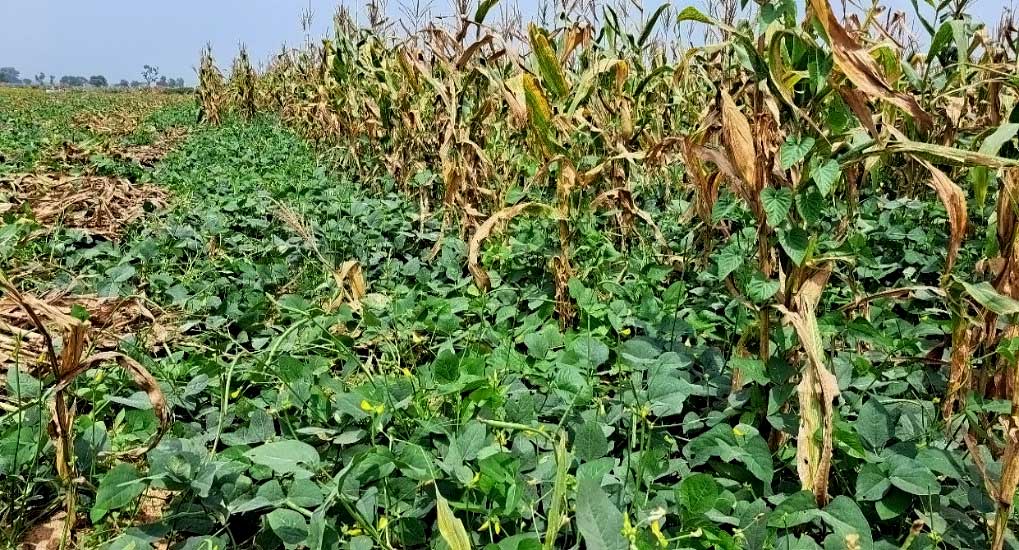
Cowpea relayed into maize. The first crop, maize, is being harvested.

Notably, it aligns perfectly with their requirements for high grain yield, intercropping with maize, and favorable processing attributes. The impact of the SEEDEQUAL intervention is evident: Female farmers achieved 10–15% higher results than their male counterparts. “This success can be attributed to the program’s focus on providing quality inputs and frequent training. The combination of improved seeds and knowledge has transformed their agricultural practices,” concluded Omoigui.

  Contributed by Lucky O. Omoigui (IITA) and Abdulwahab S. Shaibu (CDA-BUK)

Contributed by

Related news

No items found

Leave a Reply

Your email address will not be published. Required fields are marked *

Scroll to Top
Olaosebikan, Olamide

Olamide Deborah Nwanze is a Senior Research Associate specializing in gender mainstreaming research to inform participatory and inclusive breeding, variety development, and seed systems policies regarding root, tuber, and banana (RTB) crops in the International Institute of Tropical Agriculture Headquarters, Ibadan, Nigeria. She is a PhD candidate at the University of Ibadan and holds an MSc and B. Agric in Agricultural Extension and Rural Development. Olamide is a fellow of the African Women in Agricultural Research and Development – Gender Responsive Agricultural Systems Policy (AWARD-GRASP) and the Gender Responsive Researchers Equipped for Agricultural Transformation (GREAT). She seeks to apply her gender-mainstreaming learnings, gender-responsive research, and policy development, and review expertise to facilitate women, youth, children, and vulnerable social group’s access to and adoption of agricultural Innovations that guarantee food, nutrition, income, and livelihood security in Africa. Her current roles include mentoring research fellows, development of guides and training manuals, implementation and adaptation of gender frameworks and tools, value chain actors’ engagement as citizen science partners, policy review and redesign, data management, and analysis. Her current research explores mixed methods and participatory and interdisciplinary approaches to capture and highlight gender dynamics, needs, preferences, and challenges stakeholders face within the agricultural livelihood value chain to prioritize gender-inclusive strategies in breeding programs, policy design, and implementation.

At IITA, she contributes to the implementation of the CGIAR Accelerated Breeding Initiative and Genetic Innovation Programs; participatory and gender research within the NextGen CassavaHarvestPlusRTBFoods, and Tricot-ClimMob 1000Farms Projects; and gender knowledge communication via the G-LENS webinar series, video documentary, policy briefspublications, and blogs.


Recent publications

de Sousa, K., van Etten, J., Manners, R. Bello, A., Teeken, B., Olaosebikan, O., et al. 2024. The tricot approach: an agile framework for decentralized on-farm testing supported by citizen science. A retrospective. Agron. Sustain. Dev. 44, 8. https://doi.org/10.1007/s13593-023-00937-1

Madu, T., Onwuka, S., Nwafor, S., Onyemauwa, N., Ejechi, M., Ofoeze, M., Ukeje, B., Eluagu, C., Olaosebikan, O., Okoye, B., 2024. Gender-Inclusive Consumer Studies Improve Cassava Breeding in Nigeria in: Frontiers in Sociology, volume 9, number: 1224504, doi: 10.3389/fsoc.2024.1224504

Olaosebikan, O.; Bello, A.; Utoblo, O.; Okoye, B.; Olutegbe, N.; Garner, E.; Teeken, B.; Bryan, E.; Forsythe, L.; Cole, S.; Madu, T. 2023.  Stressors and Resilience within the Cassava Value Chain in Nigeria: Preferred Cassava Variety Traits and Response Strategies of Men and Women to Inform Breeding. Sustainability 15, 7837. https://doi.org/10.3390/su15107837

Okoye, B., Ofoeze, M., Ejechi, M., Onwuka, S., Nwafor, S., Onyemauwa, N., Ukeje, B., Eluagu, C., Obidiegwu, J.*, Olaosebikan, O., Madu, T.* 2023. Prioritizing preferred traits in the yam value chain in Nigeria: a gender situation analysis in: Frontiers in Sociology, volume 8, number: 1232626, pages 1 – 9, ISSN 2297-7775, 2023. https://www.frontiersin.org/articles/10.3389/fsoc.2023.1232626/full

Olaosebikan, O., Bello, A. A., de Sousa, K., Ndjouenkeu, R., Adesokan, M., Alamu, E. O., Agbona, A., van Etten, J., Kegah, F. N.*, Dufour, D., Bouniol, A., Teeken, B. 2023. Consumer acceptability of cassava gari-eba food products across cultural and environmental settings using the triadic comparison of technologies approach (tricot) in: Journal of the Science of Food and Agriculture,

Teeken, B., Olaosebikan, O., Bello, A. A., Madu, T.*, Cole, S. M. 2023. Qualitative assessment on the positionality and preferences of dyads in relation to cassava-related activities: working with tricot trial citizen scientists https://hdl.handle.net/10568/138326 Type: Manual

Bouniol, A., Ceballos, H., Bello, A. A., Teeken, B., Olaosebikan, O., Owoade, D., Agbona, A., Fotso Kuate, A., Madu, T.*, Okoye, B.*, Ofoeze, M.*, Nwafor, S.*, Onyemauwa, N.*, Adinsi, L.*, Forsythe, L., Dufour, D. 2023. Varietal impact on women’s labour, workload and related drudgery in processing root, tuber and banana crops: focus on cassava in sub-Saharan Africa in: Journal of the Science of Food and Agriculture, pages 1 – 25, ISSN 0022-5142,

Bello, A. A., Agbona, A., Olaosebikan, O., Edughaen, G., Dufour, D., Bouniol, A., Iluebbey, P., Ndjouenkeu, R.*, Rabbi, I. Y., Teeken, B. 2023. Genetic and environmental effects on processing productivity and food product yield: drudgery of women’s work in: Journal of the Science of Food and Agriculture, pages 1 – 32, ISSN 0022-5142, 5

Cavicchioli, M., Zimbiti, T., Teeken, B., Nwanze, D.O., Liani, M., Parkes, E. & Bello, A. 2023. IITA-Gender Responsive Breeding Training Report. Genetic Resources Center, IITA-HQ, Ibadan, 21-23 September, 2022. Ibadan, Nigeria: IITA, (34 p.).https://hdl.handle.net/10568/131368

Agbona, A. Peteti P., Teeken B., Olaosebikan O. Bello, A. A., Parkes, E., Rabbi, I. Y., Mueller, L., Egesi, C., Kulakow, P. 2022. Data Management in Multi-disciplinary African RTB Crop Breeding Programs. In: Williamson, H.F., Leonelli, S. (eds) Towards Responsible Plant Data Linkage: Data Challenges for Agricultural Research and Development. Springer, Cham. https://doi.org/10.1007/978-3-031-13276-6_5

Lora Forsythe, Pricilla Marimo, Sarah Mayanja, Olamide D. Olaosebikan, Esme Stuart, Bela Teeken, Benjamin Okoye, Tessy Madu, (2021). Cross-product Gender Analysis of RTBfoods Step 2 Gendered Food Mapping on RTB Products. Understanding the Drivers of Trait Preferences and the Development of Multi-user RTB Product Profiles, WP1. London, UK: RTBfoods Field Scientific Report, 30 p.

Teeken, B., Garner, E., Agbona, A., Balogun, I., Olaosebikan, O., Bello, A., Madu, T., Okoye, B., Egesi, C., Kulakow, P. and Tufan, H.A. 2021. Beyond “Women’s Traits”: Exploring How Gender, Social Difference, and Household Characteristics Influence Trait Preferences. Frontiers Sustainable Food Systems 5:740926. https://doi.org/10.3389/fsufs.2021.740926

Teeken, B., Agbona, A., Bello, A., Olaosebikan, O., Alamu, E., Adesokan, M., Awoyale, W., Madu, T., Okoye, B., Chijioke, U., Owoade, D., Okoro, M., Bouniol, A., Dufour, D., Hershey, C., Rabbi, I., Maziya‐Dixon, B., Egesi, C., Tufan, H. and Kulakow, P. (020. Understanding cassava varietal preferences through pairwise ranking of gari‐eba and fufu prepared by local farmer–processors. Int J Food Sci Technol. https://doi.org/10.1111/ijfs.14862

Bela Teeken, Olamide Olaosebikan, Ireti Balogun, Benjamin Okoye, Tessy Madu, Steven Cole, Abolore Bello, Elizabeth Parkes. (2020). Piloting the G+ customer and product profile tools for gender-responsive cassava breeding in Nigeria. Nigeria: International Institute of Tropical Agriculture (IITA). https://hdl.handle.net/20.500.11766/13000