
IITA Forest Center prepares trainers for Olokemeji School Conservation Clubs
July 30, 2021
As the Olokemeji reforestation project swings into full gear, the IITA Forest Center held its first training for School Conservation Club (SCC) leaders held in Ibadan on 15 and 16 July. This partially fulfills the project’s mandates to bring children on board as critical conveners of biodiversity conservation efforts for sustainable succession.
The two-day instructor-led course equipped the volunteer teachers with the required skills to engage school children as ambassadors of biodiversity conservation in fun yet educative ways.
In her welcome address, IITA Deputy Director General, Corporate Services, Hilde Koper, expressed her pleasure at seeing the training participants and their interest in creating the clubs. She recognized them as ambassadors of IITA and biodiversity champions to promote reforestation and environmental conservation in their community and among school children. She stressed further that ‘’Our environment is important for the future of everybody.’’
In his lecture on Biodiversity Conservation, Ademola Ajayi, IITA Forest Center Environmental Education Officer, emphasized that we experience habitat degradation due to farming and urban development. He highlighted the forest’s role as the “lungs of the earth”, noting that we need our forest reserves to breathe clean air. He explained the difference between conservation and preservation: “Conservation does not mean ‘don’t touch’; it means ‘use sustainably’. To conserve, we raise awareness and contribute actively to conservation actions.”
Speaking on Child Rights’ Protection, the Head Teacher at the International School of IITA, Derek Smith, said: “We must not just prevent the abuse of children; we must take steps to report child abuse anywhere we see it occur.” He called on participants to observe Child Protection Policies as they raise young conservationists in school pupils.
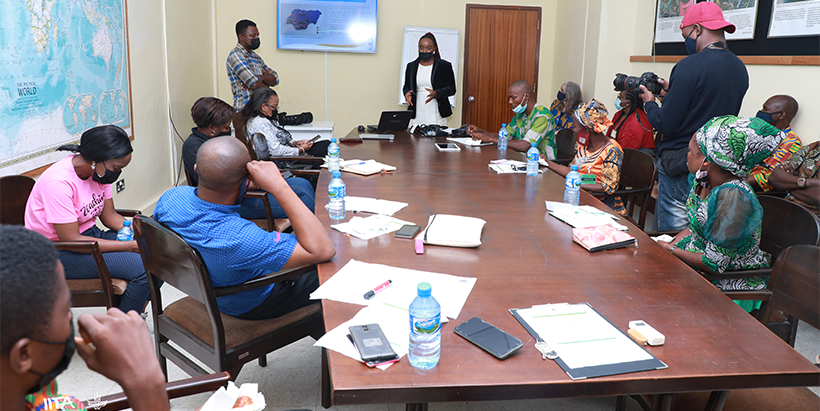 Educational Consultant and Early Childhood Specialist Anu Akinola took participants on an exciting journey, giving valuable hints on creating their Conservation Club and making it the go-to club for school children. “A good conservation club coordinator must be knowledgeable about the environment, bring innovations to children in a fun way, be creative and hands-on, be internet savvy, and have impeccable communication skills,” she added.
In her address on risk management, the Head of Administration in IITA’s West Africa Hub, Sylvia Oyinlola, enumerated anticipated risks associated with reforesting Olokemeji and how to address them. The exercise elicited useful contributions from the participants and equipped them with skills to solve anticipated challenges during the School Conservation Club activities.
Educational Consultant and Early Childhood Specialist Anu Akinola took participants on an exciting journey, giving valuable hints on creating their Conservation Club and making it the go-to club for school children. “A good conservation club coordinator must be knowledgeable about the environment, bring innovations to children in a fun way, be creative and hands-on, be internet savvy, and have impeccable communication skills,” she added.
In her address on risk management, the Head of Administration in IITA’s West Africa Hub, Sylvia Oyinlola, enumerated anticipated risks associated with reforesting Olokemeji and how to address them. The exercise elicited useful contributions from the participants and equipped them with skills to solve anticipated challenges during the School Conservation Club activities.
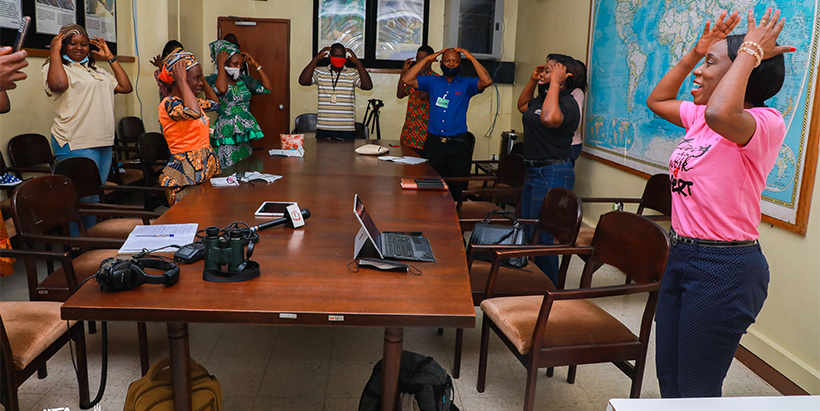 Representatives from Nigerian Breweries (NB) Plc, project partner and donor, gave participants an insight into the company’s reasons for committing to Olokemeji Reforestation. They said “it is their way of giving back to the community where they take 95% of their production resource—water.”
Jennifer Uchendu, Head of Sustainability and Regulatory Relations, said NB’s Brew A Better World Agenda takes community and stakeholder engagement seriously, as much as it commits to planting trees to reforest Olokemeji. The latter directly contributes to mitigating soil erosion and improving the water-retention capacity of the region’s underlying aquifers, while the former contributes to improving the quality of life of community members and ensuring the project’s sustainability.
The training participants were enthusiastic about converting all they had learned to raise pupils committed to conserving our natural resources in their different SCCs.
Representatives from Nigerian Breweries (NB) Plc, project partner and donor, gave participants an insight into the company’s reasons for committing to Olokemeji Reforestation. They said “it is their way of giving back to the community where they take 95% of their production resource—water.”
Jennifer Uchendu, Head of Sustainability and Regulatory Relations, said NB’s Brew A Better World Agenda takes community and stakeholder engagement seriously, as much as it commits to planting trees to reforest Olokemeji. The latter directly contributes to mitigating soil erosion and improving the water-retention capacity of the region’s underlying aquifers, while the former contributes to improving the quality of life of community members and ensuring the project’s sustainability.
The training participants were enthusiastic about converting all they had learned to raise pupils committed to conserving our natural resources in their different SCCs.
Educationist Anu Akinola training Olokemeji SCC trainers.
Nigerian Breweries Plc’s Head of Sustainability and Regulatory Relations, Jennifer Uchendu, explaining ‘Why Olokemeji’.
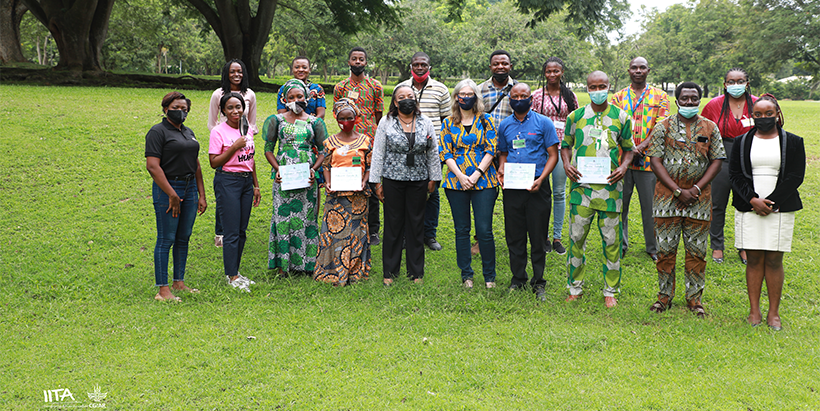
Participants received trainer certificates.
Contributed by
Recent stories
No items found