
IITA scientists and partners screen up to 189 types of banana for provitamin A
June 13, 2019
R4D Special
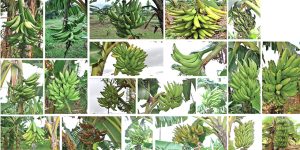
Scientists have finalized the mammoth task of screening up to 189 banana genotypes to identify those with high levels of provitamin A for integration into IITA’s banana improvement program as part of ongoing efforts to develop banana hybrids with enhanced vitamin A.
 The fat-soluble vitamin A is essential for vision, reproduction, growth, and the body’s immunity. Its deficiency leads to health conditions such as xerophthalmia (abnormal dryness of the eyeball characterized by conjunctivitis), anemia, and increased susceptibility to and severity of infections.
One of the effective ways to combat vitamin A deficiency in populations in developing countries with limited options for diverse diets is through biofortification of major staples. Scientists have successfully biofortified maize, cassava, and sweet potato with vitamin A through conventional breeding. A lot of attention is now on biofortifying banana.
Scientists from IITA and the University of the Free State, South Africa, successfully screened banana genotypes at the IITA banana breeding program in Nigeria comprising plantain, M. acuminata cultivars, and bred hybrids to determine levels of naturally occurring provitamin A carotenoid (pVAC) in fruit pulp using high performance liquid chromatography.
The findings were published in a paper, Variability of carotenoids in a Musa germplasm collection and implications for provitamin A biofortification the Food Chemistry: X journal last month.
Carotenoids are a diverse group of multifunctional plant pigments responsible for the yellow, orange, and red color seen in many fruits and vegetables including carrots. They are important in plants for photosynthesis, but in humans they are important as biological antioxidants, and provitamin A carotenoids, in particular, are an important source of vitamin A.
The total carotenoid content in tested genotypes varied from 1.45 µg/g for one of the hybrids to 36.21 µg/g for the M. acuminata cultivar with a mean of 8.00 µg/g fresh weight. Of the predominant carotenoids identified, about 78% are pro-vitamin A.
“This study demonstrates that crossbreeding in banana and plantain is feasible to obtain hybrids combining high yield and resistance with a high provitamin A content,” said Prof Rony Swennen, Head of banana breeding at IITA and one of the researchers involved in this study.
Selected plantain, M. acuminata ssp. banksii, and hybrids with high provitamin A carotenoid content will be useful in initiatives seeking to promote banana as a dietary source of vitamin A.
The fat-soluble vitamin A is essential for vision, reproduction, growth, and the body’s immunity. Its deficiency leads to health conditions such as xerophthalmia (abnormal dryness of the eyeball characterized by conjunctivitis), anemia, and increased susceptibility to and severity of infections.
One of the effective ways to combat vitamin A deficiency in populations in developing countries with limited options for diverse diets is through biofortification of major staples. Scientists have successfully biofortified maize, cassava, and sweet potato with vitamin A through conventional breeding. A lot of attention is now on biofortifying banana.
Scientists from IITA and the University of the Free State, South Africa, successfully screened banana genotypes at the IITA banana breeding program in Nigeria comprising plantain, M. acuminata cultivars, and bred hybrids to determine levels of naturally occurring provitamin A carotenoid (pVAC) in fruit pulp using high performance liquid chromatography.
The findings were published in a paper, Variability of carotenoids in a Musa germplasm collection and implications for provitamin A biofortification the Food Chemistry: X journal last month.
Carotenoids are a diverse group of multifunctional plant pigments responsible for the yellow, orange, and red color seen in many fruits and vegetables including carrots. They are important in plants for photosynthesis, but in humans they are important as biological antioxidants, and provitamin A carotenoids, in particular, are an important source of vitamin A.
The total carotenoid content in tested genotypes varied from 1.45 µg/g for one of the hybrids to 36.21 µg/g for the M. acuminata cultivar with a mean of 8.00 µg/g fresh weight. Of the predominant carotenoids identified, about 78% are pro-vitamin A.
“This study demonstrates that crossbreeding in banana and plantain is feasible to obtain hybrids combining high yield and resistance with a high provitamin A content,” said Prof Rony Swennen, Head of banana breeding at IITA and one of the researchers involved in this study.
Selected plantain, M. acuminata ssp. banksii, and hybrids with high provitamin A carotenoid content will be useful in initiatives seeking to promote banana as a dietary source of vitamin A.
Provitamin A bananas.
Contributed by
Recent stories
No items found