
IITA: Investing in tomorrow’s researchers
April 12, 2019
For a long time, IITA has recognized gender equality in the workforce as an important ideal to pursue. To achieve this, the Institute has prioritized the development of women in research by investing in the next generation of women scientists and empowering them in their different roles.
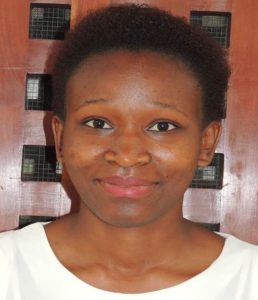 One of such women being empowered today is Fatuma Musa, a Research Technician in Molecular Biology and Microbiology. Musa holds a degree in BSc Biotechnology and Laboratory Science from Sokoine University of Agriculture (SUA) in Morogoro, Tanzania. She is currently pursuing an MSc in Molecular Biology at the University of Dar es Salaam (UDSM) supported by IITA. Her study is focusing on beneficial endophytic bacteria that will be able to control fusarium wilt banana disease.
As a Research Technician in IITA, she has also been working to support research activities on controlling soybean rust diseases and black sigatoka disease of banana.
Musa says the findings of her study will contribute towards finding solutions to control disease and reduce their spread, thus saving farmers’ production. She likes her work because it involves controlling crop diseases—one of the factors that affects farmers’ crop production.
She encourages other women to join science because “Women should become part of these solutions such as bringing in their expertise to combat crop diseases”.
One of such women being empowered today is Fatuma Musa, a Research Technician in Molecular Biology and Microbiology. Musa holds a degree in BSc Biotechnology and Laboratory Science from Sokoine University of Agriculture (SUA) in Morogoro, Tanzania. She is currently pursuing an MSc in Molecular Biology at the University of Dar es Salaam (UDSM) supported by IITA. Her study is focusing on beneficial endophytic bacteria that will be able to control fusarium wilt banana disease.
As a Research Technician in IITA, she has also been working to support research activities on controlling soybean rust diseases and black sigatoka disease of banana.
Musa says the findings of her study will contribute towards finding solutions to control disease and reduce their spread, thus saving farmers’ production. She likes her work because it involves controlling crop diseases—one of the factors that affects farmers’ crop production.
She encourages other women to join science because “Women should become part of these solutions such as bringing in their expertise to combat crop diseases”.
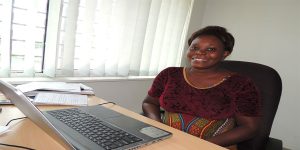 Another young female researcher, Research Associate Beatrice Bachwenkizi, has been working in IITA for 8 years. She has worked in several projects such as the Common Fund for Commodities (CFC) and is now on the cassava COMPACT of the TAAT project analyzing the financial feasibility and profitability of farmers’ activities.
Bachwenkizi, a mother of two, is an Agricultural Economist whose interest in agriculture started when she was young. Both of her parents were farmers so, “I have been helping my parents with agriculture activities and I understand the challenges they face and always wished to help.”
She studied for her MSc in Agricultural Economics also at SUA, and has a PhD in Agriculture Economy sponsored by IITA.
According to Bachwenkizi, her work makes her feel good, as she is part of efforts to find solutions to challenges in agriculture and improve farmers’ livelihoods.
“Working as an Agricultural Economist, I have been conducting a profitability analysis on cassava production and processing and providing information on the viability of the activities. We gather this information, analyze, and give feedback to the entrepreneurs whether they are making a good return on what they have invested.”
She encourages other women to work and study to become agricultural economists because it will expose them to work closely with farmers and to solve their problems.
Research Technician Latifa Mustapha is a young scientist working as part of the team fighting aflatoxin contamination in food and grain. Aflatoxin is a poison that causes cancer, retards growth especially in children, and suppresses the immune system produced by Aspergillus molds in the field during crop growth or in storage.
Another young female researcher, Research Associate Beatrice Bachwenkizi, has been working in IITA for 8 years. She has worked in several projects such as the Common Fund for Commodities (CFC) and is now on the cassava COMPACT of the TAAT project analyzing the financial feasibility and profitability of farmers’ activities.
Bachwenkizi, a mother of two, is an Agricultural Economist whose interest in agriculture started when she was young. Both of her parents were farmers so, “I have been helping my parents with agriculture activities and I understand the challenges they face and always wished to help.”
She studied for her MSc in Agricultural Economics also at SUA, and has a PhD in Agriculture Economy sponsored by IITA.
According to Bachwenkizi, her work makes her feel good, as she is part of efforts to find solutions to challenges in agriculture and improve farmers’ livelihoods.
“Working as an Agricultural Economist, I have been conducting a profitability analysis on cassava production and processing and providing information on the viability of the activities. We gather this information, analyze, and give feedback to the entrepreneurs whether they are making a good return on what they have invested.”
She encourages other women to work and study to become agricultural economists because it will expose them to work closely with farmers and to solve their problems.
Research Technician Latifa Mustapha is a young scientist working as part of the team fighting aflatoxin contamination in food and grain. Aflatoxin is a poison that causes cancer, retards growth especially in children, and suppresses the immune system produced by Aspergillus molds in the field during crop growth or in storage.
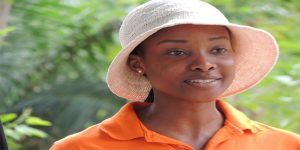 Mustapha joined IITA in 2015 as an intern, one of many who receive extended industry exposure and training in the Institute. She was employed afterwards as a Research Technician in the Pathology laboratory where production of an all-natural product for aflatoxin (Aflasafe) takes place. Most of her work involves isolation of Aspergillus flavus.
Mustapha comes from a farming background in Kondoa District in Dodoma Region of Tanzania. This is one of the areas where aflatoxin has been reported to have caused significant impacts such as death. According to her, she is happy to work with IITA in the production of aflasafe that will support her district and the country as a whole in addressing aflatoxin challenges.
“There are many opportunities in agriculture; women need to grab these opportunities. There are major challenges in agriculture such as plant diseases and pests, which need people like us to become a part of the solution. I encourage them to make use of these opportunities and take up agricultural sciences. People need food, but we must understand how to protect our food!”
Mustapha joined IITA in 2015 as an intern, one of many who receive extended industry exposure and training in the Institute. She was employed afterwards as a Research Technician in the Pathology laboratory where production of an all-natural product for aflatoxin (Aflasafe) takes place. Most of her work involves isolation of Aspergillus flavus.
Mustapha comes from a farming background in Kondoa District in Dodoma Region of Tanzania. This is one of the areas where aflatoxin has been reported to have caused significant impacts such as death. According to her, she is happy to work with IITA in the production of aflasafe that will support her district and the country as a whole in addressing aflatoxin challenges.
“There are many opportunities in agriculture; women need to grab these opportunities. There are major challenges in agriculture such as plant diseases and pests, which need people like us to become a part of the solution. I encourage them to make use of these opportunities and take up agricultural sciences. People need food, but we must understand how to protect our food!”
Fatuma Musa, Molecular Biology and Microbiology Research Technician
Beatrice Bachwenkizi, Research Associate
Latifa Mustapha, Aflasafe Research Technician
Contributed by
Recent stories
No items found