
AfDB deploys Integrated approach, proven technologies against fall armyworm in Africa
October 1, 2018
After two days of intense deliberations on the best possible ways to tackle the menace of fall armyworm (FAW) in Africa, representatives of the agriculture ministries from Central and West African countries have been urged to come up with proposals on how an integrated approach to winning the war against fall armyworm in their respective countries can be achieved.
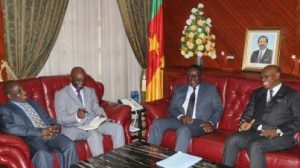 This resolution heralded the closing ceremony at the high-level meeting on controlling fall armyworm in Central and West African states held on 11 and 12 September in Yaoundé, the Cameroonian capital.
Béninese Minister for Agriculture, Livestock and Fishery, Hon. Gaston Cossi Dossouhoui, who presided over the closing ceremony commended the organizers, notably the African Development Bank (AfDB) and IITA, for the rare opportunity to brainstorm together and come up with proposals for possible funding and collaboration.
Hon. Dossouhoui urged the respective agriculture ministries from the two participating subregions to come up with bankable proposals within three months to facilitate the implementation of the solutions proffered at the high- level meeting, taking into consideration, their respective national contexts and circumstances.
This resolution heralded the closing ceremony at the high-level meeting on controlling fall armyworm in Central and West African states held on 11 and 12 September in Yaoundé, the Cameroonian capital.
Béninese Minister for Agriculture, Livestock and Fishery, Hon. Gaston Cossi Dossouhoui, who presided over the closing ceremony commended the organizers, notably the African Development Bank (AfDB) and IITA, for the rare opportunity to brainstorm together and come up with proposals for possible funding and collaboration.
Hon. Dossouhoui urged the respective agriculture ministries from the two participating subregions to come up with bankable proposals within three months to facilitate the implementation of the solutions proffered at the high- level meeting, taking into consideration, their respective national contexts and circumstances.
 The meeting also identified innovative solutions such as use of seeds, oil, and leaf extracts of neem tree (Neem oil emulsion at 5–20 mL per plant); a mixture of ash and sand on the whorl; use of botanical and synthetic pesticides; a mixture of tithonia and piper emulsions; a mixture of tobacco leaves and piper; push–pull technology; and the use of pheromone traps for monitoring and detection.
 Immediate recommendations include awareness raising campaigns on fall armyworm symptoms, early detection and control, including beneficial agronomic practices; and national preparation and communication of a list of recommended, regulated pesticides and biopesticides and their appropriate application methods.
Participants also agreed that work should start immediately to assess preferred crop varieties for resistance or tolerance to fall armyworm, and introduce classical biological control agents from the Americas.
A conducive policy environment should promote lower risk control options through short-term subsidies and rapid assessment and registration of biopesticides and biological control products, they said.
According to Jean-Baptiste Bahama of the Food and Agriculture Organization (FAO), the operationalization of National Task Force on fall armyworm is key to efficiently coordinating preparedness and response through contingency planning.
Immediate recommendations include awareness raising campaigns on fall armyworm symptoms, early detection and control, including beneficial agronomic practices; and national preparation and communication of a list of recommended, regulated pesticides and biopesticides and their appropriate application methods.
Participants also agreed that work should start immediately to assess preferred crop varieties for resistance or tolerance to fall armyworm, and introduce classical biological control agents from the Americas.
A conducive policy environment should promote lower risk control options through short-term subsidies and rapid assessment and registration of biopesticides and biological control products, they said.
According to Jean-Baptiste Bahama of the Food and Agriculture Organization (FAO), the operationalization of National Task Force on fall armyworm is key to efficiently coordinating preparedness and response through contingency planning.
 To Dr Chrys Akem, TAAT Program Coordinator at IITA, this is where the AfDB comes in through the Technologies for African Agricultural Transformation (TAAT) program.
TAAT, according to him, “takes proven agricultural technologies to scale in a commercially sustainable fashion through the establishment of a mechanism that facilitates partnerships and provides access to expertise required to design, implement, and monitor progress of crop, animal, and aquaculture campaigns.”
[su_quote]“It is in this light that we have established the TAAT Fall Armyworm Compact which will create an enabling environment to effectively access and scale up the adoption of an IPM- based fall armyworm management technologies and practices through public–private partnerships,” Akem added.[/su_quote]
To Dr Chrys Akem, TAAT Program Coordinator at IITA, this is where the AfDB comes in through the Technologies for African Agricultural Transformation (TAAT) program.
TAAT, according to him, “takes proven agricultural technologies to scale in a commercially sustainable fashion through the establishment of a mechanism that facilitates partnerships and provides access to expertise required to design, implement, and monitor progress of crop, animal, and aquaculture campaigns.”
[su_quote]“It is in this light that we have established the TAAT Fall Armyworm Compact which will create an enabling environment to effectively access and scale up the adoption of an IPM- based fall armyworm management technologies and practices through public–private partnerships,” Akem added.[/su_quote]
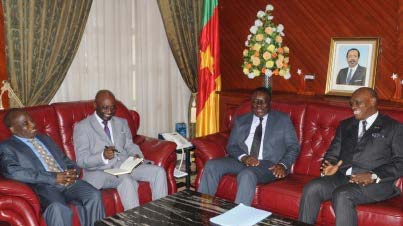
The TAAT leadership in a discussion with the country officials.
A cocktail of solutions
Some of the solutions proffered against the rampaging fall armyworm include awareness creation on holistic management of the pest, training of stakeholders on the identification of fall armyworm, synchronizing cropping calendars and timely planting, and broad-based dissemination of information via technologies (SMS, apps, etc.).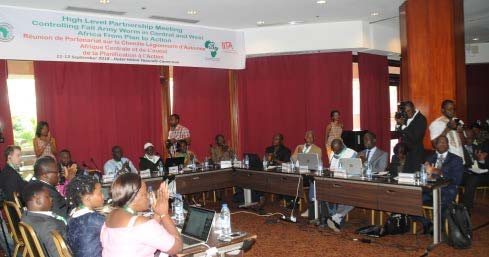
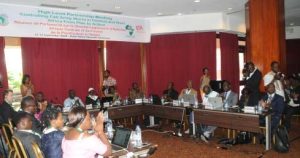
Participants at the high-level partnership meeting on FAW management in Cameroon.
Technologies against fall armyworm
The consensus of the meeting was a regional approach that emphasizes Integrated Pest and Disease Management (IPDM) required to contain fall armyworm.
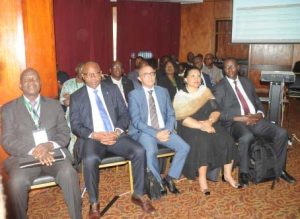
Participants listening to presentations at the FAW meeting.
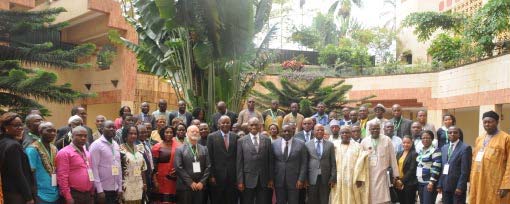
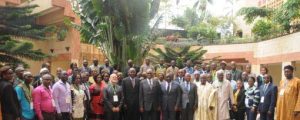
Participants at the FAW meeting.
Contributed by
Recent stories
No items found