
Support expressed for Madagascar’s ENABLE youth program
July 13, 2018
As part of the program implementation and promotion of youth in agribusiness in Francophone countries, the ENABLE youth program in Madagascar has been receiving support from different sectors in the country. The program, which is an initiative of the African Development Bank (AfDB), is being implemented by the Ministry of Agriculture with technical support from IITA. It aims to create youth employment through agribusiness ventures. The country views the initiative as a vehicle towards not only job creation but also addressing food and nutrition security concerns in the country.
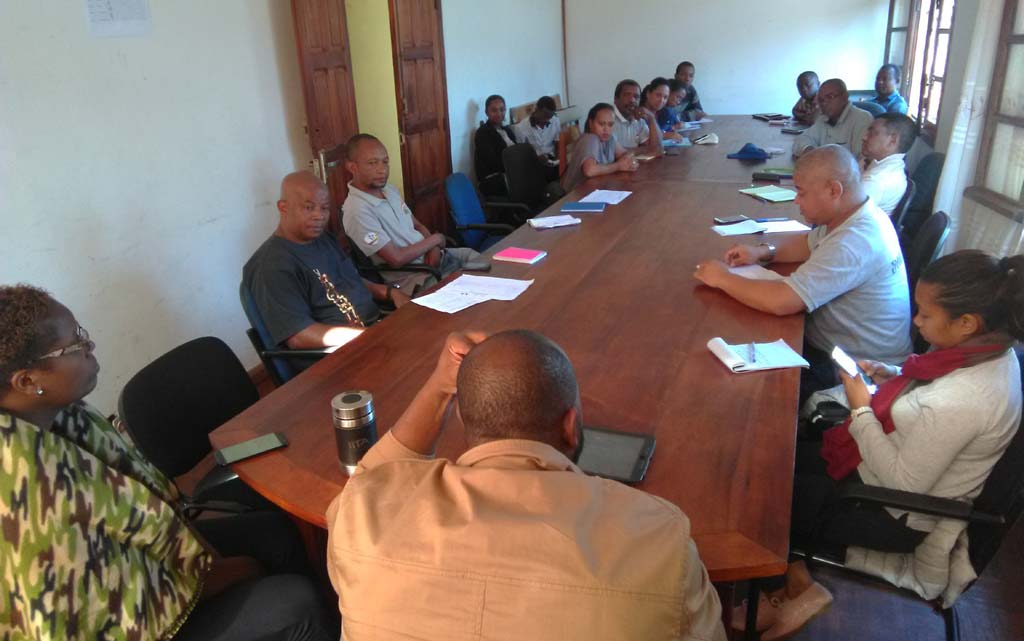 In a recent mission to Madagascar, an IITA-led team comprising Mary Thiong’o, Fred Murhula, and Cheick Diarra, met with stakeholders in the banking sector and organized private sector, including several agribusiness ecosystem actors involved in various activities along the agricultural value chain. The mission, which included visits to Atsinanana and Vatovavy-Fitovinany regions, lasted from 12 to 22 June with the aim of exploring opportunities to support the ENABLE Youth program through developing business partnerships, access agricultural financing, and create avenues for socioeconomic development of Madagascar in general.
The goal of the mission was to familiarize value chain actors with the program to promote youth entrepreneurship and establish business models that would ensure that youth become engaged in sustainable business activities.
The value chain actors visited expressed their willingness to support the young graduates to start their own businesses and become millionaires. They reiterated their commitment to collaborate with the Ministry of Agriculture in ensuring that youth Agripreneurs were well mentored and supported to conduct businesses along the value chains of their choice. Through this partnership the youth will gain knowledge, skills, and understanding of the dynamics of the business sector. Further, they will be introduced to both local and international markets, gaining understanding about standards and other requisite regulations that will support their business ventures.
The team had a fruitful exchange with the stakeholders from the banking sector of Madagascar as they lobbied for support in accessing financing opportunities. Speaking to the manager in charge of the Bank of Africa in Tamatave region, the mission implored the financial sector to collaborate with the ENABLE youth program to facilitate access to finance by developing friendly financing instruments to support youth in starting agribusiness ventures. Noting that one of the key challenges facing youth in startup ventures was access to financial services, the team indicated that the ENABLE youth program was committed to ensure youth had bankable business plans against which funding would be extended.
The team intimated the bank with details about the initiative, indicating that the incubation program would provide mentorship and handholding services as well as developing a Risk Sharing Financial Mechanism for the youth to enhance risk minimization.
In their rejoinder, the manager expressed the bank’s willingness to offer technical and financial support to the youth Agripreneurs and indicated that they would draw from their rich experiences in financing agribusiness projects.
During the visit to Manakara, capital of Vatovavy-Fitovinany region, the team interacted with local development actors, soliciting their support for the implementation of the ENABLE youth program in the region. The stakeholders, drawn from the private sector, farmer organizations, and local SMEs, noted that youth unemployment, especially in their region, remained a huge challenge and was a concern for everyone.
They noted that the socioeconomic development of Madagascar in general and Vatovavy-Fitovinany region in particular was of interest to all stakeholders and indicated that the problem required involvement of all actors in the region. They consequently affirmed their support for the program, which they see as being critical to the achievement of their objectives.
Andrianaivo H. Felene, Director of the FINARITRE cooperative, said that within the region, youth have an opportunity to participate in the ENABLE youth program. Other stakeholders present also committed to support the young entrepreneurs to invest in promising value chains and to find the most profitable markets locally, regionally, nationally, and internationally.
The Youth Agribusiness Incubator in the two regions (Vatovavy-Fitovinany and Atsinanana) will commence in August 2018 and will focus on assorted value chains that are projected to have viable business opportunities.
In a recent mission to Madagascar, an IITA-led team comprising Mary Thiong’o, Fred Murhula, and Cheick Diarra, met with stakeholders in the banking sector and organized private sector, including several agribusiness ecosystem actors involved in various activities along the agricultural value chain. The mission, which included visits to Atsinanana and Vatovavy-Fitovinany regions, lasted from 12 to 22 June with the aim of exploring opportunities to support the ENABLE Youth program through developing business partnerships, access agricultural financing, and create avenues for socioeconomic development of Madagascar in general.
The goal of the mission was to familiarize value chain actors with the program to promote youth entrepreneurship and establish business models that would ensure that youth become engaged in sustainable business activities.
The value chain actors visited expressed their willingness to support the young graduates to start their own businesses and become millionaires. They reiterated their commitment to collaborate with the Ministry of Agriculture in ensuring that youth Agripreneurs were well mentored and supported to conduct businesses along the value chains of their choice. Through this partnership the youth will gain knowledge, skills, and understanding of the dynamics of the business sector. Further, they will be introduced to both local and international markets, gaining understanding about standards and other requisite regulations that will support their business ventures.
The team had a fruitful exchange with the stakeholders from the banking sector of Madagascar as they lobbied for support in accessing financing opportunities. Speaking to the manager in charge of the Bank of Africa in Tamatave region, the mission implored the financial sector to collaborate with the ENABLE youth program to facilitate access to finance by developing friendly financing instruments to support youth in starting agribusiness ventures. Noting that one of the key challenges facing youth in startup ventures was access to financial services, the team indicated that the ENABLE youth program was committed to ensure youth had bankable business plans against which funding would be extended.
The team intimated the bank with details about the initiative, indicating that the incubation program would provide mentorship and handholding services as well as developing a Risk Sharing Financial Mechanism for the youth to enhance risk minimization.
In their rejoinder, the manager expressed the bank’s willingness to offer technical and financial support to the youth Agripreneurs and indicated that they would draw from their rich experiences in financing agribusiness projects.
During the visit to Manakara, capital of Vatovavy-Fitovinany region, the team interacted with local development actors, soliciting their support for the implementation of the ENABLE youth program in the region. The stakeholders, drawn from the private sector, farmer organizations, and local SMEs, noted that youth unemployment, especially in their region, remained a huge challenge and was a concern for everyone.
They noted that the socioeconomic development of Madagascar in general and Vatovavy-Fitovinany region in particular was of interest to all stakeholders and indicated that the problem required involvement of all actors in the region. They consequently affirmed their support for the program, which they see as being critical to the achievement of their objectives.
Andrianaivo H. Felene, Director of the FINARITRE cooperative, said that within the region, youth have an opportunity to participate in the ENABLE youth program. Other stakeholders present also committed to support the young entrepreneurs to invest in promising value chains and to find the most profitable markets locally, regionally, nationally, and internationally.
The Youth Agribusiness Incubator in the two regions (Vatovavy-Fitovinany and Atsinanana) will commence in August 2018 and will focus on assorted value chains that are projected to have viable business opportunities.
IITA mission team members meeting with Madagascar agriculture stakeholders.
Contributed by
Recent stories
No items found