
Nigeria hosts consultative meeting on alignment of research and delivery to its agriculture agenda
May 6, 2018
Stakeholders in Nigeria’s agricultural landscape attended a country consultation on alignment of research and delivery towards agricultural policies of the Federal Government, 10–12 April, in Abuja.
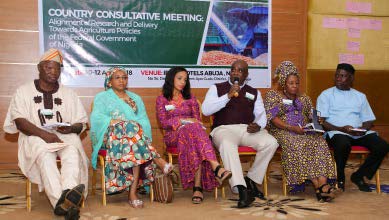 The 3-day meeting was attended by over 80 participants representing various stakeholder categories: government (Federal Ministry of Agriculture and Rural Development [FMARD – Project Coordination Unit, PCU], Ogun State Ministry of Agriculture; national agriculture research institutions [NARIs] (Agriculture Research Council of Nigeria [ARCN], universities); CGIAR centers (IFPRI, ICRISAT, ICARDA, CIP, AfricaRice, IITA); development partners (donors and technical partners); farmer associations; and the private sector.
These diverse agencies in the country working on agricultural research for development include the national agriculture research systems (NARS), federal and state government universities in agriculture, international agriculture research institutions (e.g., CGIAR), and private sector institutions. Each of these institutions undertakes various research projects and programs in agriculture to improve overall economic development, food and nutrition security, and the livelihoods of farmers and communities, among other goals. However, coordination, harmonization, and collaboration across the different institutions and sectors working on agriculture and related sectors in the country is limited. While some progress has been made in these areas, the impacts have been diverse and disjointed. This makes it difficult for significant impacts to be achieved in alignment with the country’s strategic goals as set out in Nigeria’s Agricultural Promotion Policy (APP or the Green Alternative).
In her opening remarks, Dr Aisha Ndayako-Mohammed, Head, PCU, FMARD, spoke about PCU’s role in coordinating projects that support agriculture and noted that the purpose of the meeting was to “address the gap between research outputs and the linkage to Government policies and objectives.” All levels of stakeholders from agricultural research institutes to extension to farmers were involved in the process of economic development as part of the Government’s Economic Growth and Recovery Plan (EGRP).
IITA’s goodwill message was given by Alfred Dixon on behalf of the Director for Partnerships for Delivery. He noted the desire for agricultural transformation in Africa was widespread because Africa’s food import bill is $35 billion and may rise to $110 in 2025 if nothing is done to remedy this trend. “We are exporting jobs instead of food, so we need to produce food in ways that create wealth.” He argued “The process of agricultural transformation has been ongoing, but we need the right approach and the Technologies for African Agricultural Transformation (TAAT) program is one such approach. Key stakeholders need to work together to achieve the desired agricultural transformation and align with respective country goals. We may pursue agricultural transformation, but Nigeria has already started with its Green Alternative. We work together so we give what Nigeria wants.”
Kwesi Atta-Krah, Director, Systems and Site Integration, IITA, opened the working sessions, stating the objectives and expected outcomes of the meeting. He gave an overview on the status of alignment and emphasized that alignment to country strategic goals was a key element in enhanced impact. He said that as things stand, they represent a “case of critical disconnect.”
In a presentation by Cassava Breeder Peter Kulakow, IITA research on cassava was given as a case study on the problems of aligning research to the Government’s APP. An overview of the crop in Nigeria was given and a brief description of all IITA projects related to cassava. He said there are over 10 projects on cassava in IITA, covering the whole value chain. Although individual projects may align to government policy, they need to integrate. He said: “The challenge is how can IITA and our national partners come together more effectively to ensure projects are aligned with national goals and outcomes are sustained.” He added that research and delivery need to be linked with national institutions, extension, and the private sector and concluded, “Research needs to be integrated to deliver technologies.”
The 3-day meeting was attended by over 80 participants representing various stakeholder categories: government (Federal Ministry of Agriculture and Rural Development [FMARD – Project Coordination Unit, PCU], Ogun State Ministry of Agriculture; national agriculture research institutions [NARIs] (Agriculture Research Council of Nigeria [ARCN], universities); CGIAR centers (IFPRI, ICRISAT, ICARDA, CIP, AfricaRice, IITA); development partners (donors and technical partners); farmer associations; and the private sector.
These diverse agencies in the country working on agricultural research for development include the national agriculture research systems (NARS), federal and state government universities in agriculture, international agriculture research institutions (e.g., CGIAR), and private sector institutions. Each of these institutions undertakes various research projects and programs in agriculture to improve overall economic development, food and nutrition security, and the livelihoods of farmers and communities, among other goals. However, coordination, harmonization, and collaboration across the different institutions and sectors working on agriculture and related sectors in the country is limited. While some progress has been made in these areas, the impacts have been diverse and disjointed. This makes it difficult for significant impacts to be achieved in alignment with the country’s strategic goals as set out in Nigeria’s Agricultural Promotion Policy (APP or the Green Alternative).
In her opening remarks, Dr Aisha Ndayako-Mohammed, Head, PCU, FMARD, spoke about PCU’s role in coordinating projects that support agriculture and noted that the purpose of the meeting was to “address the gap between research outputs and the linkage to Government policies and objectives.” All levels of stakeholders from agricultural research institutes to extension to farmers were involved in the process of economic development as part of the Government’s Economic Growth and Recovery Plan (EGRP).
IITA’s goodwill message was given by Alfred Dixon on behalf of the Director for Partnerships for Delivery. He noted the desire for agricultural transformation in Africa was widespread because Africa’s food import bill is $35 billion and may rise to $110 in 2025 if nothing is done to remedy this trend. “We are exporting jobs instead of food, so we need to produce food in ways that create wealth.” He argued “The process of agricultural transformation has been ongoing, but we need the right approach and the Technologies for African Agricultural Transformation (TAAT) program is one such approach. Key stakeholders need to work together to achieve the desired agricultural transformation and align with respective country goals. We may pursue agricultural transformation, but Nigeria has already started with its Green Alternative. We work together so we give what Nigeria wants.”
Kwesi Atta-Krah, Director, Systems and Site Integration, IITA, opened the working sessions, stating the objectives and expected outcomes of the meeting. He gave an overview on the status of alignment and emphasized that alignment to country strategic goals was a key element in enhanced impact. He said that as things stand, they represent a “case of critical disconnect.”
In a presentation by Cassava Breeder Peter Kulakow, IITA research on cassava was given as a case study on the problems of aligning research to the Government’s APP. An overview of the crop in Nigeria was given and a brief description of all IITA projects related to cassava. He said there are over 10 projects on cassava in IITA, covering the whole value chain. Although individual projects may align to government policy, they need to integrate. He said: “The challenge is how can IITA and our national partners come together more effectively to ensure projects are aligned with national goals and outcomes are sustained.” He added that research and delivery need to be linked with national institutions, extension, and the private sector and concluded, “Research needs to be integrated to deliver technologies.”
 At the end of the meeting, it was clear that an empowered Agricultural Research Council of Nigeria should be the driving force that would align agricultural research to the Government’s Agriculture Promotion Policy. Support for the alignment process would also come from a Data and Knowledge Management platform, an M&E system, the 0FMARD, the private sector, and a change in mindset and culture towards alignment to government goals.
The meeting was organized under the auspices of FMARD and led by PCU. ARCN and IITA are the technical implementers.
At the end of the meeting, it was clear that an empowered Agricultural Research Council of Nigeria should be the driving force that would align agricultural research to the Government’s Agriculture Promotion Policy. Support for the alignment process would also come from a Data and Knowledge Management platform, an M&E system, the 0FMARD, the private sector, and a change in mindset and culture towards alignment to government goals.
The meeting was organized under the auspices of FMARD and led by PCU. ARCN and IITA are the technical implementers.
Representatives of stakeholder groups at the Country Consultative Meeting in Abuja
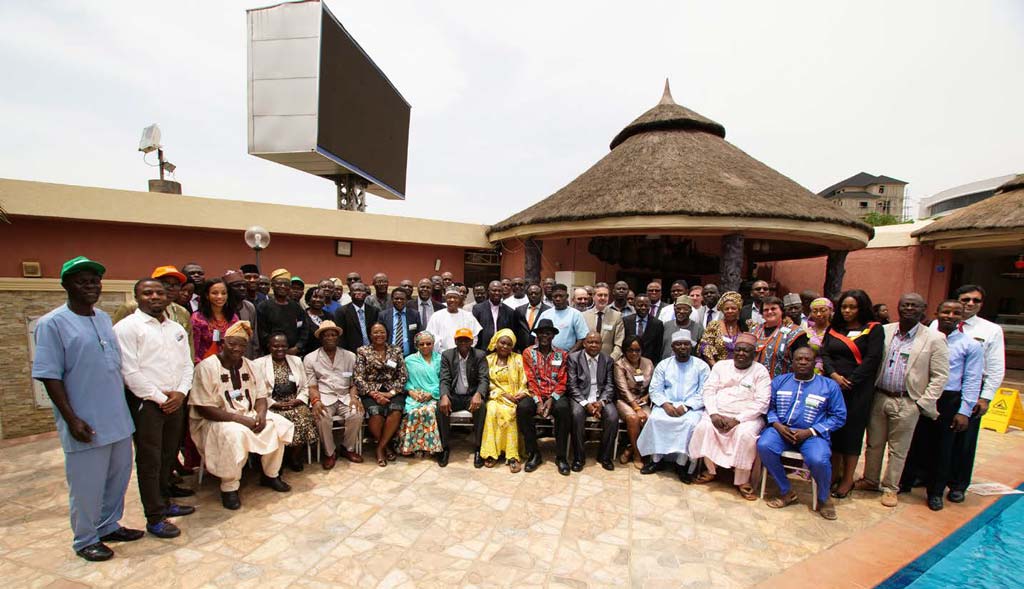
Group photo of participants.
Contributed by
Recent stories
No items found