
Sister projects come together for their beneficiaries
March 10, 2017
As the 2017 planting season in Nigeria draws to a close, stakeholders from two IITA projects being sponsored by the Bill & Melinda Gates Foundation came together in Kano to align plans and activities for their beneficiaries. This synergy is an example of how sister projects can work together to achieve greater impact and forestall duplicity of efforts. It also follows the new thinking of the Gates Foundation, which encourages sister projects to align their strategies and leverage on resources to create more impact.
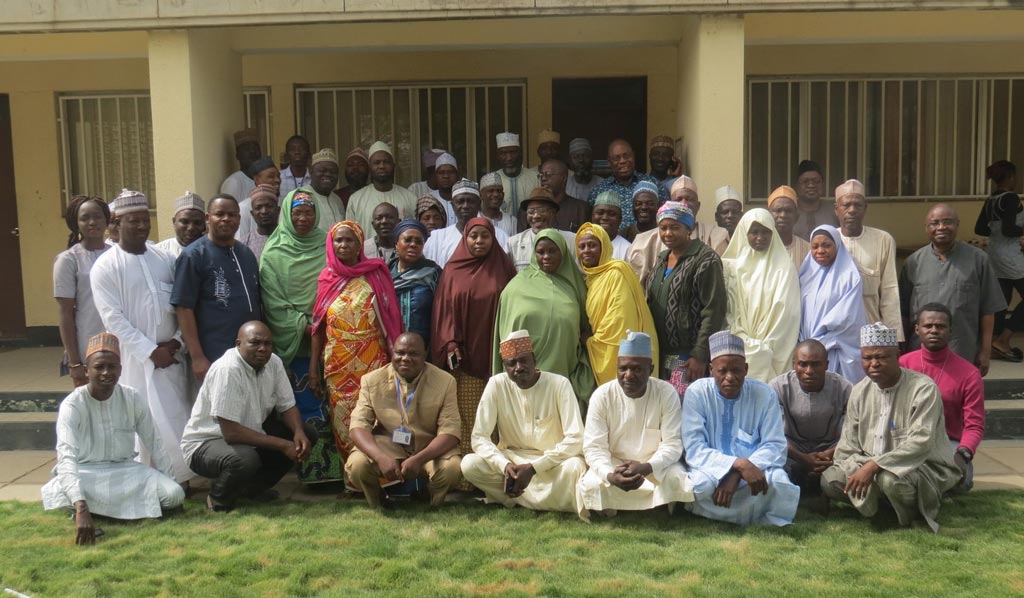 The sister projects—Tropical Legumes III (TL III) and USAID Cowpea Upscaling project— during their annual in-country review and planning meeting on 14-15 February, aligned the projects’ work plans with the national strategic mandate and detailed milestones, and discussed how they would address challenges, increase production and productivity of cowpea and groundnut, and improve the seed systems delivery for both crops this year.
“This meeting will expose key aspects of our impact on our targets in the last one year. From the lessons, we will get a better insight that will guide us in our plans for a better 2017 cropping season,” said Lucky Omoigui, TL III Seed System Specialist who facilitated the meeting on behalf of Alpha Kamara, IITA systems agronomist and principal scientist.
Omoigui also noted that the presence of stakeholders at the meeting was a clear testimony of their commitment to improving the agricultural sector in Nigeria. He reinforced IITA’s commitment to work with National Agricultural Research System (NARS) in research that will continue to improve food production and reduce hunger and poverty in Nigeria.
The two-day meeting was attended by 60 partners and stakeholders in the groundnut and cowpea value chains drawn from IITA, the Institute for Agricultural Research of the Ahmadu Bello University Zaria (IAR/ABU), the Center for Dry Land Agriculture of Bayero University Kano (CDA/BUK), the University of Agriculture, Makurdi (UAM) working in the focus states (Bauchi, Kano, Jigawa, Katsina, Kebbi, Sokoto), project desk officers from participating Agricultural Development Programs (ADPs), private seed companies, farmers, and the media.
In his remarks, Ibrahim Abubakar, Director IAR/ABU who was represented by Muhtar Mahmud – Deputy Director Extension of the Institute, acknowledged the support from the Gates Foundation and emphasized the research and development work of IAR as a major partner in the implementation of the two projects. Abubakar pledged IAR’s commitment to give maximum support toward the success of the projects.
Highlighting the immense importance of cowpea and groundnut to the Nigerian economy, Ado Rabo, IITA Administrative Manager enjoined researchers to recognize the health benefits of legumes and promote them such that as people’s incomes rise, consumption of legumes would also increase. He expressed hope that the joint efforts of the projects will bring about the needed improvement for the crops.
“This meeting is very unique as it brings together two sister projects to address legume seed delivery systems. We hope that this synergy would contribute greater impact in scaling-out the projects’ goals,” Rabo said.
The partners agreed at the end of the discussions to leverage resources between the two projects, improve the efficiency and effectiveness of seed delivery and scaling-out, implement joint capacity building of national partners, and align the Gates Foundation seed sector development activities to national priorities.
The sister projects—Tropical Legumes III (TL III) and USAID Cowpea Upscaling project— during their annual in-country review and planning meeting on 14-15 February, aligned the projects’ work plans with the national strategic mandate and detailed milestones, and discussed how they would address challenges, increase production and productivity of cowpea and groundnut, and improve the seed systems delivery for both crops this year.
“This meeting will expose key aspects of our impact on our targets in the last one year. From the lessons, we will get a better insight that will guide us in our plans for a better 2017 cropping season,” said Lucky Omoigui, TL III Seed System Specialist who facilitated the meeting on behalf of Alpha Kamara, IITA systems agronomist and principal scientist.
Omoigui also noted that the presence of stakeholders at the meeting was a clear testimony of their commitment to improving the agricultural sector in Nigeria. He reinforced IITA’s commitment to work with National Agricultural Research System (NARS) in research that will continue to improve food production and reduce hunger and poverty in Nigeria.
The two-day meeting was attended by 60 partners and stakeholders in the groundnut and cowpea value chains drawn from IITA, the Institute for Agricultural Research of the Ahmadu Bello University Zaria (IAR/ABU), the Center for Dry Land Agriculture of Bayero University Kano (CDA/BUK), the University of Agriculture, Makurdi (UAM) working in the focus states (Bauchi, Kano, Jigawa, Katsina, Kebbi, Sokoto), project desk officers from participating Agricultural Development Programs (ADPs), private seed companies, farmers, and the media.
In his remarks, Ibrahim Abubakar, Director IAR/ABU who was represented by Muhtar Mahmud – Deputy Director Extension of the Institute, acknowledged the support from the Gates Foundation and emphasized the research and development work of IAR as a major partner in the implementation of the two projects. Abubakar pledged IAR’s commitment to give maximum support toward the success of the projects.
Highlighting the immense importance of cowpea and groundnut to the Nigerian economy, Ado Rabo, IITA Administrative Manager enjoined researchers to recognize the health benefits of legumes and promote them such that as people’s incomes rise, consumption of legumes would also increase. He expressed hope that the joint efforts of the projects will bring about the needed improvement for the crops.
“This meeting is very unique as it brings together two sister projects to address legume seed delivery systems. We hope that this synergy would contribute greater impact in scaling-out the projects’ goals,” Rabo said.
The partners agreed at the end of the discussions to leverage resources between the two projects, improve the efficiency and effectiveness of seed delivery and scaling-out, implement joint capacity building of national partners, and align the Gates Foundation seed sector development activities to national priorities.
Group photo of the participants in Kano.
Contributed by
Recent stories
No items found