
The IITA-CGIAR Cassava Breeding Program held the first stakeholder engagement meeting across research institutions in West and Central Africa in Kumasi, Ghana, on 10 – 13 June. The meeting, held in collaboration with CSIR-CRI and designed to develop stronger CGIAR-NARES networks for crop improvement, had cassava value chain actors, including farmers, input suppliers, extension workers, transporters, and marketers across Ghana present.
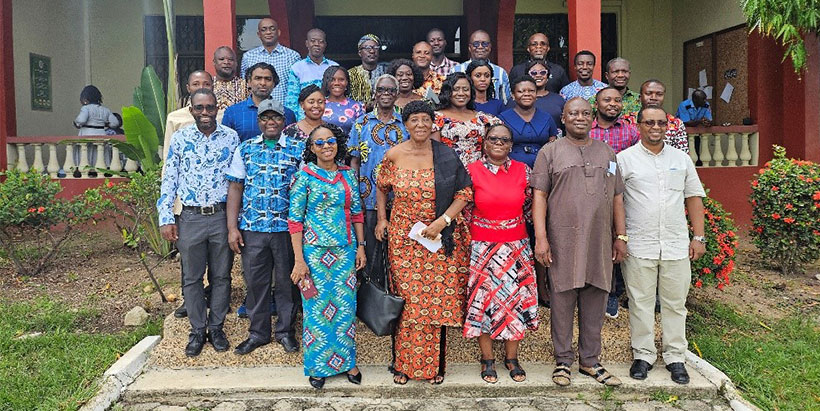
The meeting engaged these stakeholders in defining the market segments, market share, and target production environment and identifying high-priority traits and threshold values that stakeholders would like to see in improved varieties. In his opening remarks, the Director of CRI Kumasi, Prof. M.B. Mochiah, underscored the importance of cassava in Ghana. He further affirmed his continuous support for CRI’s long-standing collaboration with IITA Cassava Breeding.
Accelerated Breeding Initiative (ABI) Transform Focal Person in West and Central Africa, Vishnuvardhan Banda, introduced the participants to the concepts of product design in aggregating demands for specific products, choosing the most suited geography for production, and identifying preferred traits that drive consumer’s preference. Participants shared their perspectives in groups and made submissions about the market segments, target production environments, and traits that should be included in the new variety design.
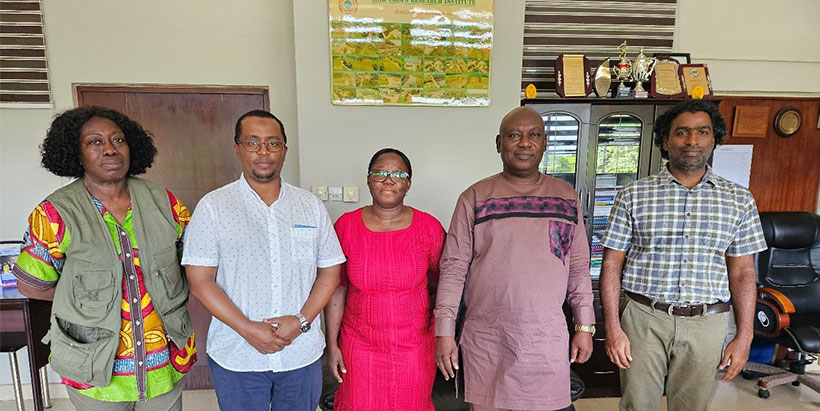
Researchers and experts from IITA and CRI Kumasi further refined the market segment and product profile documents. Furthermore, a breeding assessment of CRI Kumasi was done to determine the current state of its cassava breeding program. The facilitators, including IITA Head of the Cassava Breeding Unit Elizabeth Parkes, IITA Cassava Breeder Ismail Rabbi, Data Specialist Ekanem, and CRI Kumasi Cassava Breeder Ruth Prempeh, thanked all participants for their collaboration, commitment, and dedication to fulfilling the meeting’s objectives.
The IITA Cassava Breeding Program will continue to hold meetings like this across research institutions in West and Central Africa. The vision is to create the West and Central Africa Cassava Breeding Network by 2025. IITA will focus on developing improved cassava varieties that address the market needs defined in each country’s target product profile. These meetings will include farmers, seed producers, transporters, processors, marketers, and consumers at the initial planning stages to define and characterize new varieties to be developed. This will ensure effective collaboration during the evaluation, registration, release, and monitoring of the adoption rate of new varieties as IITA strives to transform Africa’s agriculture.
Contributed by the IITA Cassava Breeding Team
Contributed by
Recent stories