
N2Africa reaches out to 20,000 plus households in Tanzania with improved legume technologies
November 11, 2016
At least 23,828 households in Tanzania have been reached with improved technologies for legume production while at least 1,365 farmers have been trained on how to use these technologies with significant increases in yield being realized by those who have adopted the new technologies.
 The technologies included the use of quality seeds of improved legume varieties, rhizobia inoculants, and appropriate application of fertilizers among other improved farming practices.
This was noted by Freddy Baijukya, the country coordinator for ‘Putting Nitrogen fixation to work for Africa (N2Africa) project in Tanzania which is behind these successes. He was speaking at an annual review and planning meeting held on 19-20 October whose purpose was to look back at the project’s past achievements and develop work plans for 2017.
The meeting brought together the partners and beneficiaries of the project including the media, researchers, NGOs, and private sector companies to discuss their experiences and challenges encountered when implementing the project activities and identify further areas of collaboration.
N2Africa is a large-scale, science-based “research-in-development” project focused on putting nitrogen fixation to work for smallholder farmers through promoting the cultivation of legume crops in Africa. It is led by Wageningen University and IITA is one of the main implementing partners.
The project is seeking to promote and expand legume production through strengthening delivery and dissemination of improved legume technologies with potential to boost production and close the yield gap through, among others, creating sustainable input supply and market access and empower women to benefit from legume production.
“Our target is to reach over 60,000 farmers in Tanzania by 2018. To achieve this goal, we need to be strategic and work together to efficiently implement the project activities,” Baijukya said.
Theresa Ampadu-Boakeye, the N2Africa project Monitoring & Evaluation Specialist praised the efforts made by partners. She advised them to conduct a demand quantification analysis before introducing any new technology to farmers. The analysis will help in determining the needs of farmers.
She also encouraged partners to create information databases with contact details of farmers, field extension officers, and other partners.The databases should be shared and will help in the marketing quantity analysis and identification of technologies that are needed by farmers.
On the first day of the meeting, partners presented their work progress, achievements, challenges, and lessons learned; on the second day, they deliberated on activities for the 2017 work plan. The partner projects include Sustainable Agricultural Intensification Research and Learning in Africa (SAIRLA), Scaling up improved legume technologies (SILT), and Africa RISING-NAFAKA.
Partner institutions include the Agricultural Research Institute (ARI) at Ilonga, Naliendele, Makutupora, and Uyole for the research component; NGOs such as Building Rural Income through Enterprise (BRITEN), Farm Inputs Promotion Services (FIPS-Africa), Catholic Relief Services, Farm Radio International, Faida Market Link (FAIDAMALI), and the Clinton Development Initiative (CDI) to support the dissemination of the technologies and private companies such as YARA, Syngenta, MEA Ltd., and Export Trading Group (ETG) to either supply inputs or buy legumes.
The technologies included the use of quality seeds of improved legume varieties, rhizobia inoculants, and appropriate application of fertilizers among other improved farming practices.
This was noted by Freddy Baijukya, the country coordinator for ‘Putting Nitrogen fixation to work for Africa (N2Africa) project in Tanzania which is behind these successes. He was speaking at an annual review and planning meeting held on 19-20 October whose purpose was to look back at the project’s past achievements and develop work plans for 2017.
The meeting brought together the partners and beneficiaries of the project including the media, researchers, NGOs, and private sector companies to discuss their experiences and challenges encountered when implementing the project activities and identify further areas of collaboration.
N2Africa is a large-scale, science-based “research-in-development” project focused on putting nitrogen fixation to work for smallholder farmers through promoting the cultivation of legume crops in Africa. It is led by Wageningen University and IITA is one of the main implementing partners.
The project is seeking to promote and expand legume production through strengthening delivery and dissemination of improved legume technologies with potential to boost production and close the yield gap through, among others, creating sustainable input supply and market access and empower women to benefit from legume production.
“Our target is to reach over 60,000 farmers in Tanzania by 2018. To achieve this goal, we need to be strategic and work together to efficiently implement the project activities,” Baijukya said.
Theresa Ampadu-Boakeye, the N2Africa project Monitoring & Evaluation Specialist praised the efforts made by partners. She advised them to conduct a demand quantification analysis before introducing any new technology to farmers. The analysis will help in determining the needs of farmers.
She also encouraged partners to create information databases with contact details of farmers, field extension officers, and other partners.The databases should be shared and will help in the marketing quantity analysis and identification of technologies that are needed by farmers.
On the first day of the meeting, partners presented their work progress, achievements, challenges, and lessons learned; on the second day, they deliberated on activities for the 2017 work plan. The partner projects include Sustainable Agricultural Intensification Research and Learning in Africa (SAIRLA), Scaling up improved legume technologies (SILT), and Africa RISING-NAFAKA.
Partner institutions include the Agricultural Research Institute (ARI) at Ilonga, Naliendele, Makutupora, and Uyole for the research component; NGOs such as Building Rural Income through Enterprise (BRITEN), Farm Inputs Promotion Services (FIPS-Africa), Catholic Relief Services, Farm Radio International, Faida Market Link (FAIDAMALI), and the Clinton Development Initiative (CDI) to support the dissemination of the technologies and private companies such as YARA, Syngenta, MEA Ltd., and Export Trading Group (ETG) to either supply inputs or buy legumes.
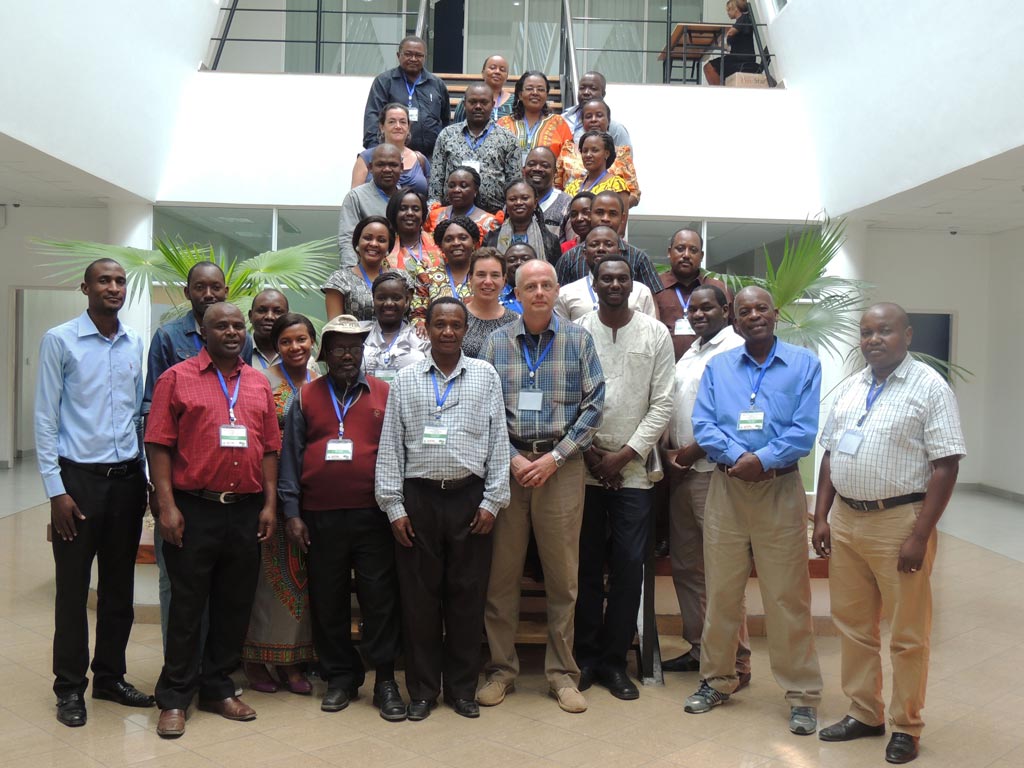
Participants at the N2Africa Review meeting.
Contributed by
Recent stories
No items found