
aflasafe KE01TM launched in Kenya; private sector asked to invest in the technology
October 8, 2016
Good news for maize farmers in Kenya and indeed Africa! The biocontrol product aflasafe KE01™, an innovative, safe, and effective technology for controlling aflatoxin contamination, was launched on 4 October at a ceremony at the Kenyan Agricultural Livestock and Research Organization (KALRO).
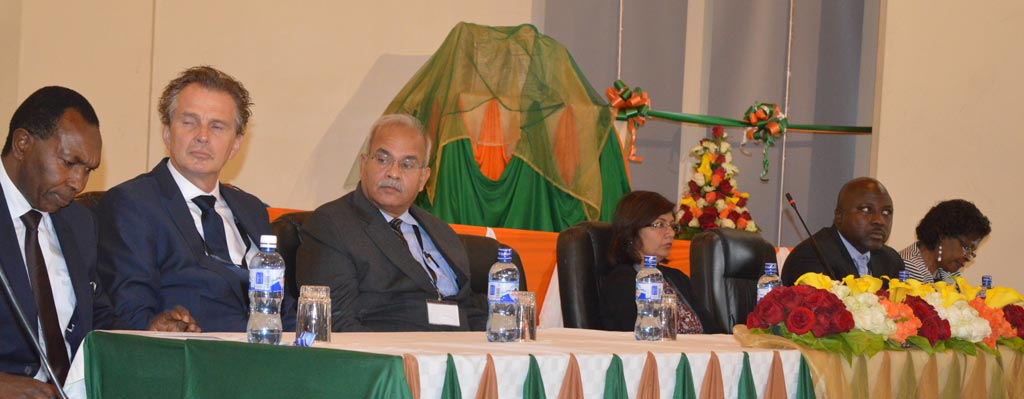 aflasafe KE01TM has proven effective in reducing aflatoxin contamination by 70–80% in trials in farmers’ fields across various parts of the country.
The technology was launched by Eliud Kireger, KALRO Director General, at a ceremony attended by policy makers, researchers, development partners, nongovernmental organizations, private sector partners, and representatives from the farming community from within and outside the country.
The launch paves the way for the production and distribution of aflasafe KE01TM and was followed by a business meeting to entice the private sector to invest in the technology to ensure its sustainable production and distribution to the farming community.
Speaking at the event, Kireger said he considered this a very important development for the Kenyan people, especially the farming community. He noted that aflatoxins are a major challenge to maize production in the country and its efforts to secure food supplies and improve the health and well-being of its people.
“The aflasafe technology could not have come at a more opportune time. Climate change and the accompanying extreme weather conditions, from drought to too much rain, are not only threats to food security but they also create favorable conditions for the mold that produces aflatoxin and increase in aflatoxin contamination,” he said.
Kireger said that the adoption of this biocontrol technology with other management practices by farmers will reduce aflatoxin contamination by over 70% in maize and groundnut, increase crop value by at least 5%, and improve the health of children and women.
“High levels of aflatoxin in maize—far above acceptable levels—have forced regulators to remove maize grain and prevent it from entering the food/feed chain leading to food insecurity and increase in food prices. aflasafe KE01TM is a safe and effective solution to this challenge.
The technology was first developed by the United States Department of Agriculture–Agriculture Research Services (USDA–ARS). KALRO and IITA partnered with USDA–ARS and many other international and national partners to adapt and improve the technology to Kenya using locally sourced strains of the atoxigenic fungus.
aflasafe KE01TM was registered by KALRO, on behalf of the partners, with the Pest Control Products Board (PCPB) on 29 June 2015. IITA and KALRO are also constructing a modular plant to manufacture the product at KALRO Katumani. Early this month, Kireger and IITA Director General Nteranya Sanginga signed a Technology Transfer and Licensing Agreement on aflasafe KE01TM.
“We anticipate completing the construction of the modular plant to manufacture aflasafe KE01TM at the end of the year and start production so farmers can have the product for the 2017 cropping season. This is the second plant in Africa; the first is at IITA Headquarters in Ibadan, Nigeria. It is our wish to see this product widely distributed to all the major maize-growing regions in the country to make sure all the maize is safe for the people of Kenya,” said Leena Tripathi, IITA Country Coordinator, also speaking at the event.
The launch and subsequent business meeting were organized under the Aflasafe Technology Transfer and Commercialization (ATTC) project led by IITA. The project is designed to carefully but efficiently identify strategic options for partnership with private companies or government entities, execute those partnerships, and help ensure that aflasafe products reach millions of farmers.
“This business meeting is the starting point of the commercialization of the product in Kenya to benefit farmers. We look forward to partnering with both private and public sectors to ensure the production and wide distribution of the product in the country,” said Abdou Konlambigue, ATTC Managing Director.
This 5-year project funded jointly by the United States Agency for International Development (USAID) and the Gates Foundation covers 11 countries where aflasafe is or may soon be a nationally registered product: Burkina Faso, Ghana, Kenya, Malawi, Mozambique, Nigeria, Senegal, Tanzania, The Gambia, Uganda, and Zambia.
[Best_Wordpress_Gallery id=”3″ gal_title=”aflasafe KE01 TM launched in Kenya”]
aflasafe KE01TM has proven effective in reducing aflatoxin contamination by 70–80% in trials in farmers’ fields across various parts of the country.
The technology was launched by Eliud Kireger, KALRO Director General, at a ceremony attended by policy makers, researchers, development partners, nongovernmental organizations, private sector partners, and representatives from the farming community from within and outside the country.
The launch paves the way for the production and distribution of aflasafe KE01TM and was followed by a business meeting to entice the private sector to invest in the technology to ensure its sustainable production and distribution to the farming community.
Speaking at the event, Kireger said he considered this a very important development for the Kenyan people, especially the farming community. He noted that aflatoxins are a major challenge to maize production in the country and its efforts to secure food supplies and improve the health and well-being of its people.
“The aflasafe technology could not have come at a more opportune time. Climate change and the accompanying extreme weather conditions, from drought to too much rain, are not only threats to food security but they also create favorable conditions for the mold that produces aflatoxin and increase in aflatoxin contamination,” he said.
Kireger said that the adoption of this biocontrol technology with other management practices by farmers will reduce aflatoxin contamination by over 70% in maize and groundnut, increase crop value by at least 5%, and improve the health of children and women.
“High levels of aflatoxin in maize—far above acceptable levels—have forced regulators to remove maize grain and prevent it from entering the food/feed chain leading to food insecurity and increase in food prices. aflasafe KE01TM is a safe and effective solution to this challenge.
The technology was first developed by the United States Department of Agriculture–Agriculture Research Services (USDA–ARS). KALRO and IITA partnered with USDA–ARS and many other international and national partners to adapt and improve the technology to Kenya using locally sourced strains of the atoxigenic fungus.
aflasafe KE01TM was registered by KALRO, on behalf of the partners, with the Pest Control Products Board (PCPB) on 29 June 2015. IITA and KALRO are also constructing a modular plant to manufacture the product at KALRO Katumani. Early this month, Kireger and IITA Director General Nteranya Sanginga signed a Technology Transfer and Licensing Agreement on aflasafe KE01TM.
“We anticipate completing the construction of the modular plant to manufacture aflasafe KE01TM at the end of the year and start production so farmers can have the product for the 2017 cropping season. This is the second plant in Africa; the first is at IITA Headquarters in Ibadan, Nigeria. It is our wish to see this product widely distributed to all the major maize-growing regions in the country to make sure all the maize is safe for the people of Kenya,” said Leena Tripathi, IITA Country Coordinator, also speaking at the event.
The launch and subsequent business meeting were organized under the Aflasafe Technology Transfer and Commercialization (ATTC) project led by IITA. The project is designed to carefully but efficiently identify strategic options for partnership with private companies or government entities, execute those partnerships, and help ensure that aflasafe products reach millions of farmers.
“This business meeting is the starting point of the commercialization of the product in Kenya to benefit farmers. We look forward to partnering with both private and public sectors to ensure the production and wide distribution of the product in the country,” said Abdou Konlambigue, ATTC Managing Director.
This 5-year project funded jointly by the United States Agency for International Development (USAID) and the Gates Foundation covers 11 countries where aflasafe is or may soon be a nationally registered product: Burkina Faso, Ghana, Kenya, Malawi, Mozambique, Nigeria, Senegal, Tanzania, The Gambia, Uganda, and Zambia.
[Best_Wordpress_Gallery id=”3″ gal_title=”aflasafe KE01 TM launched in Kenya”]
The opening program of the ATTC in Nairobi, Kenya.
Contributed by
Recent stories
No items found