
IITA adopts data and information management policy on Open Access
February 26, 2016
IITA has announced the development and adoption of a data and information management policy on Open Access, and has also instituted guiding principles detailing the roles and responsibilities of everyone involved to ensure compliance. The policy demonstrates the Institute’s commitment to research excellence and became fully functional recently.
 It also supports IITA’s strategic objectives to ensure that data, information research findings, and output gain the widest possible and free access by the general public.
To protect copyright and intellectual property rights, the Policy has been aligned with the CGIAR Open Access and Data Management Policy and the CGIAR Principles on the Management of Intellectual Assets. By adopting this policy, IITA expresses its support to the principles of open access to publicly funded research outputs, as well as to:
Promote open access to data and information produced at IITA to facilitate data and information discovery, sharing, and collaboration.
Clarify responsibilities so that researchers and research support staff understand what is required from them.
Set out the Institute’s obligations including the provision of facilities for the management of data and training, support, and guidance on good practice in data and information management.
Improve access, discoverability, usability, and visibility of the Institute’s research outputs, documents, and knowledge products, innovations, and technologies.
Protect the legitimate interests of the Institute and of other parties.
Ensure that data and information are protected from unauthorized access and avoid the risks associated with the theft, loss, misuse, damage, or abuse.
Under this policy, scientists, students, and all staff members are under obligation to publicize all data and information from projects led by IITA as well as those solely implemented by the Institute.
Researchers are also encouraged to negotiate copyright terms with publishers in the event that the publisher does not allow archiving, reuse, and sharing of data. Where the Institute is involved in any collaborative research project, the policy enjoins researchers to ensure that collaborators are aware of the obligation to publish results in Open Access. The agreement must consider and make arrangements to manage the intellectual property, the ownership of equipment, research data and primary materials, and the authorship and publication prior to the commencement of the research project.
The policy also supports the publication of materials under the Creative Commons licenses to promote the sharing of knowledge and the creation of open research data and outputs, particularly in sub-Saharan Africa.
This year is also the Year of Open Access in IITA.
It also supports IITA’s strategic objectives to ensure that data, information research findings, and output gain the widest possible and free access by the general public.
To protect copyright and intellectual property rights, the Policy has been aligned with the CGIAR Open Access and Data Management Policy and the CGIAR Principles on the Management of Intellectual Assets. By adopting this policy, IITA expresses its support to the principles of open access to publicly funded research outputs, as well as to:
Promote open access to data and information produced at IITA to facilitate data and information discovery, sharing, and collaboration.
Clarify responsibilities so that researchers and research support staff understand what is required from them.
Set out the Institute’s obligations including the provision of facilities for the management of data and training, support, and guidance on good practice in data and information management.
Improve access, discoverability, usability, and visibility of the Institute’s research outputs, documents, and knowledge products, innovations, and technologies.
Protect the legitimate interests of the Institute and of other parties.
Ensure that data and information are protected from unauthorized access and avoid the risks associated with the theft, loss, misuse, damage, or abuse.
Under this policy, scientists, students, and all staff members are under obligation to publicize all data and information from projects led by IITA as well as those solely implemented by the Institute.
Researchers are also encouraged to negotiate copyright terms with publishers in the event that the publisher does not allow archiving, reuse, and sharing of data. Where the Institute is involved in any collaborative research project, the policy enjoins researchers to ensure that collaborators are aware of the obligation to publish results in Open Access. The agreement must consider and make arrangements to manage the intellectual property, the ownership of equipment, research data and primary materials, and the authorship and publication prior to the commencement of the research project.
The policy also supports the publication of materials under the Creative Commons licenses to promote the sharing of knowledge and the creation of open research data and outputs, particularly in sub-Saharan Africa.
This year is also the Year of Open Access in IITA.
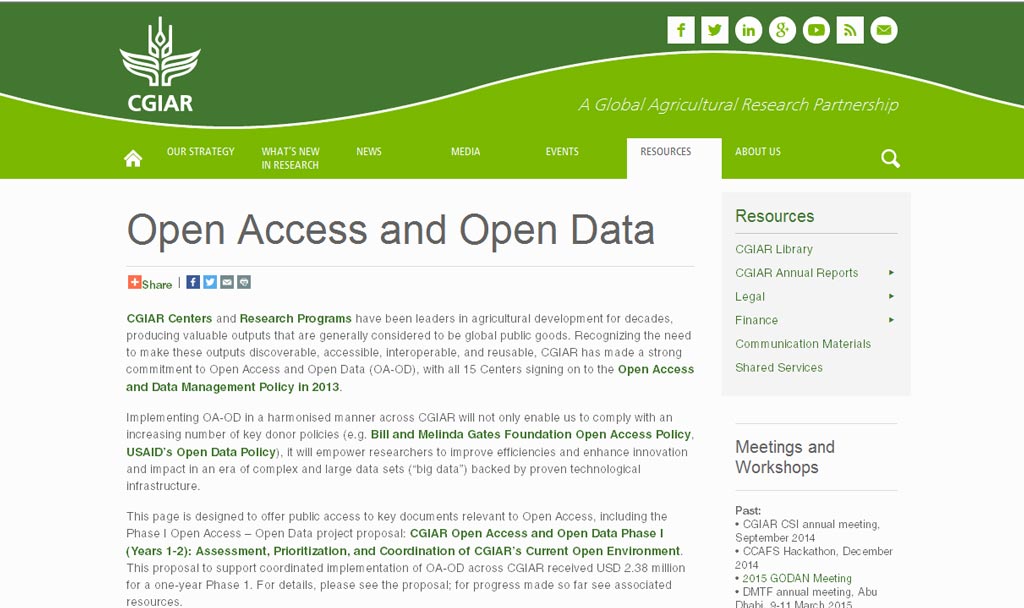
Open Access and Open Data on CGIAR.org website
Contributed by
Recent stories
No items found