
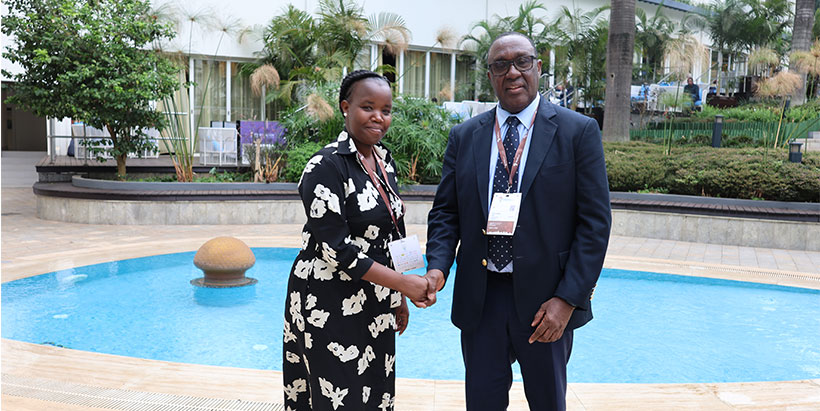
As part of efforts to increase IITA–CGIAR‘s research efforts in Rwanda, IITA Director General and CGIAR Regional Director for Continental Africa, Dr Simeon Ehui, met with the Deputy Director General for Agriculture Development, Rwanda Agriculture and Animal Resources Development Board (RAB), Florence Uwamahoro, to discuss aligning of interest areas and expanding partnerships to ensure impactful agricultural research in the country.
The meeting centered on scaling research solutions to bolster Rwanda’s food security and highlighted the importance of aligning national programs with international research initiatives for agricultural transformation.
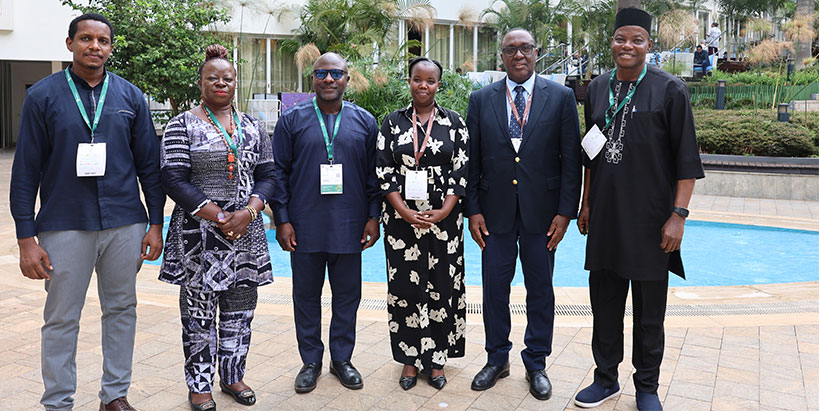
During the discussions, DG Ehui emphasized the need for stronger collaborations with key stakeholders, particularly within Rwanda’s national agricultural programs, to ensure that research efforts produce tangible outcomes.
“Research without impact is futile. I care about partnerships with national programs because they are key to ensuring our research delivery is done. We want to use research as a solution to support food security in Rwanda,” DG Ehui said.
He further outlined IITA’s commitment to building the capacity of Rwanda’s national research systems and youth, stressing the need to prepare the next generation of agricultural leaders to carry on the work of today’s scientists.
According to DG Ehui, Rwanda must see the value addition from IITA’s presence. “The national research system is key to achieving the goal of transforming agriculture in Africa, and I appreciate the support Rwanda has offered to IITA Rwanda,” he added.
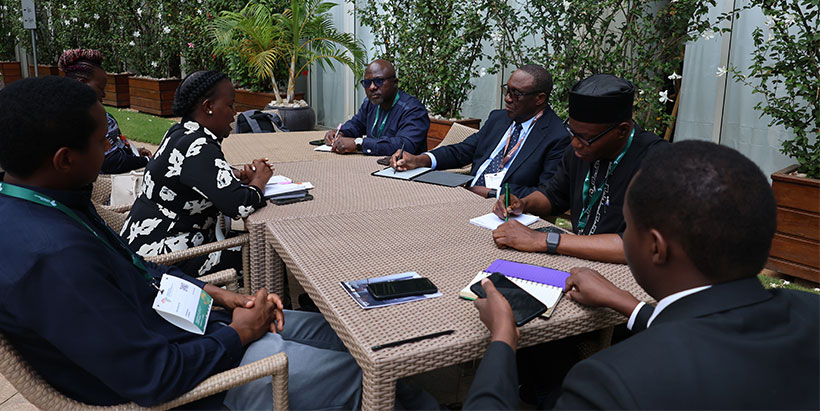
Reinforcing the country’s focus on plant health, pest and disease management, and genetic improvement, Uwamahoro mentioned ongoing efforts to increase the adoption of improved crop varieties. She noted that despite the development of new cowpea varieties, adoption among farmers remains limited, explaining the need to increase farmers’ access to clean and improved cassava seed varieties, which will help meet the demand from local processing centers.
“There is a need for clean, improved seed varieties that can supply the cassava value chain in Rwanda,” Uwamohoro remarked. She also emphasized RAB’s commitment to enhancing research infrastructures, such as tissue culture labs and gene banks, while prioritizing capacity building and youth engagement. She said these efforts align with Rwanda’s national strategic plan for agriculture, which has been developed with the help of various partners.
The meeting also focused on ongoing collaboration to combat pressing agricultural challenges, such as managing pests like banana xanthomonas wilt (BXW) and cassava bacterial blight (CBB). The IITA representative pledged continued support in these areas, particularly in addressing aflatoxin contamination through research on Aflasafe, a biological control product, and scaling up digitization in pest control management.
Both parties agreed that a technical working group was needed to conduct a comprehensive needs assessment and develop an implementation plan based on the recommendations from the meeting. The partnership will further focus on capacity development, digital innovation, and scaling up pest management systems to secure Rwanda’s agricultural future.
As Rwanda embarks on this critical phase of agricultural transformation, the partnership between IITA and RAB is expected to be crucial in driving research-based solutions that will enhance food security and improve livelihoods across the country.
Contributed by ‘Timilehin Osunde
Contributed by
Recent stories