
Agriculture in Zambia is traditionally the preserve of the older generations. It is mostly seen as a last resort – vocation, an occupation one takes up only after retirement. However, experts are calling for a mindset shift towards an industry with untapped potential to deliver jobs, wealth, and development.
At a recent engagement between Mukuba University and IITA-Zambia held at the Southern Africa Research and Administration Hub (SARAH) in Lusaka, the IITA Southern Africa Director, Dr David Chikoye, said universities need to redesign their agriculture curricula, linking them to ICT, innovation hubs, and financial support. He said this is key to addressing the misconceptions and making agriculture attractive to the younger generation.
“With their energy, digital skills, and appetite for new technologies, youths are well-placed to become the drivers of a modern, profitable agricultural sector,” he said.
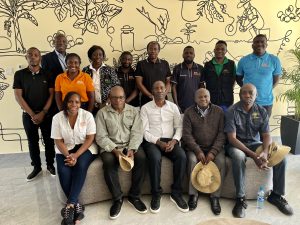
Dr Chikoye emphasized the need for intentional university programs that target youth involvement, including mechanization, agritech start-ups, and digital extension services.
He noted that the opportunities in agriculture stretch far beyond production, as Zambia’s agricultural value chain includes processing, logistics, marketing, and advisory services. Adding that these areas align with youth interests in technology, entrepreneurship, and innovation.
“Young people don’t always want to soil their hands,” Dr Chikoye added. “But they can run agribusinesses, operate ICT platforms, manage value chains, and drive innovation across the sector. Modern farming is no longer about spending days in the field with a hoe. With mechanization, artificial intelligence (AI), and ICT-based solutions, farming today can be as modern as any corporate job.”
“Agriculture is profitable. If young people take farming seriously, they can earn more by investing in the land than sitting in an office shuffling files.”
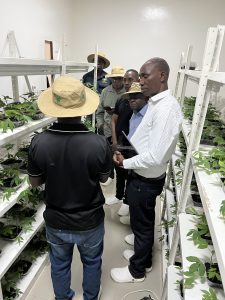
Dr Chikoye said IITA-CGIAR is ready to explore other opportunities for further collaboration to strengthen capacity.
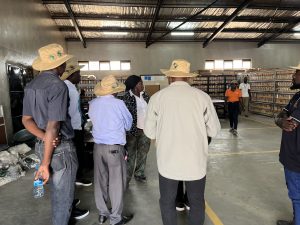
This vision for youth-centered agriculture framed the engagement with Mukuba University, highlighting two key objectives: to understand the facilities and expertise provided by IITA-CGIAR that can help advance agriculture in Zambia and the region, and to further cement the partnership between the two institutions.
With IITA-Zambia’s ongoing support in the cassava seed multiplication program at Mukuba University, both institutions recognize the opportunity to expand collaboration beyond seed multiplication.
Speaking on partnership engagements, Mukuba University Acting Dean in the School of Mathematical and Natural Resources, Dr Mushekwa Sakumona, said IITA-Zambia’s multi-crop expertise opens new avenues for partnership. Mukuba is ready to build on this foundation as a public service institution.
Dr Sakumona said the collaboration has already surpassed expectations.
“Mukuba is developing its postgraduate program with plans to tap into IITA-CGIAR’s personnel for supervision. In addition, IITA-CGIAR’s engagement is expected to motivate students to pursue careers in agribusiness. By the end of next year, Mukuba hopes IITA-CGIAR will actively join one of its youth empowerment initiatives, helping recruit champions to strengthen youth organizations in the country.”
He expressed gratitude to IITA-CGIAR for its unwavering support, especially during a challenging period last year, and looks forward to deepening collaboration for greater agricultural impact.
Both institutions are committed to scaling this collaboration for regional impact.
Contributed by Rachel Namukolo-Nali
Contributed by
Recent stories