
IITA NEWS

Why Climate Finance Must Tackle Food Loss and Waste
October 10, 2025

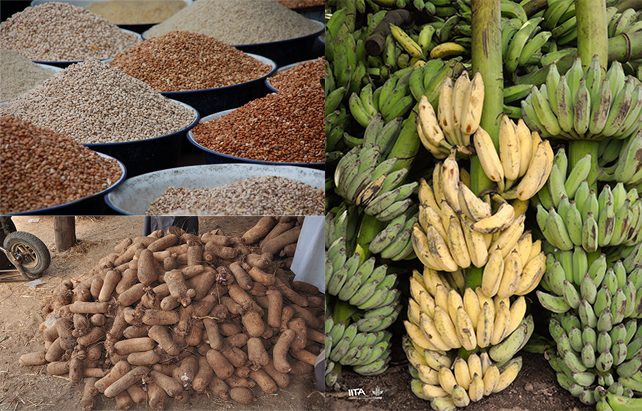
Every harvest season in Africa, food is lost or wasted at staggering levels. Nigeria loses 45% of its 3.9 million tons of tomato harvest each year to postharvest losses and supply chain inefficiencies. Kenya loses up to 40% of the food it produces–around 9 million tons worth KES 72 billion (approximately US$578 million)–even as one in four citizens struggles daily to find enough to eat. In South Africa, about a third of all food ends up at the dump. These are not isolated failures. They are symptoms of a global crisis. On average, one-third of all food produced never gets eaten, generating 8–10% of global greenhouse gas emissions. If food loss and waste were a country, it would be the world’s third-largest emitter.

On 29 September, the world marked the sixth International Day of Awareness of Food Loss and Waste, a reminder that cutting waste is essential to a sustainable food future. My message is simple: we cannot fix the climate without fixing food waste. Yet today, less than 6% of public climate finance in food systems targets reducing loss and waste. We are starving the very solutions that could feed people and protect the planet. It is time to expand and align stakeholder efforts, and to channel climate finance where it matters most–into reducing food loss and waste.

Food loss and waste is not a side issue. It is a climate, nutrition, food justice, and economic issue rolled into one. We cannot afford inaction, with rice losses in sub-Saharan Africa alone exceeding $10 billion per year. In Africa, where climate shocks already slash harvests, postharvest losses rob households of income and nutrients, worsening hidden hunger in communities that can least afford it. Women, who produce and process much of our food, shoulder the heaviest burden, spending more hours salvaging spoiled crops, risking illness, or stretching scarce resources to feed their families. Youth lose out on farming and agribusiness opportunities as value literally rots away, eroding confidence in agriculture as a viable path for employment and innovation.

Climate finance is meant to build resilience. But how resilient can a food system be when 30–40% of its harvest disappears each season as the climate grows increasingly erratic? Financing cold chains, storage, transport, and waste-to-value solutions is not charity. It is climate adaptation in action. Every dollar invested in reducing food loss and waste reduction pays back at least threefold: cutting emissions, strengthening supply chains against climate shocks, and ensuring more food reaches households without clearing new land. This is one of the rare areas where climate, health, and the economy align.
The barriers are real. Climate modeling and advisory services exist but often do not reach smallholders. Governments struggle to integrate food systems into climate plans, ministries work in silos with limited capacity to design bankable projects, and many institutions lack accreditation to access global funds, while policies rarely link agriculture, nutrition, and climate. Climate finance can change this.

Dedicated funding windows in other sectors already show what is possible: the Green Climate Fund’s Readiness Programme has supported more than 140 countries to build accredited entities and prepare projects; the Adaptation Fund’s Innovation Facility has enabled bold, locally driven solutions; and the Global Agriculture and Food Security Program has demonstrated how pooled finance can reach smallholders directly. Applying these approaches to food systems can build national capacity to embed food loss and waste reduction into climate strategies; support inclusive projects that cut emissions while improving nutrition; and catalyze private sector innovation—from waste-to-value enterprises to digital logistics platforms, while ensuring women, youth, and smallholders secure a fair share of resources, voice, and leadership.

Skeptics may argue that climate finance should focus on “harder” sectors such as energy or forestry, where emission reductions are easier to measure. Ignoring food waste, however, is a false economy. We already track carbon in forests and smokestacks. Why not in wasted food? Tools exist to measure and verify reductions. What is missing is political will and financial priority. Others say infrastructure is costly. So is inaction. Every year of delay means billions lost in spoiled harvests, wasted water and land, and millions of children undernourished.

This year’s theme gets it right—climate finance must step up. Here is how: Governments should embed food loss and waste reduction in national climate strategies and investment plans. Finance windows should earmark funding for loss and waste reduction. Development partners must co-invest and coordinate in infrastructure and innovation (cold-chain, storage, transport, and data systems). The private sector should be rewarded for turning waste into value and ensuring participation and benefits for women, youth, and smallholders.

If food loss is climate loss, then financing its reduction is financing survival. The question is no longer whether we can afford to act. It is whether we can afford not to.


Contributed by

Related news

No items found

Leave a Reply

Your email address will not be published. Required fields are marked *

Scroll to Top
Olaosebikan, Olamide

Olamide Deborah Nwanze is a Senior Research Associate specializing in gender mainstreaming research to inform participatory and inclusive breeding, variety development, and seed systems policies regarding root, tuber, and banana (RTB) crops in the International Institute of Tropical Agriculture Headquarters, Ibadan, Nigeria. She is a PhD candidate at the University of Ibadan and holds an MSc and B. Agric in Agricultural Extension and Rural Development. Olamide is a fellow of the African Women in Agricultural Research and Development – Gender Responsive Agricultural Systems Policy (AWARD-GRASP) and the Gender Responsive Researchers Equipped for Agricultural Transformation (GREAT). She seeks to apply her gender-mainstreaming learnings, gender-responsive research, and policy development, and review expertise to facilitate women, youth, children, and vulnerable social group’s access to and adoption of agricultural Innovations that guarantee food, nutrition, income, and livelihood security in Africa. Her current roles include mentoring research fellows, development of guides and training manuals, implementation and adaptation of gender frameworks and tools, value chain actors’ engagement as citizen science partners, policy review and redesign, data management, and analysis. Her current research explores mixed methods and participatory and interdisciplinary approaches to capture and highlight gender dynamics, needs, preferences, and challenges stakeholders face within the agricultural livelihood value chain to prioritize gender-inclusive strategies in breeding programs, policy design, and implementation.

At IITA, she contributes to the implementation of the CGIAR Accelerated Breeding Initiative and Genetic Innovation Programs; participatory and gender research within the NextGen CassavaHarvestPlusRTBFoods, and Tricot-ClimMob 1000Farms Projects; and gender knowledge communication via the G-LENS webinar series, video documentary, policy briefspublications, and blogs.


Recent publications

de Sousa, K., van Etten, J., Manners, R. Bello, A., Teeken, B., Olaosebikan, O., et al. 2024. The tricot approach: an agile framework for decentralized on-farm testing supported by citizen science. A retrospective. Agron. Sustain. Dev. 44, 8. https://doi.org/10.1007/s13593-023-00937-1

Madu, T., Onwuka, S., Nwafor, S., Onyemauwa, N., Ejechi, M., Ofoeze, M., Ukeje, B., Eluagu, C., Olaosebikan, O., Okoye, B., 2024. Gender-Inclusive Consumer Studies Improve Cassava Breeding in Nigeria in: Frontiers in Sociology, volume 9, number: 1224504, doi: 10.3389/fsoc.2024.1224504

Olaosebikan, O.; Bello, A.; Utoblo, O.; Okoye, B.; Olutegbe, N.; Garner, E.; Teeken, B.; Bryan, E.; Forsythe, L.; Cole, S.; Madu, T. 2023.  Stressors and Resilience within the Cassava Value Chain in Nigeria: Preferred Cassava Variety Traits and Response Strategies of Men and Women to Inform Breeding. Sustainability 15, 7837. https://doi.org/10.3390/su15107837

Okoye, B., Ofoeze, M., Ejechi, M., Onwuka, S., Nwafor, S., Onyemauwa, N., Ukeje, B., Eluagu, C., Obidiegwu, J.*, Olaosebikan, O., Madu, T.* 2023. Prioritizing preferred traits in the yam value chain in Nigeria: a gender situation analysis in: Frontiers in Sociology, volume 8, number: 1232626, pages 1 – 9, ISSN 2297-7775, 2023. https://www.frontiersin.org/articles/10.3389/fsoc.2023.1232626/full

Olaosebikan, O., Bello, A. A., de Sousa, K., Ndjouenkeu, R., Adesokan, M., Alamu, E. O., Agbona, A., van Etten, J., Kegah, F. N.*, Dufour, D., Bouniol, A., Teeken, B. 2023. Consumer acceptability of cassava gari-eba food products across cultural and environmental settings using the triadic comparison of technologies approach (tricot) in: Journal of the Science of Food and Agriculture,

Teeken, B., Olaosebikan, O., Bello, A. A., Madu, T.*, Cole, S. M. 2023. Qualitative assessment on the positionality and preferences of dyads in relation to cassava-related activities: working with tricot trial citizen scientists https://hdl.handle.net/10568/138326 Type: Manual

Bouniol, A., Ceballos, H., Bello, A. A., Teeken, B., Olaosebikan, O., Owoade, D., Agbona, A., Fotso Kuate, A., Madu, T.*, Okoye, B.*, Ofoeze, M.*, Nwafor, S.*, Onyemauwa, N.*, Adinsi, L.*, Forsythe, L., Dufour, D. 2023. Varietal impact on women’s labour, workload and related drudgery in processing root, tuber and banana crops: focus on cassava in sub-Saharan Africa in: Journal of the Science of Food and Agriculture, pages 1 – 25, ISSN 0022-5142,

Bello, A. A., Agbona, A., Olaosebikan, O., Edughaen, G., Dufour, D., Bouniol, A., Iluebbey, P., Ndjouenkeu, R.*, Rabbi, I. Y., Teeken, B. 2023. Genetic and environmental effects on processing productivity and food product yield: drudgery of women’s work in: Journal of the Science of Food and Agriculture, pages 1 – 32, ISSN 0022-5142, 5

Cavicchioli, M., Zimbiti, T., Teeken, B., Nwanze, D.O., Liani, M., Parkes, E. & Bello, A. 2023. IITA-Gender Responsive Breeding Training Report. Genetic Resources Center, IITA-HQ, Ibadan, 21-23 September, 2022. Ibadan, Nigeria: IITA, (34 p.).https://hdl.handle.net/10568/131368

Agbona, A. Peteti P., Teeken B., Olaosebikan O. Bello, A. A., Parkes, E., Rabbi, I. Y., Mueller, L., Egesi, C., Kulakow, P. 2022. Data Management in Multi-disciplinary African RTB Crop Breeding Programs. In: Williamson, H.F., Leonelli, S. (eds) Towards Responsible Plant Data Linkage: Data Challenges for Agricultural Research and Development. Springer, Cham. https://doi.org/10.1007/978-3-031-13276-6_5

Lora Forsythe, Pricilla Marimo, Sarah Mayanja, Olamide D. Olaosebikan, Esme Stuart, Bela Teeken, Benjamin Okoye, Tessy Madu, (2021). Cross-product Gender Analysis of RTBfoods Step 2 Gendered Food Mapping on RTB Products. Understanding the Drivers of Trait Preferences and the Development of Multi-user RTB Product Profiles, WP1. London, UK: RTBfoods Field Scientific Report, 30 p.

Teeken, B., Garner, E., Agbona, A., Balogun, I., Olaosebikan, O., Bello, A., Madu, T., Okoye, B., Egesi, C., Kulakow, P. and Tufan, H.A. 2021. Beyond “Women’s Traits”: Exploring How Gender, Social Difference, and Household Characteristics Influence Trait Preferences. Frontiers Sustainable Food Systems 5:740926. https://doi.org/10.3389/fsufs.2021.740926

Teeken, B., Agbona, A., Bello, A., Olaosebikan, O., Alamu, E., Adesokan, M., Awoyale, W., Madu, T., Okoye, B., Chijioke, U., Owoade, D., Okoro, M., Bouniol, A., Dufour, D., Hershey, C., Rabbi, I., Maziya‐Dixon, B., Egesi, C., Tufan, H. and Kulakow, P. (020. Understanding cassava varietal preferences through pairwise ranking of gari‐eba and fufu prepared by local farmer–processors. Int J Food Sci Technol. https://doi.org/10.1111/ijfs.14862

Bela Teeken, Olamide Olaosebikan, Ireti Balogun, Benjamin Okoye, Tessy Madu, Steven Cole, Abolore Bello, Elizabeth Parkes. (2020). Piloting the G+ customer and product profile tools for gender-responsive cassava breeding in Nigeria. Nigeria: International Institute of Tropical Agriculture (IITA). https://hdl.handle.net/20.500.11766/13000