

IITA NEWS

Youth involvement in agriculture is crucial in solving poverty – IITA DG
November 17, 2025

A cross-section of participants at the event

The IITACGIAR Director General Dr Simeon Ehui, has called for increased youth involvement in agriculture, stating that this is crucial in addressing the challenges of hunger, poverty, and youth unemployment in Africa. Speaking in Abeokuta recently at the networking conference organized by the Youth in Agribusiness, “Enabling scaling of innovative technologies for sustainable food solutions,” also known as YAS Project, Dr Ehui, represented by the Coordinator of the Technology for African Agricultural Transformation (TAAT) program at the institute, Dr Chrys Akem, said the future of sustainable agricultural practices lies with young people.

The conference, jointly organized by the Oyo and Ogun agribusiness hubs of the YAS project, had the theme, ‘Enhancing public-private partnership to sustain the capacity of youth in agribusiness’. Dr Ehui stated, “We believe that if we want to sustain profitable agriculture, solve the challenge of hunger, and create more jobs for Africans, we must invest in our youth, and that is why the YAS project, funded by the Kingdom of the Netherlands, got the mandate to empower the youth with technology and innovations that are crucial to making agribusiness more attractive and profitable.”

The Chief Executive Officer, IITA Youth in Agribusiness Unit, Aline Mugisho, lamented the level of hunger on the continent, saying, “Africa is being told to feed the world, but the face of hunger is still Africa. When you go to London, Japan, or the United States, the image of that beggarly child that you see at the airports is that of an African. I am not saying what they have done is good, but we have been challenged to change that perception today, not only by putting food on our tables, but also by ensuring it is affordable for all. To achieve that, we need to engage our large youth demographic and equip them with modern skills.”
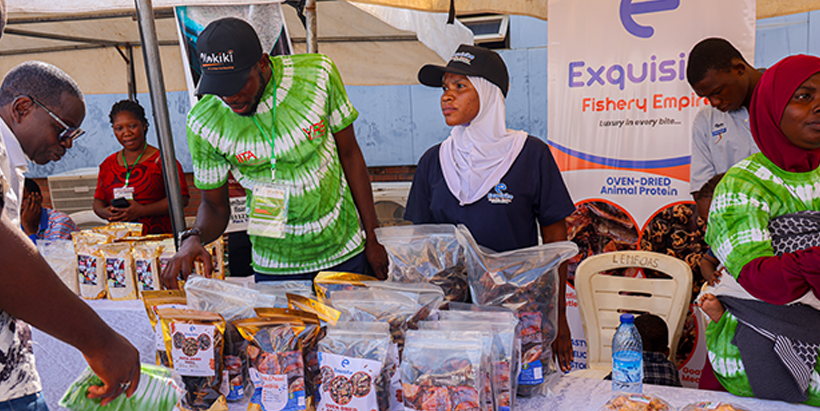
Some participants exhibiting their products

The Country Director of Bopinc, Mercy Mayaki, who is YAS’ major partner, encouraged the participants to embrace opportunities that could aid the expansion of their agribusiness. She added, “The training and support, including business development, were designed to help you maximize your income, and so I appeal to you to not let all the efforts and capital investment be a waste.

Represented at the event were the Ogun State commissioners for agriculture and food security, women’s affairs and social development, commerce and industry, youth development, as well as the project’s partners and other stakeholders in the agricultural sector. Also present was the Special Adviser on Agriculture and Food Security to Governor Dapo Abiodun, Dr Angel Adelaja-Kuye.

The Commissioner for Women Affairs and Social Development, Adijat Adeleye, was represented by the Acting Director of Women Empowerment Services, Adewusi Olajumoke, who commended IITA for its consistent efforts in advancing agricultural innovations and youth empowerment.

Speaking during the panel session, the Chief Regulatory Officer of the National Agency for Food and Drug Administration and Control in Ogun State, John Enitame, advised MSME owners to familiarize themselves with the requirements and processes for product registration to avoid delayed approval. He said non-compliance with documentation requirements remained the biggest challenge for most people who complain about delayed approval.
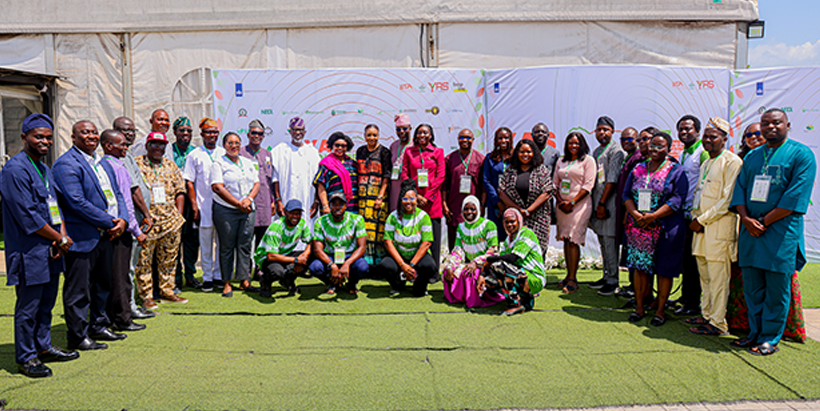
Participants, partners, government representatives and the YAS Team after the event

While highlighting the achievements of the government in the area of support for farmers, an agribusiness consultant at the Ogun State Economic Transformation Project (OGSTEP), Ibidunni Oluwadayopo, said the government had subsidized inputs like fertilizers, agro-chemicals, seed, and stems, adding that the government had also renovated production facilities and provided new ones that farmers could make use of.

In his submission, the representative of Cato Foods, Pelumi Aribisala, described agriculture as a rewarding venture that requires time and good agronomic practices to be profitable. He called on young people interested in agriculture to identify needs and be strategic in meeting them. “We have young people who sell cassava stems in trailer loads, and some don’t even have one hectare of cassava farm. They simply identified the need for the farmers to produce the stems, and they provide support for the farmers.”

A major highlight of the conference was the business pitch competition by participants from Oyo and Ogun agribusiness hubs, respectively. The representative of the Commissioner for Commerce and Industry, Ogun State, Engr Akintomide Kehinde; Innovation & Regional Diversification Lead at Horti Nigeria, Ilebani Olabisi; and the founder of Climate Emerge Innovation Development Hub (CEID), Afolayan Shope, served as judges.

For Oyo State, Paul Etuedo was declared the winner, followed by Oluwakorede Nathaniel in second place, Timilehin Olowoyo in third place, Ganiyu Omolara in fourth place, and Siddiq Lateefat in fifth place.

For Ogun State, Adekunle Isaac was declared the winner, followed by Ajiboye Onajite in second place, Idowu Ayomide in third place, Adelaja Adewale in fourth place, and Apiti Elijah in fifth place.

In the respective competitions, the winner would receive N500,000 worth of inputs; the second-place winner would receive N300,000 worth of inputs, the third-place winner N200,000 worth of inputs, while the fourth- and fifth-place winners would receive consolation prizes of N100,000 worth of inputs, respectively.

Speaking on behalf of the contestants, Etuedo said he learnt about Orange Fleshed and Purple Fleshed Sweet Potato during the training, and that beyond producing year-round using the knowledge he gained from the training, the newly added varieties had boosted the fortunes of his farm.

Impressed by Omolara’s products and expansion plan, a contestant from Oyo, Aribisala of Cato Foods, said his company would support her with an oil extractor. “I have already spoken with the fabricator in Ibadan, and I will link you with the person fabricating it. I bought her kulikuli and it’s very nice,” he stated. In addition, he promised all the winners six months of free mentoring.

The participants also exhibited various products at the event.

Over the last three years, YAS has trained 2,723 participants in Oyo State and 2,617 participants in Ogun State. Meanwhile, 8,629 youth-led enterprises have been established by participants across the four project locations, including Kano and the FCT, with these businesses having employed 20,206 youths to date.

Contributed by Babatunde Ajaja


Contributed by

Recent stories

No items found

Leave a Reply

Your email address will not be published. Required fields are marked *

Scroll to Top
Olaosebikan, Olamide

Olamide Deborah Nwanze is a Senior Research Associate specializing in gender mainstreaming research to inform participatory and inclusive breeding, variety development, and seed systems policies regarding root, tuber, and banana (RTB) crops in the International Institute of Tropical Agriculture Headquarters, Ibadan, Nigeria. She is a PhD candidate at the University of Ibadan and holds an MSc and B. Agric in Agricultural Extension and Rural Development. Olamide is a fellow of the African Women in Agricultural Research and Development – Gender Responsive Agricultural Systems Policy (AWARD-GRASP) and the Gender Responsive Researchers Equipped for Agricultural Transformation (GREAT). She seeks to apply her gender-mainstreaming learnings, gender-responsive research, and policy development, and review expertise to facilitate women, youth, children, and vulnerable social group’s access to and adoption of agricultural Innovations that guarantee food, nutrition, income, and livelihood security in Africa. Her current roles include mentoring research fellows, development of guides and training manuals, implementation and adaptation of gender frameworks and tools, value chain actors’ engagement as citizen science partners, policy review and redesign, data management, and analysis. Her current research explores mixed methods and participatory and interdisciplinary approaches to capture and highlight gender dynamics, needs, preferences, and challenges stakeholders face within the agricultural livelihood value chain to prioritize gender-inclusive strategies in breeding programs, policy design, and implementation.

At IITA, she contributes to the implementation of the CGIAR Accelerated Breeding Initiative and Genetic Innovation Programs; participatory and gender research within the NextGen CassavaHarvestPlusRTBFoods, and Tricot-ClimMob 1000Farms Projects; and gender knowledge communication via the G-LENS webinar series, video documentary, policy briefspublications, and blogs.


Recent publications

de Sousa, K., van Etten, J., Manners, R. Bello, A., Teeken, B., Olaosebikan, O., et al. 2024. The tricot approach: an agile framework for decentralized on-farm testing supported by citizen science. A retrospective. Agron. Sustain. Dev. 44, 8. https://doi.org/10.1007/s13593-023-00937-1

Madu, T., Onwuka, S., Nwafor, S., Onyemauwa, N., Ejechi, M., Ofoeze, M., Ukeje, B., Eluagu, C., Olaosebikan, O., Okoye, B., 2024. Gender-Inclusive Consumer Studies Improve Cassava Breeding in Nigeria in: Frontiers in Sociology, volume 9, number: 1224504, doi: 10.3389/fsoc.2024.1224504

Olaosebikan, O.; Bello, A.; Utoblo, O.; Okoye, B.; Olutegbe, N.; Garner, E.; Teeken, B.; Bryan, E.; Forsythe, L.; Cole, S.; Madu, T. 2023.  Stressors and Resilience within the Cassava Value Chain in Nigeria: Preferred Cassava Variety Traits and Response Strategies of Men and Women to Inform Breeding. Sustainability 15, 7837. https://doi.org/10.3390/su15107837

Okoye, B., Ofoeze, M., Ejechi, M., Onwuka, S., Nwafor, S., Onyemauwa, N., Ukeje, B., Eluagu, C., Obidiegwu, J.*, Olaosebikan, O., Madu, T.* 2023. Prioritizing preferred traits in the yam value chain in Nigeria: a gender situation analysis in: Frontiers in Sociology, volume 8, number: 1232626, pages 1 – 9, ISSN 2297-7775, 2023. https://www.frontiersin.org/articles/10.3389/fsoc.2023.1232626/full

Olaosebikan, O., Bello, A. A., de Sousa, K., Ndjouenkeu, R., Adesokan, M., Alamu, E. O., Agbona, A., van Etten, J., Kegah, F. N.*, Dufour, D., Bouniol, A., Teeken, B. 2023. Consumer acceptability of cassava gari-eba food products across cultural and environmental settings using the triadic comparison of technologies approach (tricot) in: Journal of the Science of Food and Agriculture,

Teeken, B., Olaosebikan, O., Bello, A. A., Madu, T.*, Cole, S. M. 2023. Qualitative assessment on the positionality and preferences of dyads in relation to cassava-related activities: working with tricot trial citizen scientists https://hdl.handle.net/10568/138326 Type: Manual

Bouniol, A., Ceballos, H., Bello, A. A., Teeken, B., Olaosebikan, O., Owoade, D., Agbona, A., Fotso Kuate, A., Madu, T.*, Okoye, B.*, Ofoeze, M.*, Nwafor, S.*, Onyemauwa, N.*, Adinsi, L.*, Forsythe, L., Dufour, D. 2023. Varietal impact on women’s labour, workload and related drudgery in processing root, tuber and banana crops: focus on cassava in sub-Saharan Africa in: Journal of the Science of Food and Agriculture, pages 1 – 25, ISSN 0022-5142,

Bello, A. A., Agbona, A., Olaosebikan, O., Edughaen, G., Dufour, D., Bouniol, A., Iluebbey, P., Ndjouenkeu, R.*, Rabbi, I. Y., Teeken, B. 2023. Genetic and environmental effects on processing productivity and food product yield: drudgery of women’s work in: Journal of the Science of Food and Agriculture, pages 1 – 32, ISSN 0022-5142, 5

Cavicchioli, M., Zimbiti, T., Teeken, B., Nwanze, D.O., Liani, M., Parkes, E. & Bello, A. 2023. IITA-Gender Responsive Breeding Training Report. Genetic Resources Center, IITA-HQ, Ibadan, 21-23 September, 2022. Ibadan, Nigeria: IITA, (34 p.).https://hdl.handle.net/10568/131368

Agbona, A. Peteti P., Teeken B., Olaosebikan O. Bello, A. A., Parkes, E., Rabbi, I. Y., Mueller, L., Egesi, C., Kulakow, P. 2022. Data Management in Multi-disciplinary African RTB Crop Breeding Programs. In: Williamson, H.F., Leonelli, S. (eds) Towards Responsible Plant Data Linkage: Data Challenges for Agricultural Research and Development. Springer, Cham. https://doi.org/10.1007/978-3-031-13276-6_5

Lora Forsythe, Pricilla Marimo, Sarah Mayanja, Olamide D. Olaosebikan, Esme Stuart, Bela Teeken, Benjamin Okoye, Tessy Madu, (2021). Cross-product Gender Analysis of RTBfoods Step 2 Gendered Food Mapping on RTB Products. Understanding the Drivers of Trait Preferences and the Development of Multi-user RTB Product Profiles, WP1. London, UK: RTBfoods Field Scientific Report, 30 p.

Teeken, B., Garner, E., Agbona, A., Balogun, I., Olaosebikan, O., Bello, A., Madu, T., Okoye, B., Egesi, C., Kulakow, P. and Tufan, H.A. 2021. Beyond “Women’s Traits”: Exploring How Gender, Social Difference, and Household Characteristics Influence Trait Preferences. Frontiers Sustainable Food Systems 5:740926. https://doi.org/10.3389/fsufs.2021.740926

Teeken, B., Agbona, A., Bello, A., Olaosebikan, O., Alamu, E., Adesokan, M., Awoyale, W., Madu, T., Okoye, B., Chijioke, U., Owoade, D., Okoro, M., Bouniol, A., Dufour, D., Hershey, C., Rabbi, I., Maziya‐Dixon, B., Egesi, C., Tufan, H. and Kulakow, P. (020. Understanding cassava varietal preferences through pairwise ranking of gari‐eba and fufu prepared by local farmer–processors. Int J Food Sci Technol. https://doi.org/10.1111/ijfs.14862

Bela Teeken, Olamide Olaosebikan, Ireti Balogun, Benjamin Okoye, Tessy Madu, Steven Cole, Abolore Bello, Elizabeth Parkes. (2020). Piloting the G+ customer and product profile tools for gender-responsive cassava breeding in Nigeria. Nigeria: International Institute of Tropical Agriculture (IITA). https://hdl.handle.net/20.500.11766/13000