
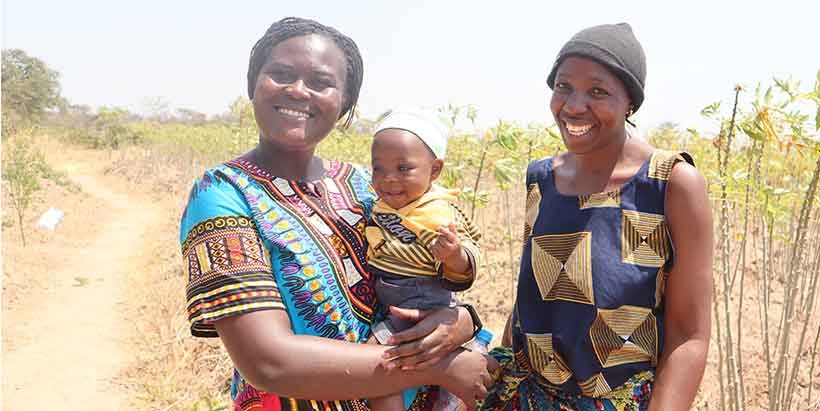
On 16 March, IITA -CGIAR hosted a seminar to assess the ongoing work of Postdoctoral Fellow in Gender Research Dr Millicent Liani, under the Muhogo Bora project and the contributions of Dr Melissa Ngliani under the title, “Advancing Gender Equality and Social Inclusion in IITA’s Cassava Seed System and Agricultural Innovation Scaling Initiatives: Achievements and future directions.
Dr Liani shared insight into the project, its progress and next steps in advancing gender equality and social inclusion within cassava seed systems in Tanzania.
Launched in 2021 and jointly led by Cornell University and IITA, the Muhogo Bora project focuses on developing a gender-responsive cassava seed system across the western and central zones of Tanzania. The initiative aims to empower women, youth, and marginalized farmers by improving their participation in cassava seed entrepreneurship.
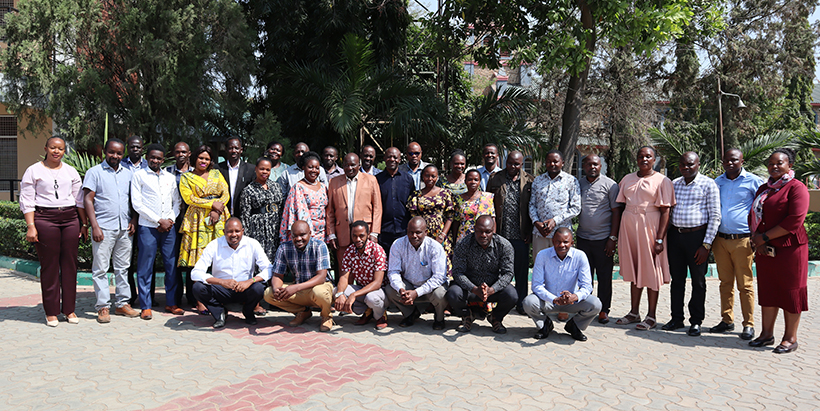
Presenting key findings, Dr Liani noted that the initial selection criteria for cassava seed entrepreneurs (CSEs), which required access to land, financial resources, and formal education, were largely gender blind. This limited the participation of women and youth, who often face structural barriers such as restricted land ownership, limited financial access, and social norms that affect decision-making.
In response, the project introduced a more inclusive approach, guided by the “Reach, Benefit, Empower, Transform” gender framework. Through validation workshops with extension agents and targeted community engagement, the selection model was refined to address these constraints.
These efforts have already yielded results. Participation among women and youth has increased significantly, with 433 CSEs now engaged in the project. The use of participatory action research has also helped identify key gender-based challenges and opportunities, enabling the design of more effective, locally relevant interventions.
The seminar further highlighted the transition into phase two of the Muhogo Bora project, which will expand to include additional crops such as high-iron beans and orange-fleshed sweet potato. This phase will deepen efforts to create enabling social and institutional environments, while strengthening market linkages and agricultural productivity.
Beyond Tanzania, the seminar evaluated the broader impact of inclusive agricultural approaches through scaling initiatives such as the Great Lakes Accelerated Innovation Delivery Hub, which has already reached over 1.5 million households across Rwanda, Burundi, and the Democratic Republic of Congo.
Looking ahead, Dr Ngliani’s work will continue to focus on designing and implementing gender-transformative interventions, strengthening partnerships, and supporting inclusive scaling strategies. Ongoing priorities also include the development of policy briefs, capacity building, and resource mobilization to sustain and expand impact.
The project is advancing inclusive agricultural systems that not only improve productivity but also ensure equitable opportunities for all.
Contributed by Ochuwa Favour Daramola
Contributed by
Recent stories