
IITA NEWS

Restoring forests, Reviving futures: Olokemeji hosts International Day of Forests 2026
March 26, 2026

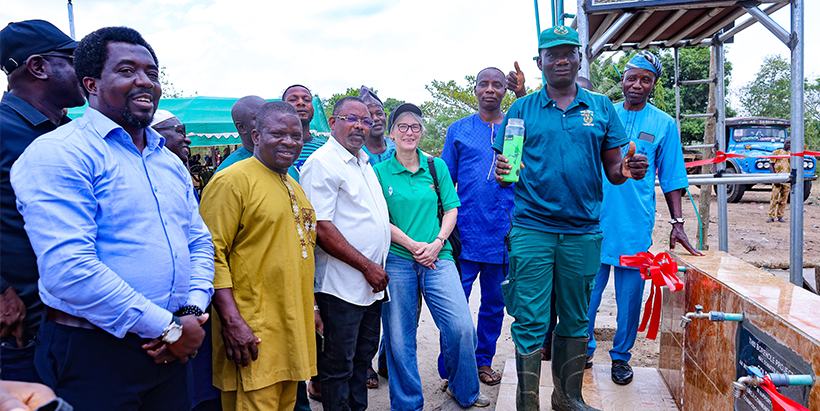
 Representative of the Ogun State Commissioner for Forestry, Engineer Taiwo Oludotun, commissioning the borehole donated by Nigerian Breweries for clean and potable water to the people of Olokemeji, alongside IITA DDG Corporate Services, Hilde Koper-Limbourg, the Baale of Olokemeji, Fashola Jamiu, and other dignitaries.
Representative of the Ogun State Commissioner for Forestry, Engineer Taiwo Oludotun, commissioning the borehole donated by Nigerian Breweries for clean and potable water to the people of Olokemeji, alongside IITA DDG Corporate Services, Hilde Koper-Limbourg, the Baale of Olokemeji, Fashola Jamiu, and other dignitaries.

The historic town of Olokemeji provided a fitting backdrop for the celebration of the International Day of Forests 2026, themed “Forests and economies.” The event, held on 24 March, underscored the transformative impact of the Olokemeji Reforestation Project, a collaborative initiative between IITA Forest Center, Nigerian Breweries Plc, and the Ogun State Ministry of Forestry. Beyond commemorating forests, the gathering also aligned with World Water Day, reinforcing the intrinsic link between forest ecosystems and water security.
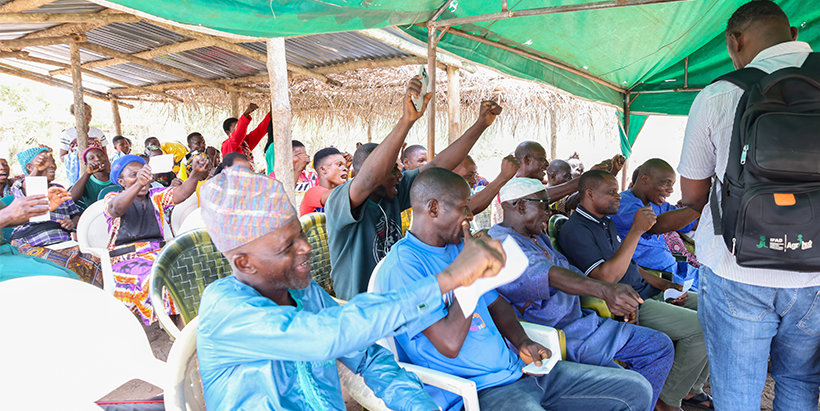
The people of Olokemeji hailing the Nigerian Breweries and IITA Forest Center for impacting their community positively during the International Day of Forests sensitization messages delivered by IITA Forest Center Field Supervisors, Olukunle Olasupo and Ademola Ajayi.

At the heart of the celebration is a bold restoration effort spanning over 600 hectares of degraded forest reserve. To date, 319 hectares have already been successfully reforested—equivalent to more than 455 football fields—using over 80 indigenous species, including economically valuable trees such as Parkia biglobosa (locust bean tree) and Treculia africana (ukwa). In total, more than 300,000 trees have been planted, signaling a significant stride toward ecological recovery and climate resilience.

Speaking at the event, the IITA Forest Center Field Supervisors, Olukunle Olasupo and Ademola Ajayi, emphasized the project’s far-reaching ecological and economic benefits. They highlighted how forest restoration strengthens watersheds, replenishes underground aquifers, and revives biodiversity, with encouraging signs already visible in the return of birdlife and other wildlife species. They also highlighted the project’s long-term potential to position Olokemeji as an ecotourism hub, attracting visitors seeking nature-based experiences.

IITA–CGIAR  Deputy Director General, Corporate Services, Hilde Koper-Limbourg, described the Olokemeji Reforestation Project as a model for sustainable development. She noted that the project goes beyond tree planting, focusing equally on people-centered outcomes. Over 100 community members have already benefited from alternative livelihood opportunities, including beekeeping and other income-generating activities linked to forest conservation. “The impact is enormous,” she stated, adding that the project is placing Olokemeji on the global map as a leading example of community-driven environmental restoration.

A major highlight of the event was the commissioning of a borehole donated by Nigerian Breweries Plc, which provided the community with access to clean, potable water. The donation reflects the company’s broader commitment to water stewardship, particularly within water-stressed basins that support its operations. According to Danjuma John-Ekele, Corporate Affairs Manager (West and Mid-West), representing Corporate Affairs Director Dr Uzodinma Odenigbo, the project embodies the synergy between people, place, and progress. He emphasized the company’s long-term commitment to environmental sustainability, including support for initiatives that secure ecosystems for future generations. He added that scientifically, the reforested trees hold the potential to replenish over 300 million liters of water into the aquifer.

In his remarks, the Baale of Olokemeji, Fashola Jamiu, expressed deep appreciation to IITA and Nigerian Breweries for their sustained investment in the community. He acknowledged the social and economic transformation the project has brought and pledged continued community support to ensure its success.

Similarly, the Commissioner for Forestry, Engineer Taiwo Oludotun, represented by a ministry official, commended all partners for their role in restoring life to Olokemeji—reviving not only forests, but also livelihoods and biodiversity. He called for continued community support to facilitate the increasing success of the reforestation project.

As the celebration concluded, stakeholders reaffirmed their shared vision: to nurture a thriving forest ecosystem that delivers lasting environmental and economic benefits. With strong community participation and sustained partnerships, the Olokemeji Reforestation Project stands as a powerful testament to how restoring forests can also restore hope, resilience, and prosperity for generations to come.


Contributed by Folake Oduntan

Related stories:

International Day of Forests: IITA Forest Center contributes to forest conservation in Nigeria

Highlighting benefits and challenges of Olokemeji Reforestation Project in Nigeria


Contributed by

Related news

No items found

Leave a Reply

Your email address will not be published. Required fields are marked *

Scroll to Top
Olaosebikan, Olamide

Olamide Deborah Nwanze is a Senior Research Associate specializing in gender mainstreaming research to inform participatory and inclusive breeding, variety development, and seed systems policies regarding root, tuber, and banana (RTB) crops in the International Institute of Tropical Agriculture Headquarters, Ibadan, Nigeria. She is a PhD candidate at the University of Ibadan and holds an MSc and B. Agric in Agricultural Extension and Rural Development. Olamide is a fellow of the African Women in Agricultural Research and Development – Gender Responsive Agricultural Systems Policy (AWARD-GRASP) and the Gender Responsive Researchers Equipped for Agricultural Transformation (GREAT). She seeks to apply her gender-mainstreaming learnings, gender-responsive research, and policy development, and review expertise to facilitate women, youth, children, and vulnerable social group’s access to and adoption of agricultural Innovations that guarantee food, nutrition, income, and livelihood security in Africa. Her current roles include mentoring research fellows, development of guides and training manuals, implementation and adaptation of gender frameworks and tools, value chain actors’ engagement as citizen science partners, policy review and redesign, data management, and analysis. Her current research explores mixed methods and participatory and interdisciplinary approaches to capture and highlight gender dynamics, needs, preferences, and challenges stakeholders face within the agricultural livelihood value chain to prioritize gender-inclusive strategies in breeding programs, policy design, and implementation.

At IITA, she contributes to the implementation of the CGIAR Accelerated Breeding Initiative and Genetic Innovation Programs; participatory and gender research within the NextGen CassavaHarvestPlusRTBFoods, and Tricot-ClimMob 1000Farms Projects; and gender knowledge communication via the G-LENS webinar series, video documentary, policy briefspublications, and blogs.


Recent publications

de Sousa, K., van Etten, J., Manners, R. Bello, A., Teeken, B., Olaosebikan, O., et al. 2024. The tricot approach: an agile framework for decentralized on-farm testing supported by citizen science. A retrospective. Agron. Sustain. Dev. 44, 8. https://doi.org/10.1007/s13593-023-00937-1

Madu, T., Onwuka, S., Nwafor, S., Onyemauwa, N., Ejechi, M., Ofoeze, M., Ukeje, B., Eluagu, C., Olaosebikan, O., Okoye, B., 2024. Gender-Inclusive Consumer Studies Improve Cassava Breeding in Nigeria in: Frontiers in Sociology, volume 9, number: 1224504, doi: 10.3389/fsoc.2024.1224504

Olaosebikan, O.; Bello, A.; Utoblo, O.; Okoye, B.; Olutegbe, N.; Garner, E.; Teeken, B.; Bryan, E.; Forsythe, L.; Cole, S.; Madu, T. 2023.  Stressors and Resilience within the Cassava Value Chain in Nigeria: Preferred Cassava Variety Traits and Response Strategies of Men and Women to Inform Breeding. Sustainability 15, 7837. https://doi.org/10.3390/su15107837

Okoye, B., Ofoeze, M., Ejechi, M., Onwuka, S., Nwafor, S., Onyemauwa, N., Ukeje, B., Eluagu, C., Obidiegwu, J.*, Olaosebikan, O., Madu, T.* 2023. Prioritizing preferred traits in the yam value chain in Nigeria: a gender situation analysis in: Frontiers in Sociology, volume 8, number: 1232626, pages 1 – 9, ISSN 2297-7775, 2023. https://www.frontiersin.org/articles/10.3389/fsoc.2023.1232626/full

Olaosebikan, O., Bello, A. A., de Sousa, K., Ndjouenkeu, R., Adesokan, M., Alamu, E. O., Agbona, A., van Etten, J., Kegah, F. N.*, Dufour, D., Bouniol, A., Teeken, B. 2023. Consumer acceptability of cassava gari-eba food products across cultural and environmental settings using the triadic comparison of technologies approach (tricot) in: Journal of the Science of Food and Agriculture,

Teeken, B., Olaosebikan, O., Bello, A. A., Madu, T.*, Cole, S. M. 2023. Qualitative assessment on the positionality and preferences of dyads in relation to cassava-related activities: working with tricot trial citizen scientists https://hdl.handle.net/10568/138326 Type: Manual

Bouniol, A., Ceballos, H., Bello, A. A., Teeken, B., Olaosebikan, O., Owoade, D., Agbona, A., Fotso Kuate, A., Madu, T.*, Okoye, B.*, Ofoeze, M.*, Nwafor, S.*, Onyemauwa, N.*, Adinsi, L.*, Forsythe, L., Dufour, D. 2023. Varietal impact on women’s labour, workload and related drudgery in processing root, tuber and banana crops: focus on cassava in sub-Saharan Africa in: Journal of the Science of Food and Agriculture, pages 1 – 25, ISSN 0022-5142,

Bello, A. A., Agbona, A., Olaosebikan, O., Edughaen, G., Dufour, D., Bouniol, A., Iluebbey, P., Ndjouenkeu, R.*, Rabbi, I. Y., Teeken, B. 2023. Genetic and environmental effects on processing productivity and food product yield: drudgery of women’s work in: Journal of the Science of Food and Agriculture, pages 1 – 32, ISSN 0022-5142, 5

Cavicchioli, M., Zimbiti, T., Teeken, B., Nwanze, D.O., Liani, M., Parkes, E. & Bello, A. 2023. IITA-Gender Responsive Breeding Training Report. Genetic Resources Center, IITA-HQ, Ibadan, 21-23 September, 2022. Ibadan, Nigeria: IITA, (34 p.).https://hdl.handle.net/10568/131368

Agbona, A. Peteti P., Teeken B., Olaosebikan O. Bello, A. A., Parkes, E., Rabbi, I. Y., Mueller, L., Egesi, C., Kulakow, P. 2022. Data Management in Multi-disciplinary African RTB Crop Breeding Programs. In: Williamson, H.F., Leonelli, S. (eds) Towards Responsible Plant Data Linkage: Data Challenges for Agricultural Research and Development. Springer, Cham. https://doi.org/10.1007/978-3-031-13276-6_5

Lora Forsythe, Pricilla Marimo, Sarah Mayanja, Olamide D. Olaosebikan, Esme Stuart, Bela Teeken, Benjamin Okoye, Tessy Madu, (2021). Cross-product Gender Analysis of RTBfoods Step 2 Gendered Food Mapping on RTB Products. Understanding the Drivers of Trait Preferences and the Development of Multi-user RTB Product Profiles, WP1. London, UK: RTBfoods Field Scientific Report, 30 p.

Teeken, B., Garner, E., Agbona, A., Balogun, I., Olaosebikan, O., Bello, A., Madu, T., Okoye, B., Egesi, C., Kulakow, P. and Tufan, H.A. 2021. Beyond “Women’s Traits”: Exploring How Gender, Social Difference, and Household Characteristics Influence Trait Preferences. Frontiers Sustainable Food Systems 5:740926. https://doi.org/10.3389/fsufs.2021.740926

Teeken, B., Agbona, A., Bello, A., Olaosebikan, O., Alamu, E., Adesokan, M., Awoyale, W., Madu, T., Okoye, B., Chijioke, U., Owoade, D., Okoro, M., Bouniol, A., Dufour, D., Hershey, C., Rabbi, I., Maziya‐Dixon, B., Egesi, C., Tufan, H. and Kulakow, P. (020. Understanding cassava varietal preferences through pairwise ranking of gari‐eba and fufu prepared by local farmer–processors. Int J Food Sci Technol. https://doi.org/10.1111/ijfs.14862

Bela Teeken, Olamide Olaosebikan, Ireti Balogun, Benjamin Okoye, Tessy Madu, Steven Cole, Abolore Bello, Elizabeth Parkes. (2020). Piloting the G+ customer and product profile tools for gender-responsive cassava breeding in Nigeria. Nigeria: International Institute of Tropical Agriculture (IITA). https://hdl.handle.net/20.500.11766/13000