
NEWS

Collaborative effort saves Ukerewe’s bananas from BBTV threat
August 14, 2026
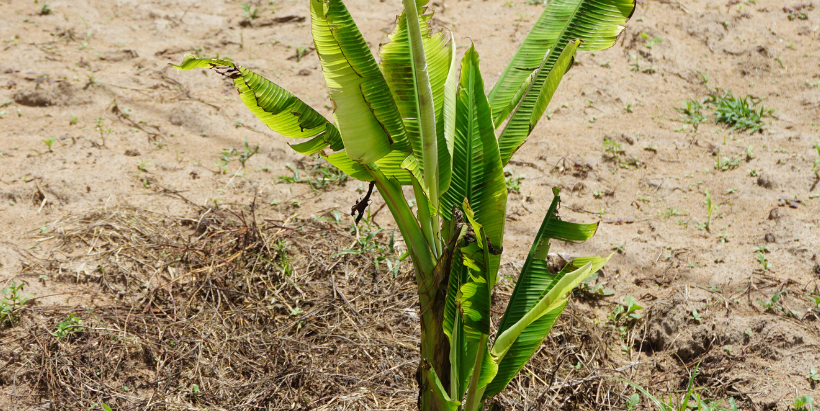
Lost Hope: A smallholder farmer's banana garden severely devastated by Banana Bunchy Top Disease (BBTD), resulting in the loss of most plants.
Lost Hope: A smallholder farmer’s banana garden severely devastated by Banana Bunchy Top Disease (BBTD), resulting in the loss of most plants.

Banana farmers on Ukerewe Island, Tanzania, faced disaster when banana bunchy top virus (BBTV) swept through, wiping out over 90% of the crop and threatening the island’s main food and income source. For this remote community, bananas are a staple food and a lifeline. As livelihoods were threatened, a partnership between scientists, local leaders, and farmers emerged to restore hope.

BBTV, which causes banana bunchy top disease (BBTD), spreads through infected planting material and the aphid vector. BBTV was first officially reported in Tanzania in 2020, and by 2023, the virus had spread to 12 regions, with Ukerewe District among the hardest hit. Most farmers were unaware of the disease and unknowingly used infected suckers, fueling the outbreak. As infection rates soared, harvests plummeted, leaving many households food insecure.

In response, IITACGIAR, Tanzania Plant Health and Pesticides Authority (TPHPA), and Tanzania Agricultural Research Institute (TARI) collaborated with local authorities. Their first move was to remove infected plants and give farmers access to healthy, virus-free banana plantlets. In November 2024, a macropropagation unit was established, with the capacity to produce 6,000 disease-free banana planting materials. The facility has so far produced 2,950 disease-free plantlets across five banana varieties: Inshakara, Nyoya, TARIBAN 2, TARIBAN 4, and FHIA 17. Plantlets were distributed to farmers, with each recipient receiving between 10 and 100 plants depending on farm size.

Within months, positive results are becoming visible. Fields replanted with clean plantlets have begun to recover, with healthy banana plants returning to the landscape. Although a few new infections occurred, mostly due to aphids, most farms remained disease-free thanks to improved field hygiene and regular training for farmers.

“We are seeing real benefits of using disease-free banana plantlets,” said Dr George Mahuku, IITA Plant Pathologist. “Working together and using clean planting material is what is making the difference.”
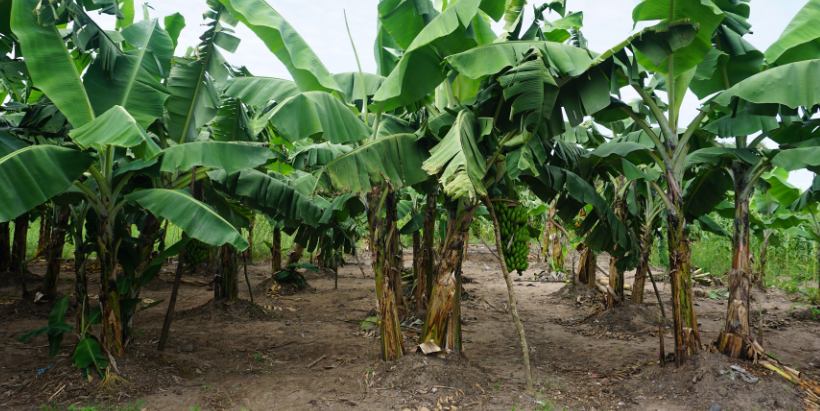
Restored Hope: A smallholder farmer in Ukerewe successfully restored their banana garden using certified disease-free planting material produced through the locally established macro-propagation unit.

Farmers like Sospeter Mgaya expressed renewed hope, noting bigger bunches and healthier crops than he thought possible after the outbreak. Mgaya also called on local authorities to enact bylaws supporting the removal of infected plants and to allocate resources for herbicides, ensuring the gains are sustained.

The control strategy focuses on eradicating infected mats (clumps of shoots from a banana plant’s base) by uprooting them or injecting herbicide, then replanting with virus-free material. This approach, coupled with continuous farmer education, has been key to recovery. The awareness campaign, led by IITA and partners, also emphasized the importance of roguing infected plants and eliminating volunteer plants that can harbor the virus.

“BBTD spread in Ukerewe is a classic case of disease expansion through the movement of infected planting materials. Building farmer awareness of BBTD is a critical first step toward managing the disease and restoring banana production,” said Dr Lava Kumar, IITA Virologist.

Despite progress, persistent challenges remain: the ongoing risk of reintroduction of infected suckers from neighboring areas, a limited supply of clean planting material, and inconsistent application of recommended management practices. Hamady Lyimo of TPHPA stressed the need for widespread coordinated action. “Sustained and widespread adoption across the community is essential for successful disease eradication,” he said.

District Executive Director Vincent Augustine Mbua reaffirmed the commitment of local government and stakeholders to rebuild a resilient banana sector. The mission emphasizes maintaining momentum by strengthening disease surveillance, expanding clean seed distribution, and continuing farmer education. Ukerewe’s experience demonstrates that with collaboration and determination, even the most devastating plant diseases can be overcome.


Scroll to Top
Olaosebikan, Olamide

Olamide Deborah Nwanze is a Senior Research Associate specializing in gender mainstreaming research to inform participatory and inclusive breeding, variety development, and seed systems policies regarding root, tuber, and banana (RTB) crops in the International Institute of Tropical Agriculture Headquarters, Ibadan, Nigeria. She is a PhD candidate at the University of Ibadan and holds an MSc and B. Agric in Agricultural Extension and Rural Development. Olamide is a fellow of the African Women in Agricultural Research and Development – Gender Responsive Agricultural Systems Policy (AWARD-GRASP) and the Gender Responsive Researchers Equipped for Agricultural Transformation (GREAT). She seeks to apply her gender-mainstreaming learnings, gender-responsive research, and policy development, and review expertise to facilitate women, youth, children, and vulnerable social group’s access to and adoption of agricultural Innovations that guarantee food, nutrition, income, and livelihood security in Africa. Her current roles include mentoring research fellows, development of guides and training manuals, implementation and adaptation of gender frameworks and tools, value chain actors’ engagement as citizen science partners, policy review and redesign, data management, and analysis. Her current research explores mixed methods and participatory and interdisciplinary approaches to capture and highlight gender dynamics, needs, preferences, and challenges stakeholders face within the agricultural livelihood value chain to prioritize gender-inclusive strategies in breeding programs, policy design, and implementation.

At IITA, she contributes to the implementation of the CGIAR Accelerated Breeding Initiative and Genetic Innovation Programs; participatory and gender research within the NextGen CassavaHarvestPlusRTBFoods, and Tricot-ClimMob 1000Farms Projects; and gender knowledge communication via the G-LENS webinar series, video documentary, policy briefspublications, and blogs.


Recent publications

de Sousa, K., van Etten, J., Manners, R. Bello, A., Teeken, B., Olaosebikan, O., et al. 2024. The tricot approach: an agile framework for decentralized on-farm testing supported by citizen science. A retrospective. Agron. Sustain. Dev. 44, 8. https://doi.org/10.1007/s13593-023-00937-1

Madu, T., Onwuka, S., Nwafor, S., Onyemauwa, N., Ejechi, M., Ofoeze, M., Ukeje, B., Eluagu, C., Olaosebikan, O., Okoye, B., 2024. Gender-Inclusive Consumer Studies Improve Cassava Breeding in Nigeria in: Frontiers in Sociology, volume 9, number: 1224504, doi: 10.3389/fsoc.2024.1224504

Olaosebikan, O.; Bello, A.; Utoblo, O.; Okoye, B.; Olutegbe, N.; Garner, E.; Teeken, B.; Bryan, E.; Forsythe, L.; Cole, S.; Madu, T. 2023.  Stressors and Resilience within the Cassava Value Chain in Nigeria: Preferred Cassava Variety Traits and Response Strategies of Men and Women to Inform Breeding. Sustainability 15, 7837. https://doi.org/10.3390/su15107837

Okoye, B., Ofoeze, M., Ejechi, M., Onwuka, S., Nwafor, S., Onyemauwa, N., Ukeje, B., Eluagu, C., Obidiegwu, J.*, Olaosebikan, O., Madu, T.* 2023. Prioritizing preferred traits in the yam value chain in Nigeria: a gender situation analysis in: Frontiers in Sociology, volume 8, number: 1232626, pages 1 – 9, ISSN 2297-7775, 2023. https://www.frontiersin.org/articles/10.3389/fsoc.2023.1232626/full

Olaosebikan, O., Bello, A. A., de Sousa, K., Ndjouenkeu, R., Adesokan, M., Alamu, E. O., Agbona, A., van Etten, J., Kegah, F. N.*, Dufour, D., Bouniol, A., Teeken, B. 2023. Consumer acceptability of cassava gari-eba food products across cultural and environmental settings using the triadic comparison of technologies approach (tricot) in: Journal of the Science of Food and Agriculture,

Teeken, B., Olaosebikan, O., Bello, A. A., Madu, T.*, Cole, S. M. 2023. Qualitative assessment on the positionality and preferences of dyads in relation to cassava-related activities: working with tricot trial citizen scientists https://hdl.handle.net/10568/138326 Type: Manual

Bouniol, A., Ceballos, H., Bello, A. A., Teeken, B., Olaosebikan, O., Owoade, D., Agbona, A., Fotso Kuate, A., Madu, T.*, Okoye, B.*, Ofoeze, M.*, Nwafor, S.*, Onyemauwa, N.*, Adinsi, L.*, Forsythe, L., Dufour, D. 2023. Varietal impact on women’s labour, workload and related drudgery in processing root, tuber and banana crops: focus on cassava in sub-Saharan Africa in: Journal of the Science of Food and Agriculture, pages 1 – 25, ISSN 0022-5142,

Bello, A. A., Agbona, A., Olaosebikan, O., Edughaen, G., Dufour, D., Bouniol, A., Iluebbey, P., Ndjouenkeu, R.*, Rabbi, I. Y., Teeken, B. 2023. Genetic and environmental effects on processing productivity and food product yield: drudgery of women’s work in: Journal of the Science of Food and Agriculture, pages 1 – 32, ISSN 0022-5142, 5

Cavicchioli, M., Zimbiti, T., Teeken, B., Nwanze, D.O., Liani, M., Parkes, E. & Bello, A. 2023. IITA-Gender Responsive Breeding Training Report. Genetic Resources Center, IITA-HQ, Ibadan, 21-23 September, 2022. Ibadan, Nigeria: IITA, (34 p.).https://hdl.handle.net/10568/131368

Agbona, A. Peteti P., Teeken B., Olaosebikan O. Bello, A. A., Parkes, E., Rabbi, I. Y., Mueller, L., Egesi, C., Kulakow, P. 2022. Data Management in Multi-disciplinary African RTB Crop Breeding Programs. In: Williamson, H.F., Leonelli, S. (eds) Towards Responsible Plant Data Linkage: Data Challenges for Agricultural Research and Development. Springer, Cham. https://doi.org/10.1007/978-3-031-13276-6_5

Lora Forsythe, Pricilla Marimo, Sarah Mayanja, Olamide D. Olaosebikan, Esme Stuart, Bela Teeken, Benjamin Okoye, Tessy Madu, (2021). Cross-product Gender Analysis of RTBfoods Step 2 Gendered Food Mapping on RTB Products. Understanding the Drivers of Trait Preferences and the Development of Multi-user RTB Product Profiles, WP1. London, UK: RTBfoods Field Scientific Report, 30 p.

Teeken, B., Garner, E., Agbona, A., Balogun, I., Olaosebikan, O., Bello, A., Madu, T., Okoye, B., Egesi, C., Kulakow, P. and Tufan, H.A. 2021. Beyond “Women’s Traits”: Exploring How Gender, Social Difference, and Household Characteristics Influence Trait Preferences. Frontiers Sustainable Food Systems 5:740926. https://doi.org/10.3389/fsufs.2021.740926

Teeken, B., Agbona, A., Bello, A., Olaosebikan, O., Alamu, E., Adesokan, M., Awoyale, W., Madu, T., Okoye, B., Chijioke, U., Owoade, D., Okoro, M., Bouniol, A., Dufour, D., Hershey, C., Rabbi, I., Maziya‐Dixon, B., Egesi, C., Tufan, H. and Kulakow, P. (020. Understanding cassava varietal preferences through pairwise ranking of gari‐eba and fufu prepared by local farmer–processors. Int J Food Sci Technol. https://doi.org/10.1111/ijfs.14862

Bela Teeken, Olamide Olaosebikan, Ireti Balogun, Benjamin Okoye, Tessy Madu, Steven Cole, Abolore Bello, Elizabeth Parkes. (2020). Piloting the G+ customer and product profile tools for gender-responsive cassava breeding in Nigeria. Nigeria: International Institute of Tropical Agriculture (IITA). https://hdl.handle.net/20.500.11766/13000