
NEWS

VACS taro breeders equipped to accelerate genetic gains and variety delivery
November 27, 2026
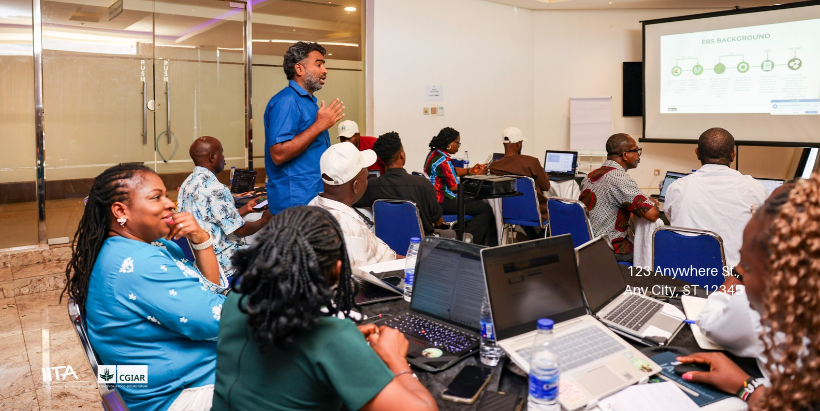
 Vish Banda addressing participants
Vish Banda addressing participants

Taro breeders and research partners under the VACS Breeding Project have received practical training in the Enterprise Breeding System (EBS), a key CGIAR breeding data management platform, to strengthen research data management, track genetic gains, and accelerate the development and delivery of improved taro varieties.

The training, held in Abuja, Nigeria, on 12-13 November, provided participants with hands-on experience in navigating the Core Breeding Platform, managing breeding data, creating experiments, and using digital tools to support the different stages of crop improvement.

In his introductory remarks, Vish Banda, IITA Product Manager for Crop Variety Development, highlighted the growing importance of EBS within the CGIAR breeding platform, describing its adoption as an important direction for breeding programs. He encouraged participants to make the most of the training opportunity, emphasizing the need for the team to harness the platform and strengthen its capacity to demonstrate research progress and results. He also noted the platform’s relevance to the broader funding and investment framework, including the need to demonstrate breeding progress in line with grant requirements and approvals.

Facilitated by Peteti Prasad, IITA Breeding Database Programmer and Manager, the training focused on strengthening participants’ capacity in breeding data management, data flow, data capture, storage, management, sharing, and utilization. Preceding sessions also covered Bioflow and familiarization with the Seed Tracker App, facilitated by Ekanem Ukoabasi and Prince Ajayi, respectively, providing participants with an understanding of how these interconnected tools support breeding data management, research production, and seed delivery.
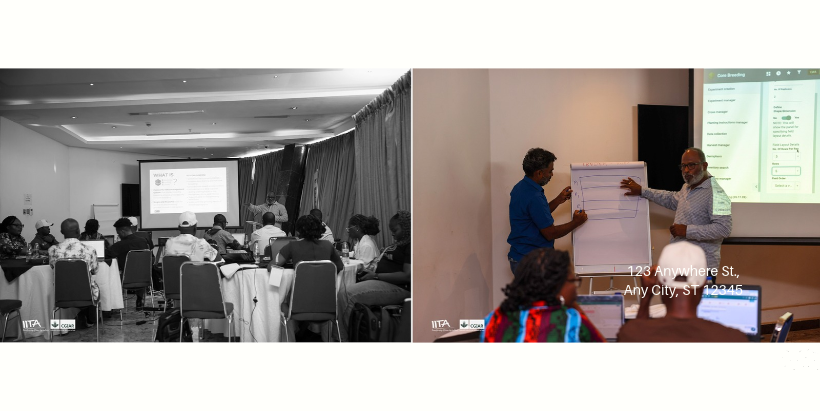
Taro breeders and research partners participating in the EBS training in Abuja, with facilitator Peteti Prasad leading a session with inputs from Vish Banda, alongside.

Prasad emphasized that agricultural research depends heavily on reliable data to develop crop varieties with improved yields and disease resistance. However, breeding data is expensive and time-consuming to generate, making its effective management essential to sustaining research investments and delivering results. He stressed four fundamental requirements for research data: it must be properly captured, stored, shared, and trusted.

Through EBS, breeding programs can organize and manage their data, monitor progress, and make information available for assessment across the CGIAR breeding network. With more than 800,000 accessions represented within the broader breeding data ecosystem, effective data management and sharing are increasingly important for research collaboration and decision-making.

Participants explored the Core Breeding Platform and its navigation features, including Breeding Analytics, the EBS Data Browser, germplasm and trait searches, and the List Manager. They also received practical instruction in experimental design, covering different experiment categories such as crossing blocks, crossing parent nurseries, breeding trials, and observations.

Attention was given to breeding trials and observations, which are especially relevant to taro breeding. Participants learned how to select experiment types, review metadata, add entries, and apply the appropriate planting, trait, management, and harvest protocols. They also explored how experimental naming conventions are generated according to the unique codes used by individual breeding programs.
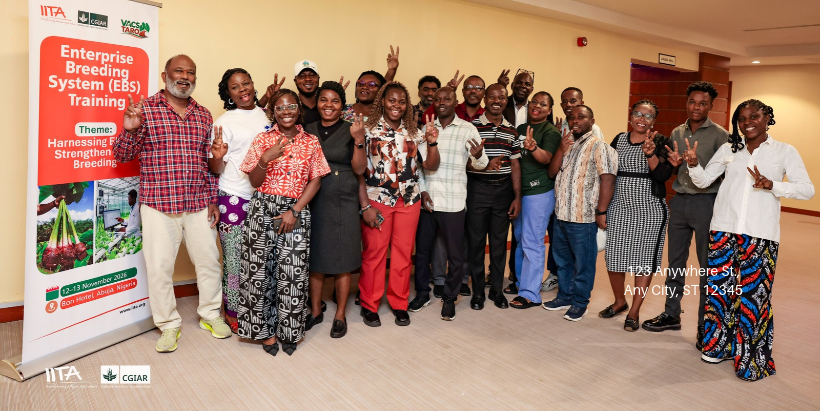
Participants and facilitators following the EBS training, ready to apply their newly acquired knowledge and skills to strengthen data management and accelerate progress in taro breeding.

The sessions demonstrated how experiment creation can be reviewed at different stages before final submission and how completed trials are subsequently accessed through the Experiment Manager. Participants practiced these processes through demonstrations and hands-on exercises.

Another important component was the introduction to Bioflow, which enables researchers to work with phenotypic and genotypic data from different sources, including existing crop databases. The training highlighted how data uploaded and managed through EBS can support information sharing with Bioflow and the Breeding Portal, providing a more transparent system for assessing breeding results and using them to inform investment and funding decisions.

Beyond the technical sessions, Dr Lava Kumar, IITA Head of the Germplasm Health Unit and the Virology and Molecular Diagnostics Unit, provided participants with a broader perspective on taro’s global importance, diversity, and commercial potential. He highlighted India’s rich taro diversity and the crop’s widespread cultivation across Southeast Asia and other parts of the world, including temperate regions. Discussing taro production in Africa, he noted that Nigeria, Ethiopia, and China are among the countries where more organized field cultivation takes place, alongside the widespread backyard production found in several other countries.

He also drew attention to the different taro types, including Dasheen and Edo, and the crop’s nutritional potential. With its edible leaves and roots and its gluten-free characteristics, taro has considerable potential to be positioned as a nutritious superfood and a commercially important tuber crop. However, despite its potential, taro remains underrepresented in mainstream agricultural markets. Dr Kumar described its current market positioning as somewhat orphaned: traditional, widely available, yet lacking a clearly established place in mainstream commercial food systems. He encouraged stakeholders to explore opportunities to reposition taro as a staple crop, with stronger market visibility and consumer demand, particularly in major urban markets like Abuja.

The discussions reinforced the importance of connecting breeding research with effective seed production and market delivery. While EBS supports research and breeding production trials, the Seed Tracker Pro platform provides tools to support seed production trials and improve the tracking and availability of planting materials.

The training also highlighted the importance of building a stronger evidence base for future investment in taro. Participants were encouraged to contribute breeding data and research results from different regions to strengthen the case for continued investment and support for the crop, including the longer-term development ambitions. By strengthening participants’ capacity to manage and share reliable breeding data, the training represents an important step towards more coordinated taro research, measurable genetic gains, and faster delivery of improved varieties.

Together, these systems offer opportunities to strengthen the pathway from research breakthroughs and improved varieties to accessible seeds and wider adoption by farmers and consumers. Ultimately, the ambition goes beyond introducing digital tools. It is about ensuring that valuable research data translates into improved varieties, accessible planting materials, stronger commercial opportunities, and the wider recognition of taro as a nutritious crop with significant potential for food security and livelihoods.

Related story: 

https://iita.org/news-item/empowering-breeders-iita-hosts-hands-on-hybridization-training-on-bambara-groundnut/https://iita.org/news-item/enterprise-breeding-system-training-strengthens-breeding-innovation/


Contributed by

Folake Oduntan

Scroll to Top
Olaosebikan, Olamide

Olamide Deborah Nwanze is a Senior Research Associate specializing in gender mainstreaming research to inform participatory and inclusive breeding, variety development, and seed systems policies regarding root, tuber, and banana (RTB) crops in the International Institute of Tropical Agriculture Headquarters, Ibadan, Nigeria. She is a PhD candidate at the University of Ibadan and holds an MSc and B. Agric in Agricultural Extension and Rural Development. Olamide is a fellow of the African Women in Agricultural Research and Development – Gender Responsive Agricultural Systems Policy (AWARD-GRASP) and the Gender Responsive Researchers Equipped for Agricultural Transformation (GREAT). She seeks to apply her gender-mainstreaming learnings, gender-responsive research, and policy development, and review expertise to facilitate women, youth, children, and vulnerable social group’s access to and adoption of agricultural Innovations that guarantee food, nutrition, income, and livelihood security in Africa. Her current roles include mentoring research fellows, development of guides and training manuals, implementation and adaptation of gender frameworks and tools, value chain actors’ engagement as citizen science partners, policy review and redesign, data management, and analysis. Her current research explores mixed methods and participatory and interdisciplinary approaches to capture and highlight gender dynamics, needs, preferences, and challenges stakeholders face within the agricultural livelihood value chain to prioritize gender-inclusive strategies in breeding programs, policy design, and implementation.

At IITA, she contributes to the implementation of the CGIAR Accelerated Breeding Initiative and Genetic Innovation Programs; participatory and gender research within the NextGen Cassava, HarvestPlus, RTBFoods, and Tricot-ClimMob 1000Farms Projects; and gender knowledge communication via the G-LENS webinar series, video documentary, policy briefs, publications, and blogs.


Recent publications

de Sousa, K., van Etten, J., Manners, R. Bello, A., Teeken, B., Olaosebikan, O., et al. 2024. The tricot approach: an agile framework for decentralized on-farm testing supported by citizen science. A retrospective. Agron. Sustain. Dev. 44, 8. https://doi.org/10.1007/s13593-023-00937-1

Madu, T., Onwuka, S., Nwafor, S., Onyemauwa, N., Ejechi, M., Ofoeze, M., Ukeje, B., Eluagu, C., Olaosebikan, O., Okoye, B., 2024. Gender-Inclusive Consumer Studies Improve Cassava Breeding in Nigeria in: Frontiers in Sociology, volume 9, number: 1224504, doi: 10.3389/fsoc.2024.1224504

Olaosebikan, O.; Bello, A.; Utoblo, O.; Okoye, B.; Olutegbe, N.; Garner, E.; Teeken, B.; Bryan, E.; Forsythe, L.; Cole, S.; Madu, T. 2023.  Stressors and Resilience within the Cassava Value Chain in Nigeria: Preferred Cassava Variety Traits and Response Strategies of Men and Women to Inform Breeding. Sustainability 15, 7837. https://doi.org/10.3390/su15107837

Okoye, B., Ofoeze, M., Ejechi, M., Onwuka, S., Nwafor, S., Onyemauwa, N., Ukeje, B., Eluagu, C., Obidiegwu, J.*, Olaosebikan, O., Madu, T.* 2023. Prioritizing preferred traits in the yam value chain in Nigeria: a gender situation analysis in: Frontiers in Sociology, volume 8, number: 1232626, pages 1 – 9, ISSN 2297-7775, 2023. https://www.frontiersin.org/articles/10.3389/fsoc.2023.1232626/full

Olaosebikan, O., Bello, A. A., de Sousa, K., Ndjouenkeu, R., Adesokan, M., Alamu, E. O., Agbona, A., van Etten, J., Kegah, F. N.*, Dufour, D., Bouniol, A., Teeken, B. 2023. Consumer acceptability of cassava gari-eba food products across cultural and environmental settings using the triadic comparison of technologies approach (tricot) in: Journal of the Science of Food and Agriculture,

Teeken, B., Olaosebikan, O., Bello, A. A., Madu, T.*, Cole, S. M. 2023. Qualitative assessment on the positionality and preferences of dyads in relation to cassava-related activities: working with tricot trial citizen scientists https://hdl.handle.net/10568/138326 Type: Manual

Bouniol, A., Ceballos, H., Bello, A. A., Teeken, B., Olaosebikan, O., Owoade, D., Agbona, A., Fotso Kuate, A., Madu, T.*, Okoye, B.*, Ofoeze, M.*, Nwafor, S.*, Onyemauwa, N.*, Adinsi, L.*, Forsythe, L., Dufour, D. 2023. Varietal impact on women’s labour, workload and related drudgery in processing root, tuber and banana crops: focus on cassava in sub-Saharan Africa in: Journal of the Science of Food and Agriculture, pages 1 – 25, ISSN 0022-5142,

Bello, A. A., Agbona, A., Olaosebikan, O., Edughaen, G., Dufour, D., Bouniol, A., Iluebbey, P., Ndjouenkeu, R.*, Rabbi, I. Y., Teeken, B. 2023. Genetic and environmental effects on processing productivity and food product yield: drudgery of women’s work in: Journal of the Science of Food and Agriculture, pages 1 – 32, ISSN 0022-5142, 5

Cavicchioli, M., Zimbiti, T., Teeken, B., Nwanze, D.O., Liani, M., Parkes, E. & Bello, A. 2023. IITA-Gender Responsive Breeding Training Report. Genetic Resources Center, IITA-HQ, Ibadan, 21-23 September, 2022. Ibadan, Nigeria: IITA, (34 p.).https://hdl.handle.net/10568/131368

Agbona, A. Peteti P., Teeken B., Olaosebikan O. Bello, A. A., Parkes, E., Rabbi, I. Y., Mueller, L., Egesi, C., Kulakow, P. 2022. Data Management in Multi-disciplinary African RTB Crop Breeding Programs. In: Williamson, H.F., Leonelli, S. (eds) Towards Responsible Plant Data Linkage: Data Challenges for Agricultural Research and Development. Springer, Cham. https://doi.org/10.1007/978-3-031-13276-6_5

Lora Forsythe, Pricilla Marimo, Sarah Mayanja, Olamide D. Olaosebikan, Esme Stuart, Bela Teeken, Benjamin Okoye, Tessy Madu, (2021). Cross-product Gender Analysis of RTBfoods Step 2 Gendered Food Mapping on RTB Products. Understanding the Drivers of Trait Preferences and the Development of Multi-user RTB Product Profiles, WP1. London, UK: RTBfoods Field Scientific Report, 30 p.

Teeken, B., Garner, E., Agbona, A., Balogun, I., Olaosebikan, O., Bello, A., Madu, T., Okoye, B., Egesi, C., Kulakow, P. and Tufan, H.A. 2021. Beyond “Women’s Traits”: Exploring How Gender, Social Difference, and Household Characteristics Influence Trait Preferences. Frontiers Sustainable Food Systems 5:740926. https://doi.org/10.3389/fsufs.2021.740926

Teeken, B., Agbona, A., Bello, A., Olaosebikan, O., Alamu, E., Adesokan, M., Awoyale, W., Madu, T., Okoye, B., Chijioke, U., Owoade, D., Okoro, M., Bouniol, A., Dufour, D., Hershey, C., Rabbi, I., Maziya‐Dixon, B., Egesi, C., Tufan, H. and Kulakow, P. (020. Understanding cassava varietal preferences through pairwise ranking of gari‐eba and fufu prepared by local farmer–processors. Int J Food Sci Technol. https://doi.org/10.1111/ijfs.14862

Bela Teeken, Olamide Olaosebikan, Ireti Balogun, Benjamin Okoye, Tessy Madu, Steven Cole, Abolore Bello, Elizabeth Parkes. (2020). Piloting the G+ customer and product profile tools for gender-responsive cassava breeding in Nigeria. Nigeria: International Institute of Tropical Agriculture (IITA). https://hdl.handle.net/20.500.11766/13000