
A breakthrough in agricultural innovation is reshaping food security, nutrition, and income generation in The Gambia.
The Pro-Vitamin A (PVA) enhanced maize variety, PVA Synthetic 13 (PVA Syn 13), developed by scientists at IITA–CGIAR, is gaining widespread recognition for its high-yielding performance and remarkable health benefits.
The Gambia is already reporting major improvements in nutrition and increased agricultural productivity following the widespread adoption of the variety developed originally to combat vitamin A deficiency. Scientists have since discovered that PVA Syn 13 is also drought-tolerant and resilient against Striga weed, allowing it to thrive in harsh and low-input conditions common among smallholder farmers in sub-Saharan Africa.
According to Dr Silvestro Meseka, IITA Maize Breeder, under the IITA Maize Improvement Program, PVA Syn 13 has already been released in several African countries, including Benin, the Democratic Republic of Congo, Ethiopia, Ghana, Mali, Nigeria, and Togo. However, its adoption and utilization in The Gambia have been particularly impactful for nutrition, health and improved livelihoods.
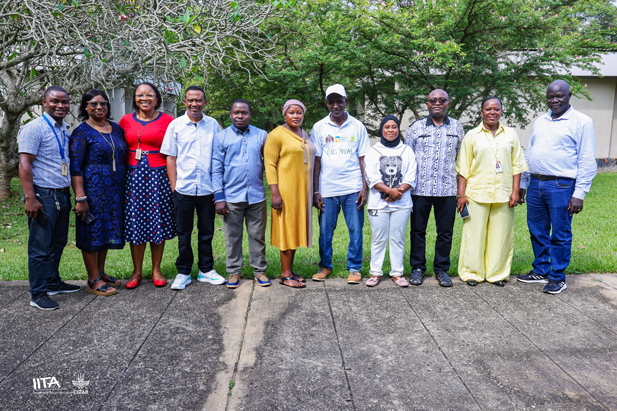
“It is addressing nutritional and health gaps. It is very important to have such a variety in a country like The Gambia,” Dr Meseka said.
The variety was introduced to Gambia in 2020 through the National Agricultural Research Institute (NARI), leading to on-station and multi-location trials that revealed PVA Syn 13’s superior performance over existing local varieties.
As a result, the Ministry of Agriculture supported its rapid advancement to foundation and certified seed production for wider cultivation in the country.
Modou Sabally, a seed scientist with the National Seed Secretariat in the Gambia, explained that strong government interest in PVA Syn13 prompted collaboration with development projects to scale production and ensure quality.
“Now lactating mothers and pregnant women are supported through the consumption of this variety instead of vitamin A tablets, which the government used to spend millions on,” Sabally noted.
“We make sure seed quality is maintained until it reaches farmers,” he added.
Today, PVA Syn13 is widely used in school feeding programs, hospital nutrition initiatives, and household food products such as porridge and flour. This value addition has boosted income for both farmers and processors, while improving health outcomes nationwide.
Extension workers say farmers have welcomed the variety enthusiastically due to higher yields and reliable market demand.
“Farmers now prefer PVA Syn13 because it improves their income and family nutrition,” said Isatou Silah, an extension officer with the Department of Agriculture. “Children under five are benefiting directly from foods produced with PVA Syn13 maize variety.”
Government policy now prioritizes PVA Syn13 in national maize promotion efforts, supported by media sensitization campaigns and community caravans aimed at educating farmers on its benefits.
With an estimated 80 to 90 percent of maize farmers in The Gambia now growing PVA Syn13, the variety is playing a crucial role in reducing vitamin A deficiency among children under five years old, as well as pregnant and lactating mothers, thereby enhancing food and nutrition security and also strengthening the country’s maize seed system.
IITA-CGIAR confirms that additional improved maize varieties will be shared with scientists in the Gambia for testing and future release, ensuring continued progress in agricultural innovation and public health.