Malawi
COUNTRY OVERVIEW
The International Institute of Tropical Agriculture (IITA) established its Burundi station in 1994 and is hosted by the Institut des Sciences Agronomiques du Burundi (ISABU) in Bujumbura. A revised country agreement with the Government of Burundi strengthens its operational presence and partnership framework.
Read more
The station hosts Alliance of Bioversity International and CIAT, the International Livestock Research Institute (ILRI), and the International Potato Center (CIP). It operates with a team of 18 staff, comprising Internationally and Nationally Recruited Staff.
IITA Burundi implements project-based interventions using Research-for-Development and Partnerships-for-Development approaches, with activities largely under P4D due to limited research infrastructure. Despite these constraints, the station plays a key technical role in strengthening the value chains for maize, cassava, and bananas while supporting national research capacity.
Location
Lilongwe
Lilongwe, Malawi
International Institute of Tropical Agriculture (IITA)
P.O Box 30258
Lilongwe, Malawi
IITA-Malawi@cgiar.org
Contacts
Sika Gbegbelegbe
g.sika@cgiar.org
Doreen Munthali
d.munthali@cgiar.org
FOCUS AREAS
Crop Improvement and Biotechnology
Advancing crop productivity through the development and use of improved genetic diversity in cassava and legumes. Efforts focus on increasing yields, enhancing nutritional quality through biofortification, and improving resistance to biotic and abiotic stresses, while strengthening seed systems and product quality for both consumers and industry.
Plant Protection and Plant Health Management
Promoting crop resilience through improved pest and disease management, climate-smart production technologies, and suitability assessments across agroecological zones. The program also strengthens seed health systems to improve access to clean and quality planting materials.
Natural Resource Management
Enhancing sustainable farming systems through integrated soil fertility management, efficient use of beneficial soil microbes, and improved cropping systems such as legume-cereal intercropping. These efforts support sustainable land use, resource conservation, and long-term productivity.
Nutrition and Food Science and Technology
Improving food and nutrition security by addressing aflatoxin contamination, promoting nutrient-rich crop varieties, and supporting dietary diversification. The program also advances food processing innovations, nutrition research, and the scaling of nutrition-sensitive interventions.
Socio-Economics and Agribusiness
Strengthening agricultural systems through impact assessments, data-driven planning, and monitoring, evaluation, and learning frameworks. These efforts support informed decision-making, technology adoption, and the development of sustainable agribusiness models.
Featured Projects
- Location: Benin, Cameroon, Democratic Republic of Congo, Gambia, Kenya, Malawi
- Location: Ethiopia, Malawi, Tanzania, Zambia
- Location: Benin, Ethiopia, Ghana, Kenya, Malawi, Mali, Nigeria, Tanzania, Uganda, Zambia
INNOVATION
Improved Crop Varieties and Technologies
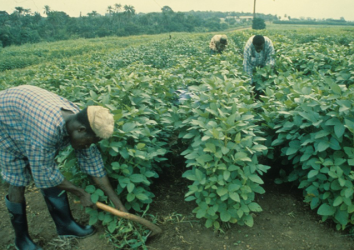
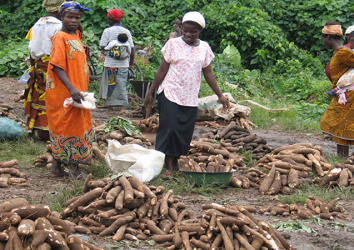
Improved cowpea, soybean, and cassava innovations have been developed and adapted to Malawi’s diverse agro-ecological zones. These include high-yielding, climate-resilient, and disease-tolerant varieties that enhance productivity, improve nutrition, and support adoption across farming systems.
Digital Farming Solutions
Digital tools and platforms have been introduced to provide farmers and extension services with timely agricultural information. These solutions support better decision-making on crop management, climate risks, and market access while improving the reach and efficiency of advisory services.
Cassava Seed Multiplication
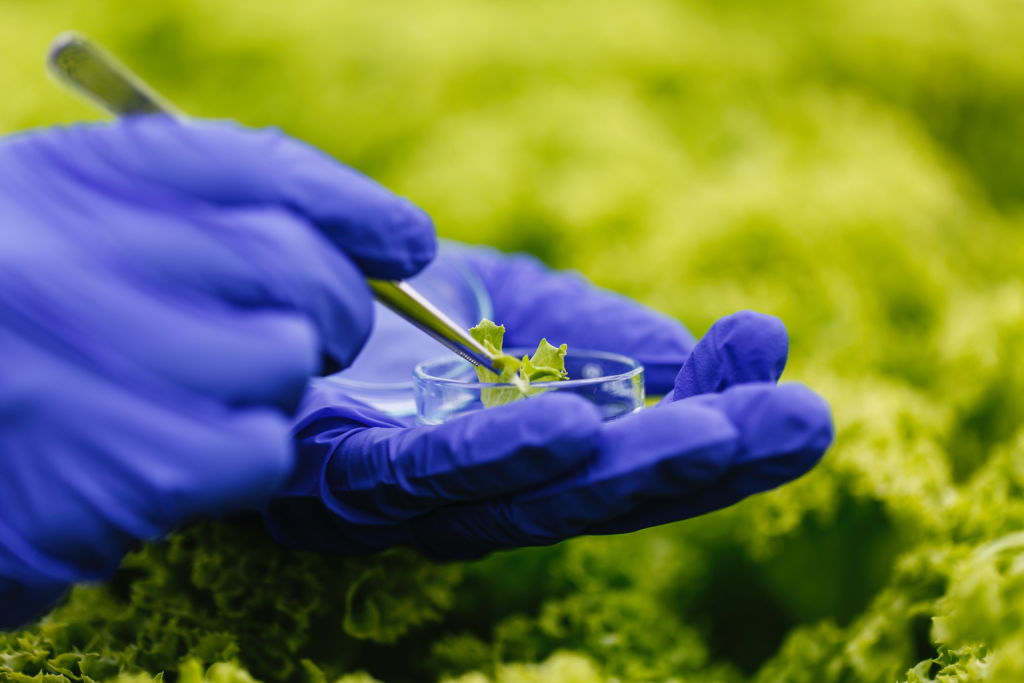
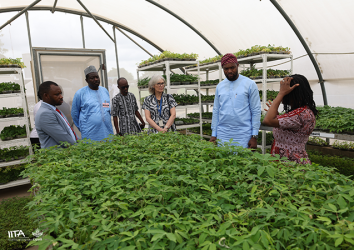
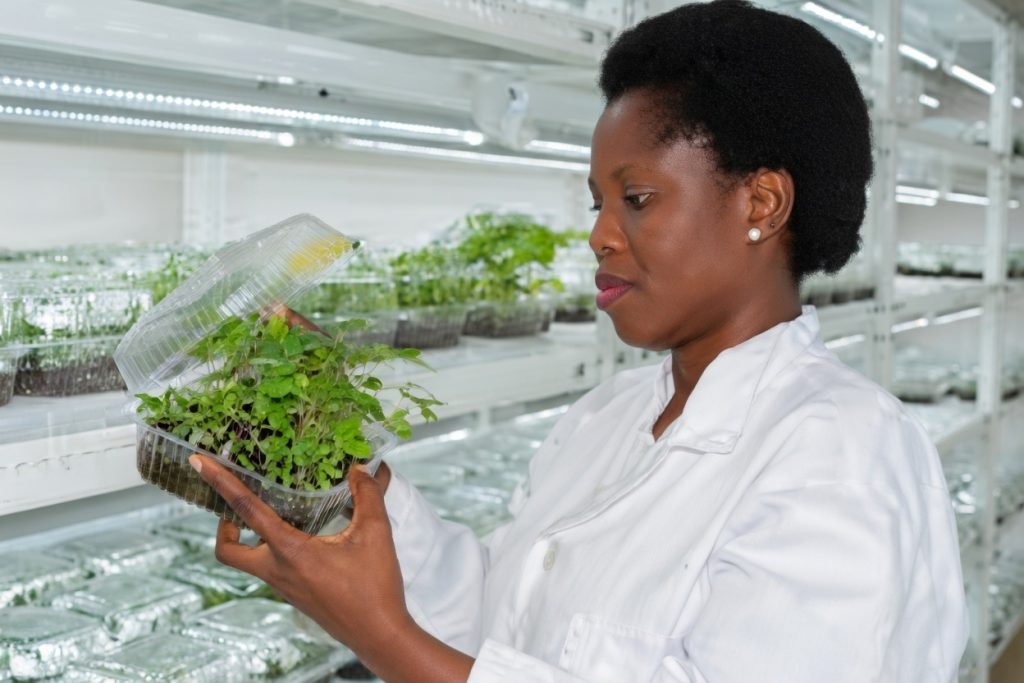
IITA deployed Semi-Autotrophic Hydroponic (SAH) technology in Bukemba to accelerate the multiplication of cassava planting materials. This innovative system enables rapid production of disease-free cassava seed, improving the availability of quality planting materials for farmers.
Cassava Variety Assessment
Seventeen cassava varieties resistant to Cassava Brown Streak Disease (CBSD) and Cassava Mosaic Disease (CMD) were introduced for evaluation. In addition, the in-vitro laboratory at ISABU in Gisozi was rehabilitated and equipped to strengthen cassava research and clean seed production.
Banana Varietal Assessment
Thirty-five high-yielding banana varieties resistant to Banana Xanthomonas Wilt (BXW) were introduced for testing and homologation. Quality planting materials have been transferred to ISABU for maintenance and further multiplication to support national banana production.
Banana Varietal Assessment
Thirty-five high-yielding banana varieties resistant to Banana Xanthomonas Wilt (BXW) were introduced for testing and homologation. Quality planting materials have been transferred to ISABU for maintenance and further multiplication to support national banana production.
IMPACT HIGHLIGHTS
Work in Malawi is delivering measurable impact through crop improvement, agricultural innovation, and capacity development. Research and partnerships have led to improved crop varieties, practical technologies, and strengthened skills that enhance productivity, food security, and livelihoods. The highlights below showcase key results across priority areas.
29
cassava innovations developed
New cassava varieties, improved agronomic practices, and processing methods were developed to enhance productivity, utilization, and value addition.
12
improved cassava varieties released
High-yielding, pest- and disease-resistant cassava varieties were officially released, improving resilience and farmer access to quality planting materials.
4
soybean varieties developed and released
Improved soybean varieties—including Tikolore, Chitedze 4, and Chitedze 6—have enhanced productivity, with ongoing efforts to develop climate-resilient and disease-resistant lines.
10+
postgraduate students co-supervised
Capacity development efforts have supported the training of Master’s and PhD students, strengthening national research and innovation systems.
Cassava silage technology increasing milk yields
Innovative cassava-based silage has boosted milk production from 12 to 20 liters per day, improving livestock productivity and farmer incomes.
Aflasafe biocontrol technology developed
Aflasafe was developed to reduce pre-harvest aflatoxin contamination in crops, improving food safety and market quality.
PARTNERS
IITA’s success in Malawi is built on strong partnerships with government institutions, national research organizations, universities, development partners, and the private sector. These collaborations support the development, validation, and scaling of agricultural innovations, ensuring sustainable impact across farming systems and value chains.
- Ministry of Agriculture
- Department of Agriculture Research Services
- Private seed companies
- Private processors (cassava and soybean)
Publications
A catalogue of tested crop, soil, and water management options under varied land degradation…
Aflatoxin management strategies in sub-Saharan Africa
Aflatoxins are natural poisons produced by…
Africa research in sustainable intensification for the next generation: sustainable intensification of key farming…
Related News
See all news

Why Climate Finance Must Tackle Food Loss and Waste
Every harvest season in Africa, food is lost or wasted at staggering levels. Nigeria loses 45% of its 3.9 million tons of tomato harvest each year to postharvest losses and supply chain inefficiencies.

CGIAR launches the Policy Innovation hub in Malawi
The CGIAR has launched the Policy Innovation hub in Lilongwe, highlighting the pivotal role researchers

Harnessing roots and tubers to strengthen Malawi’s economy
At the dissemination workshop for Malawi’s roots and tuber crops markets, the Malawi government has
See all news
MEDIA/RESOURCES
Events
engagements
Photos
Highlights from field activities and impact
Videos
Watch stories of innovation and transformation