
Plantain is a major food and income-generating crop in Cameroon, cultivated on about 303,000 hectares. Plantain farmers face challenges including pests and diseases, declining soil fertility, limited access to quality planting materials, low productivity, and climate variability. The emergence of Banana Bunchy Top Disease (BBTD) has added another serious threat to production and livelihoods.
Traditionally, Cameroon’s plantain seed system has relied on farmer-to-farmer exchanges of natural suckers, which can carry soil-borne pests such as nematodes and weevils, as well as diseases such as Black Sigatoka. IITA-Cameroon is working with national partners, including the Institute of Agricultural Research for Development (IRAD), to strengthen capacity for producing healthy, disease-free planting materials through improved propagation technologies.
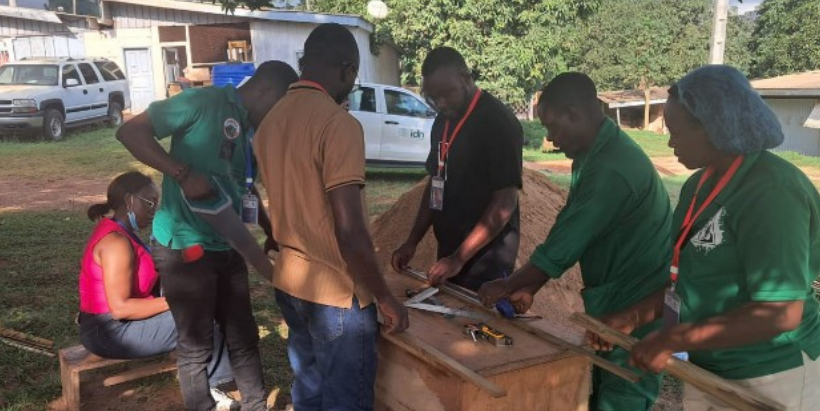
From 20–23 July 2026, IITA-Cameroon hosted a four-day Training of Trainers at its Yaoundé campus for IRAD researchers on the acclimatization of plantain tissue-culture plantlets, or vitroplants. The training was facilitated by Jules Lienou, Officer in Charge of IITA-Cameroon’s Tissue Culture Laboratory and combined theoretical sessions with hands-on practice.
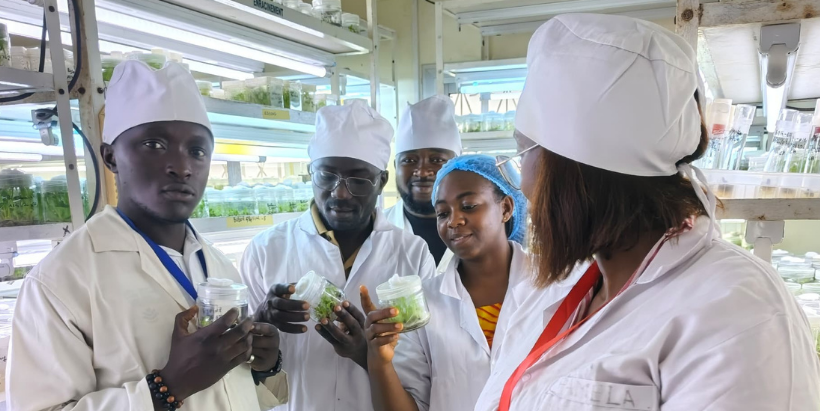
Participants were trained in substrate preparation, nursery management, transplanting, phytosanitary management, and the establishment of acclimatization facilities. Successful acclimatization is a critical step before tissue-culture plantlets can be transferred to the field and used to produce quality planting materials.
Following the training, IITA-Cameroon provided 3,000 plantain tissue-culture plantlets, along with acclimatization equipment and materials, to IRAD’s Bayangam station. The support will enable IRAD to establish an operational acclimatization unit and produce foundation planting material for certified seed producers using the Plants Issus de Fragments de Tiges (PIF) technique.
“IITA-CGIAR aims to strengthen the national capacity in acclimatizing plantain vitroplants and producing high-quality planting materials,” said Dr Fotso Apollin, Country Representative, IITA-Cameroon.
Participants welcomed the practical orientation and technical expertise of the facilitators and recommended expanding similar training to more researchers, technicians, and producers nationwide. “This training has strengthened our practical understanding of plantain plantlet acclimatization and will enable us to better support the production of healthy planting materials in Cameroon,” said Zegang Ursula, IRAD Bayangam staff and trainee.
Contributed by
Melanie Chichi Nyako and Ritha Bumwe