
IITA NEWS

Regional project strengthens seed systems and early warning tools in four African nations
March 9, 2026

FAO and AfDB-backed initiative enhanced seed production, early warning platforms
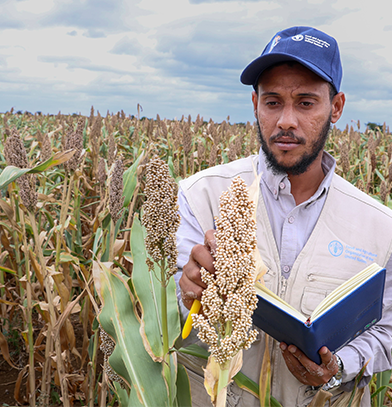
Seed multiplication in Baidoa, Somalia under the project Strengthening Emergency Preparedness and Response to Food Crisis (SEPAREF), implemented by FAO with funding from the African Development Bank. ©FAO/Abdillahi Hassan Jama

A regional initiative to strengthen seed systems and crisis preparedness across fragile contexts in Burundi, Comoros, Somalia and South Sudan has delivered significant gains in food security resilience. The project, titled Strengthening Emergency Preparedness and Response to Food Crisis (SEPAREF), was implemented by the Food and Agriculture Organization of the United Nations with funding from the African Development Bank (AfDB) and in partnership with government ministries of the four countries.

Designed in response to food security vulnerabilities exacerbated by global supply disruptions linked to the Russia–Ukraine War, the initiative focused on strengthening seed system foundations, improving input markets and advancing digital early warning platforms to contribute to increased local production. The project’s promising outcomes underscore the need to build on these initial results through a second phase of investment to ensure long-term sustainability and enable effective scaling.

Regional validation workshop

To consolidate achievements and chart the way forward, a regional validation workshop was held from 4 to 6 March 2026 in Nairobi, Kenya.

The meeting brought together technical teams from FAO, AfDB, National Agricultural Research Systems (NARS), ministries of agriculture and finance from the participating countries, and representatives from the private sector. Participants assessed project results and explored ways to embed the advances made in seed systems and digital early warning tools into permanent national infrastructure.
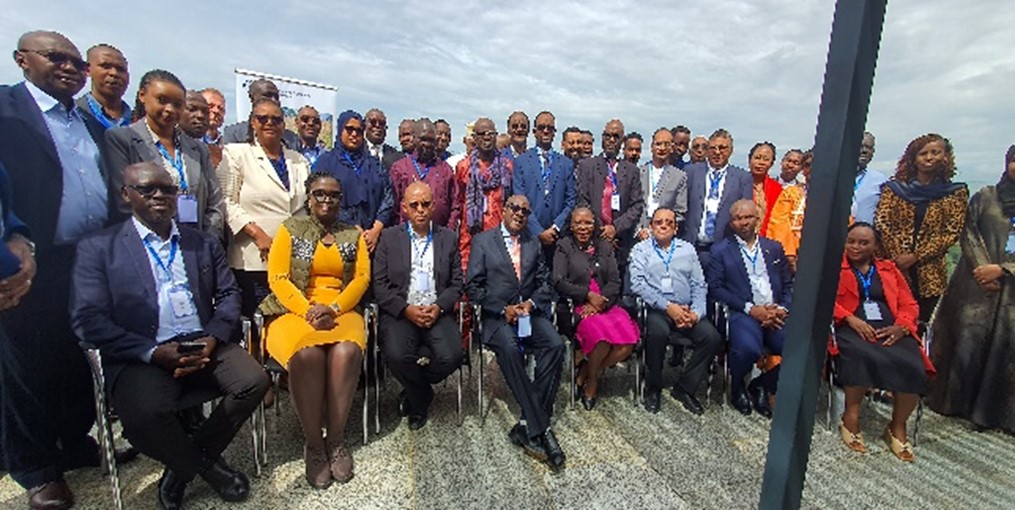
Participants at the SEPAREF workshop in Nairobi.  © FAO/Michael Kitum

Strengthening seed systems and resilience
Participants acknowledged several key results achieved under the project. More than 956 tonnes of Early Generation Seed (EGS), valued at USD 1.7 million, were produced, improving access to climate-and drought-tolerant crop varieties. The project also rehabilitated irrigation and seed storage facilities and supported over 250 seed out-growers, strengthening local production capacity. In partnership with the International Institute of Tropical Agriculture (IITA)/Technologies for African Agriculture Transformation (TAAT), the project enhanced national research institutions’ capacity to ensure the highest standards of seed technologies reach smallholder farmers.Institutionally, the initiative helped establish national seed councils and digital early warning systems, along with coordination mechanisms to support crisis preparedness. These digital platforms have already registered more than 160 000 farmers, improving access to early warning information and agricultural advisory services. Building on the gainsDuring the workshop, Pascal Sanginga, Regional Manager for Agriculture and Agro-Industries at the African Development Bank, called for scaling up the initiative for “better food and nutrition security, job creation, and the critical reduction of grain import bills”.“Despite these successes, significant risks remain,” he said, citing limited government budgets, donor dependency and restricted access to capital for seed enterprises. “This gathering should serve as a strategic design lab, transforming three years of lessons into a structured roadmap for a multi-country seed security and resilience programme.”The success of the workshop and the project’s technical implementation was supported by the FAO Regional Office for Africa (RAF) Resilience Team including the RAF Senior Regional Resilience Officer, Priya Gujadhur, alongside the FAO Sub-regional Office for Eastern Africa (SFE) Agriculture Officer, Orlando Sosa.Speaking at the workshop, Farayi Zimudzi, FAO Representative in Kenya, emphasized the importance of sustaining the project’s gains even as it concludes.“Financial sustainability for the seed sector is critical,” she said. “But equally important is embedding seed certification systems and digital early warning tools into national structures, with harmonized standards and stronger public–private partnerships to scale seed enterprises.”The workshop concluded with firm commitments by all stakeholders to sustain the gains achieved and support the development of a multi-country follow-on programme aimed at transforming the project’s achievements into regional public goods and scaling up seed security and resilience efforts across participating countries.


Scroll to Top
Olaosebikan, Olamide

Olamide Deborah Nwanze is a Senior Research Associate specializing in gender mainstreaming research to inform participatory and inclusive breeding, variety development, and seed systems policies regarding root, tuber, and banana (RTB) crops in the International Institute of Tropical Agriculture Headquarters, Ibadan, Nigeria. She is a PhD candidate at the University of Ibadan and holds an MSc and B. Agric in Agricultural Extension and Rural Development. Olamide is a fellow of the African Women in Agricultural Research and Development – Gender Responsive Agricultural Systems Policy (AWARD-GRASP) and the Gender Responsive Researchers Equipped for Agricultural Transformation (GREAT). She seeks to apply her gender-mainstreaming learnings, gender-responsive research, and policy development, and review expertise to facilitate women, youth, children, and vulnerable social group’s access to and adoption of agricultural Innovations that guarantee food, nutrition, income, and livelihood security in Africa. Her current roles include mentoring research fellows, development of guides and training manuals, implementation and adaptation of gender frameworks and tools, value chain actors’ engagement as citizen science partners, policy review and redesign, data management, and analysis. Her current research explores mixed methods and participatory and interdisciplinary approaches to capture and highlight gender dynamics, needs, preferences, and challenges stakeholders face within the agricultural livelihood value chain to prioritize gender-inclusive strategies in breeding programs, policy design, and implementation.

At IITA, she contributes to the implementation of the CGIAR Accelerated Breeding Initiative and Genetic Innovation Programs; participatory and gender research within the NextGen CassavaHarvestPlusRTBFoods, and Tricot-ClimMob 1000Farms Projects; and gender knowledge communication via the G-LENS webinar series, video documentary, policy briefspublications, and blogs.


Recent publications

de Sousa, K., van Etten, J., Manners, R. Bello, A., Teeken, B., Olaosebikan, O., et al. 2024. The tricot approach: an agile framework for decentralized on-farm testing supported by citizen science. A retrospective. Agron. Sustain. Dev. 44, 8. https://doi.org/10.1007/s13593-023-00937-1

Madu, T., Onwuka, S., Nwafor, S., Onyemauwa, N., Ejechi, M., Ofoeze, M., Ukeje, B., Eluagu, C., Olaosebikan, O., Okoye, B., 2024. Gender-Inclusive Consumer Studies Improve Cassava Breeding in Nigeria in: Frontiers in Sociology, volume 9, number: 1224504, doi: 10.3389/fsoc.2024.1224504

Olaosebikan, O.; Bello, A.; Utoblo, O.; Okoye, B.; Olutegbe, N.; Garner, E.; Teeken, B.; Bryan, E.; Forsythe, L.; Cole, S.; Madu, T. 2023.  Stressors and Resilience within the Cassava Value Chain in Nigeria: Preferred Cassava Variety Traits and Response Strategies of Men and Women to Inform Breeding. Sustainability 15, 7837. https://doi.org/10.3390/su15107837

Okoye, B., Ofoeze, M., Ejechi, M., Onwuka, S., Nwafor, S., Onyemauwa, N., Ukeje, B., Eluagu, C., Obidiegwu, J.*, Olaosebikan, O., Madu, T.* 2023. Prioritizing preferred traits in the yam value chain in Nigeria: a gender situation analysis in: Frontiers in Sociology, volume 8, number: 1232626, pages 1 – 9, ISSN 2297-7775, 2023. https://www.frontiersin.org/articles/10.3389/fsoc.2023.1232626/full

Olaosebikan, O., Bello, A. A., de Sousa, K., Ndjouenkeu, R., Adesokan, M., Alamu, E. O., Agbona, A., van Etten, J., Kegah, F. N.*, Dufour, D., Bouniol, A., Teeken, B. 2023. Consumer acceptability of cassava gari-eba food products across cultural and environmental settings using the triadic comparison of technologies approach (tricot) in: Journal of the Science of Food and Agriculture,

Teeken, B., Olaosebikan, O., Bello, A. A., Madu, T.*, Cole, S. M. 2023. Qualitative assessment on the positionality and preferences of dyads in relation to cassava-related activities: working with tricot trial citizen scientists https://hdl.handle.net/10568/138326 Type: Manual

Bouniol, A., Ceballos, H., Bello, A. A., Teeken, B., Olaosebikan, O., Owoade, D., Agbona, A., Fotso Kuate, A., Madu, T.*, Okoye, B.*, Ofoeze, M.*, Nwafor, S.*, Onyemauwa, N.*, Adinsi, L.*, Forsythe, L., Dufour, D. 2023. Varietal impact on women’s labour, workload and related drudgery in processing root, tuber and banana crops: focus on cassava in sub-Saharan Africa in: Journal of the Science of Food and Agriculture, pages 1 – 25, ISSN 0022-5142,

Bello, A. A., Agbona, A., Olaosebikan, O., Edughaen, G., Dufour, D., Bouniol, A., Iluebbey, P., Ndjouenkeu, R.*, Rabbi, I. Y., Teeken, B. 2023. Genetic and environmental effects on processing productivity and food product yield: drudgery of women’s work in: Journal of the Science of Food and Agriculture, pages 1 – 32, ISSN 0022-5142, 5

Cavicchioli, M., Zimbiti, T., Teeken, B., Nwanze, D.O., Liani, M., Parkes, E. & Bello, A. 2023. IITA-Gender Responsive Breeding Training Report. Genetic Resources Center, IITA-HQ, Ibadan, 21-23 September, 2022. Ibadan, Nigeria: IITA, (34 p.).https://hdl.handle.net/10568/131368

Agbona, A. Peteti P., Teeken B., Olaosebikan O. Bello, A. A., Parkes, E., Rabbi, I. Y., Mueller, L., Egesi, C., Kulakow, P. 2022. Data Management in Multi-disciplinary African RTB Crop Breeding Programs. In: Williamson, H.F., Leonelli, S. (eds) Towards Responsible Plant Data Linkage: Data Challenges for Agricultural Research and Development. Springer, Cham. https://doi.org/10.1007/978-3-031-13276-6_5

Lora Forsythe, Pricilla Marimo, Sarah Mayanja, Olamide D. Olaosebikan, Esme Stuart, Bela Teeken, Benjamin Okoye, Tessy Madu, (2021). Cross-product Gender Analysis of RTBfoods Step 2 Gendered Food Mapping on RTB Products. Understanding the Drivers of Trait Preferences and the Development of Multi-user RTB Product Profiles, WP1. London, UK: RTBfoods Field Scientific Report, 30 p.

Teeken, B., Garner, E., Agbona, A., Balogun, I., Olaosebikan, O., Bello, A., Madu, T., Okoye, B., Egesi, C., Kulakow, P. and Tufan, H.A. 2021. Beyond “Women’s Traits”: Exploring How Gender, Social Difference, and Household Characteristics Influence Trait Preferences. Frontiers Sustainable Food Systems 5:740926. https://doi.org/10.3389/fsufs.2021.740926

Teeken, B., Agbona, A., Bello, A., Olaosebikan, O., Alamu, E., Adesokan, M., Awoyale, W., Madu, T., Okoye, B., Chijioke, U., Owoade, D., Okoro, M., Bouniol, A., Dufour, D., Hershey, C., Rabbi, I., Maziya‐Dixon, B., Egesi, C., Tufan, H. and Kulakow, P. (020. Understanding cassava varietal preferences through pairwise ranking of gari‐eba and fufu prepared by local farmer–processors. Int J Food Sci Technol. https://doi.org/10.1111/ijfs.14862

Bela Teeken, Olamide Olaosebikan, Ireti Balogun, Benjamin Okoye, Tessy Madu, Steven Cole, Abolore Bello, Elizabeth Parkes. (2020). Piloting the G+ customer and product profile tools for gender-responsive cassava breeding in Nigeria. Nigeria: International Institute of Tropical Agriculture (IITA). https://hdl.handle.net/20.500.11766/13000