
IITA and partners organize 3-day International Symposium on Agriculture and Health in DRC
October 16, 2017
IITA, in collaboration with the International Center for Advanced Research and Training (ICART) and the University of Michigan (UM), organized a 3-day symposium on Agriculture and Health, on 17–19 August in Bukavu, South Kivu Province, DR Congo.
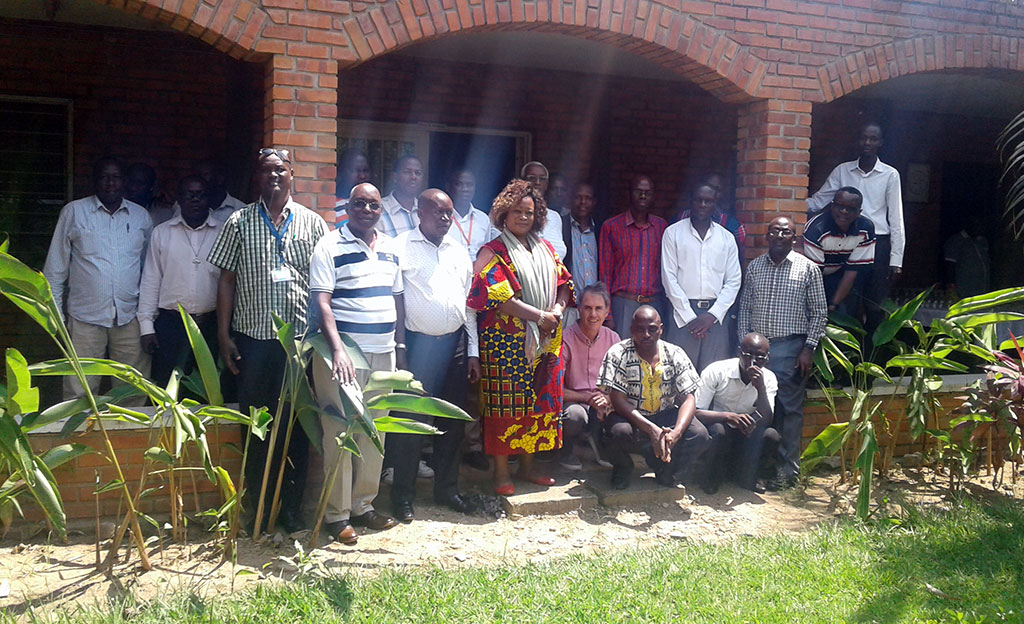 Against the background of a post-conflict environment in Eastern DRC, the symposium focused on food security and nutrition, infectious diarrheal diseases, health and social consequences for women, and ecological and environmental impacts on health. The symposium’s themes underscored the delicate link between agriculture and health of the population who are predominantly farmers in Africa.
The main objectives of the symposium were to build on the outcomes of an earlier ICART symposium, maximize opportunities for face-to-face interactions with highly qualified international researchers and budding scientists; deepen collaborative interactions among the participants; and share IITA’s contribution to agriculture and nutrition through science and development.
In his opening remarks, the chairman of the occasion, Dr Denis Mukwege, a gynecologist who in 2014 was awarded the Sakharov Prize for his work in protecting women and promoting human rights, welcomed participants. He spoke on the importance and need to ensure food and nutrition security especially for women and children by reducing health hazards in DRC, especially in South Kivu Province.
The symposium featured five keynote speakers including Dr Nzola Mahungu, who represented the IITA Director General, Nteranya Sanginga. His presentation highlighted IITA’s achievements in collaboration with other national and international research institutions in developing and promoting consumption of biofortified crops such as vitamin A-rich banana, cassava, maize, and common bean. He made a strong case for mobilizing and channeling youth energy towards agri-enterprises, an initiative IITA is championing in sub-Saharan Africa. There were also papers and poster presentations. IITA staff and students featured in the two sessions. An aflatoxin poster by Pat Udomkun et al. attracted the attention of many participants including Dr Benoit Nemery, Professor of Toxicology and Occupational Medicine at KU Leuven, Belgium, who commended the study saying: “I am really happy to see that such kinds of studies are being undertaken in the Great Lakes Region. I will be happy to visit IITA to explore possibilities of a joint research project to look at the effects of aflatoxin on human health to improve agriculture and nutrition at the farmgate and household level.”
The final day’s event was held at IITA Kalambo with presentations including that of Renée Bullock, IITA Gender Postdoctoral Fellow on IITA’s women empowerment work with ICART in Kinshasa. The over 150 participants had the opportunity to interact with IITA youth agripreneurs and visit the labs.
In his closing remarks, Chris Okafor, Head, IITA Kalambo Station, invited the organizers to think about involving policy makers the next time around and how to use the rich research outputs presented to influence policy and induce positive changes in the society. The remarks were well received by the Michigan State University delegates. The end of the symposium was marked with a cocktail hosted by IITA in commemoration of IITA50.
Against the background of a post-conflict environment in Eastern DRC, the symposium focused on food security and nutrition, infectious diarrheal diseases, health and social consequences for women, and ecological and environmental impacts on health. The symposium’s themes underscored the delicate link between agriculture and health of the population who are predominantly farmers in Africa.
The main objectives of the symposium were to build on the outcomes of an earlier ICART symposium, maximize opportunities for face-to-face interactions with highly qualified international researchers and budding scientists; deepen collaborative interactions among the participants; and share IITA’s contribution to agriculture and nutrition through science and development.
In his opening remarks, the chairman of the occasion, Dr Denis Mukwege, a gynecologist who in 2014 was awarded the Sakharov Prize for his work in protecting women and promoting human rights, welcomed participants. He spoke on the importance and need to ensure food and nutrition security especially for women and children by reducing health hazards in DRC, especially in South Kivu Province.
The symposium featured five keynote speakers including Dr Nzola Mahungu, who represented the IITA Director General, Nteranya Sanginga. His presentation highlighted IITA’s achievements in collaboration with other national and international research institutions in developing and promoting consumption of biofortified crops such as vitamin A-rich banana, cassava, maize, and common bean. He made a strong case for mobilizing and channeling youth energy towards agri-enterprises, an initiative IITA is championing in sub-Saharan Africa. There were also papers and poster presentations. IITA staff and students featured in the two sessions. An aflatoxin poster by Pat Udomkun et al. attracted the attention of many participants including Dr Benoit Nemery, Professor of Toxicology and Occupational Medicine at KU Leuven, Belgium, who commended the study saying: “I am really happy to see that such kinds of studies are being undertaken in the Great Lakes Region. I will be happy to visit IITA to explore possibilities of a joint research project to look at the effects of aflatoxin on human health to improve agriculture and nutrition at the farmgate and household level.”
The final day’s event was held at IITA Kalambo with presentations including that of Renée Bullock, IITA Gender Postdoctoral Fellow on IITA’s women empowerment work with ICART in Kinshasa. The over 150 participants had the opportunity to interact with IITA youth agripreneurs and visit the labs.
In his closing remarks, Chris Okafor, Head, IITA Kalambo Station, invited the organizers to think about involving policy makers the next time around and how to use the rich research outputs presented to influence policy and induce positive changes in the society. The remarks were well received by the Michigan State University delegates. The end of the symposium was marked with a cocktail hosted by IITA in commemoration of IITA50.
Group photograph
Contributed by
Recent stories
No items found