
NEWS

IITA–CGIAR showcases plant biodiversity and conservation at Open Day for Gardeners 2026 
September 18, 2026
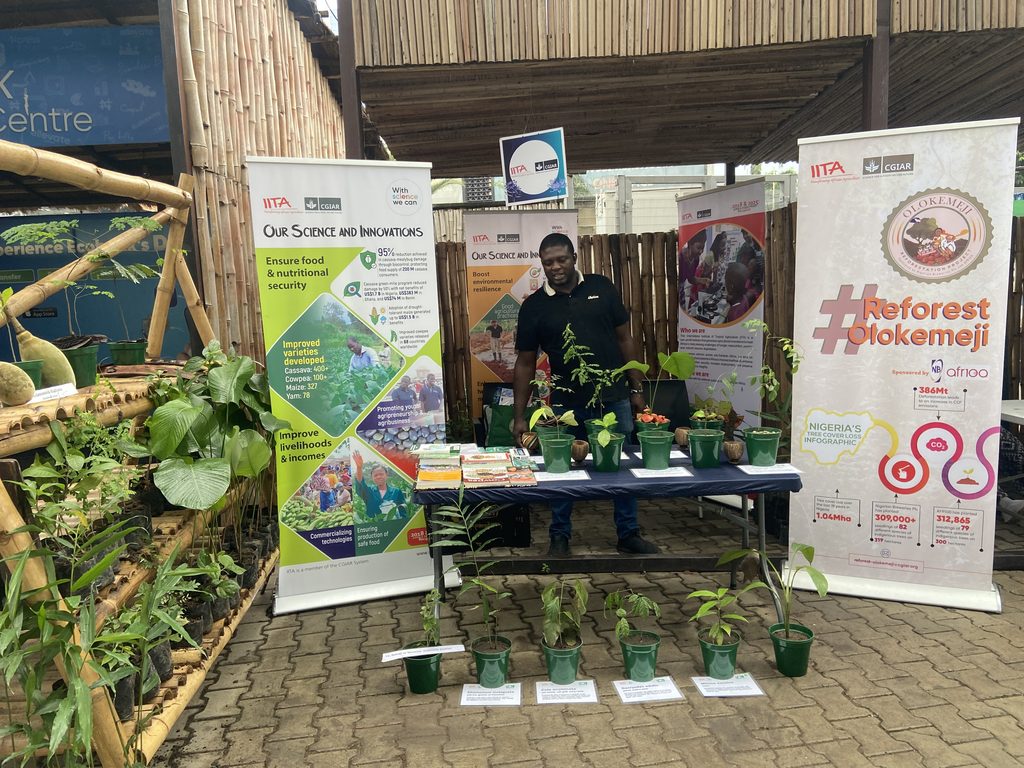
IITA's booth at the Open Day for Gardeners 2026, showcasing native tree species, IITA's impact, research, and innovations in food security and natural resource conservation, alongside educational publications available to visitors.
IITA’s booth at the Open Day for Gardeners 2026, showcasing native tree species, IITA’s impact, research, and innovations in food security and natural resource conservation, alongside educational publications available to visitors.

IITACGIAR participated in the 5th Open Day for Gardeners, held from 28 to 30 August at the Ecobank Pan African Center (EPAC), Victoria Island, Lagos. Anchored by Selah Gardens, Ecobank, and a growing community of gardeners, the annual event brought together gardeners, plant enthusiasts, conservation advocates, artists, entrepreneurs, and nature-inspired businesses in a vibrant celebration of plants, sustainability, creativity, and environmental stewardship. 

The three-day event transformed the venue into a thriving hub of nature, culture, and enterprise. Visitors explored an impressive array of indoor and outdoor plants, fruiting and flowering species, forest and gardening resources, indigenous wear, handcrafted pottery, decorative lamp holders, home decor items, fruits, foods, perfumes, arts and crafts, paintings, poetry, games, showroom galleries, and family-friendly recreational attractions such as the jump spot, throw the dice, draw your face, write a poem, and lots more. The event also provided valuable opportunities for networking, knowledge sharing, business development, and sales, while continuing to grow a vibrant and connected community of gardeners and nature lovers. 

Throughout the event, IITA–CGIAR’s booth attracted a steady stream of visitors eager to learn about agricultural innovation, biodiversity conservation, landscape restoration, environmental education, and sustainable food systems. Guests engaged with staff members, explored plant collections, and discovered how science and innovation are contributing to food security, environmental sustainability, and resilient livelihoods across Africa. The event provided an excellent platform for the IITA Forest Center to showcase its work in conserving plant diversity, restoring degraded landscapes, promoting native species, and inspiring future generations to become environmental stewards.  

A particularly engaging feature of the IITA Forest Center booth was its display of indigenous plant seeds alongside their seedlings, creating a unique learning experience for visitors. The exhibit sparked nostalgic memories as many guests recognized plant species that were once common in their childhood homes, family compounds, farms, and local communities. The display prompted lively conversations among gardeners, parents, educators, and plant enthusiasts, many of whom shared personal stories and traditional uses of the plants. Visitors expressed delight at seeing these familiar species again and commended the IITA Forest Center for helping to preserve and promote indigenous plants that are increasingly becoming less visible in urban environments. 

Nigeria's immediate past Vice President, Professor Yemi Osinbajo, and his wife, Her Excellency Dolapo Osinbajo, at the Open Day for Gardeners 2026.
Nigeria’s immediate past Vice President, Professor Yemi Osinbajo, and his wife, Her Excellency Dolapo Osinbajo, at the Open Day for Gardeners 2026.

One of the highlights of the event was the seminar delivered by Nigeria’s immediate former Vice President, Professor Yemi Osinbajo, titled “Leaving the Earth better than you found it.” In his thought-provoking presentation, he urged participants to move beyond merely appreciating nature and become active advocates for environmental stewardship. He emphasized the need to preserve seed diversity, protect trees, promote sustainable food systems, and ensure that society’s commitment to restoration matches its consumption patterns. His call for people to become “gardeners in the purest sense—people who nurture life” resonated strongly with participants and reflected the values underpinning IITA–CGIAR’s work in biodiversity and natural resources conservation. 

Another memorable moment came when Her Excellency, Dolapo Osinbajo, visited the IITA–CGIAR’s booth. The team shared with her that a ginger species she had previously gifted to the IITA Forest Center had been propagated and was among the plant collections available for sale at the event. She was delighted to learn that the species continues to be conserved, multiplied, and shared with gardening enthusiasts, extending its impact beyond the Forest Center and contributing to the preservation and appreciation of valuable plant resources. 

IITA–CGIAR’s participation at the Open Day for Gardeners reinforced the importance of partnerships, public engagement, conservation, and environmental education in building a sustainable future. It also provided an opportunity to connect with a growing network of gardeners, conservationists, entrepreneurs, and nature enthusiasts committed to leaving the Earth better than they found it. 


Contributed by

Folake Oduntan

Recent stories

No items found
Scroll to Top
Olaosebikan, Olamide

Olamide Deborah Nwanze is a Senior Research Associate specializing in gender mainstreaming research to inform participatory and inclusive breeding, variety development, and seed systems policies regarding root, tuber, and banana (RTB) crops in the International Institute of Tropical Agriculture Headquarters, Ibadan, Nigeria. She is a PhD candidate at the University of Ibadan and holds an MSc and B. Agric in Agricultural Extension and Rural Development. Olamide is a fellow of the African Women in Agricultural Research and Development – Gender Responsive Agricultural Systems Policy (AWARD-GRASP) and the Gender Responsive Researchers Equipped for Agricultural Transformation (GREAT). She seeks to apply her gender-mainstreaming learnings, gender-responsive research, and policy development, and review expertise to facilitate women, youth, children, and vulnerable social group’s access to and adoption of agricultural Innovations that guarantee food, nutrition, income, and livelihood security in Africa. Her current roles include mentoring research fellows, development of guides and training manuals, implementation and adaptation of gender frameworks and tools, value chain actors’ engagement as citizen science partners, policy review and redesign, data management, and analysis. Her current research explores mixed methods and participatory and interdisciplinary approaches to capture and highlight gender dynamics, needs, preferences, and challenges stakeholders face within the agricultural livelihood value chain to prioritize gender-inclusive strategies in breeding programs, policy design, and implementation.

At IITA, she contributes to the implementation of the CGIAR Accelerated Breeding Initiative and Genetic Innovation Programs; participatory and gender research within the NextGen CassavaHarvestPlusRTBFoods, and Tricot-ClimMob 1000Farms Projects; and gender knowledge communication via the G-LENS webinar series, video documentary, policy briefspublications, and blogs.


Recent publications

de Sousa, K., van Etten, J., Manners, R. Bello, A., Teeken, B., Olaosebikan, O., et al. 2024. The tricot approach: an agile framework for decentralized on-farm testing supported by citizen science. A retrospective. Agron. Sustain. Dev. 44, 8. https://doi.org/10.1007/s13593-023-00937-1

Madu, T., Onwuka, S., Nwafor, S., Onyemauwa, N., Ejechi, M., Ofoeze, M., Ukeje, B., Eluagu, C., Olaosebikan, O., Okoye, B., 2024. Gender-Inclusive Consumer Studies Improve Cassava Breeding in Nigeria in: Frontiers in Sociology, volume 9, number: 1224504, doi: 10.3389/fsoc.2024.1224504

Olaosebikan, O.; Bello, A.; Utoblo, O.; Okoye, B.; Olutegbe, N.; Garner, E.; Teeken, B.; Bryan, E.; Forsythe, L.; Cole, S.; Madu, T. 2023.  Stressors and Resilience within the Cassava Value Chain in Nigeria: Preferred Cassava Variety Traits and Response Strategies of Men and Women to Inform Breeding. Sustainability 15, 7837. https://doi.org/10.3390/su15107837

Okoye, B., Ofoeze, M., Ejechi, M., Onwuka, S., Nwafor, S., Onyemauwa, N., Ukeje, B., Eluagu, C., Obidiegwu, J.*, Olaosebikan, O., Madu, T.* 2023. Prioritizing preferred traits in the yam value chain in Nigeria: a gender situation analysis in: Frontiers in Sociology, volume 8, number: 1232626, pages 1 – 9, ISSN 2297-7775, 2023. https://www.frontiersin.org/articles/10.3389/fsoc.2023.1232626/full

Olaosebikan, O., Bello, A. A., de Sousa, K., Ndjouenkeu, R., Adesokan, M., Alamu, E. O., Agbona, A., van Etten, J., Kegah, F. N.*, Dufour, D., Bouniol, A., Teeken, B. 2023. Consumer acceptability of cassava gari-eba food products across cultural and environmental settings using the triadic comparison of technologies approach (tricot) in: Journal of the Science of Food and Agriculture,

Teeken, B., Olaosebikan, O., Bello, A. A., Madu, T.*, Cole, S. M. 2023. Qualitative assessment on the positionality and preferences of dyads in relation to cassava-related activities: working with tricot trial citizen scientists https://hdl.handle.net/10568/138326 Type: Manual

Bouniol, A., Ceballos, H., Bello, A. A., Teeken, B., Olaosebikan, O., Owoade, D., Agbona, A., Fotso Kuate, A., Madu, T.*, Okoye, B.*, Ofoeze, M.*, Nwafor, S.*, Onyemauwa, N.*, Adinsi, L.*, Forsythe, L., Dufour, D. 2023. Varietal impact on women’s labour, workload and related drudgery in processing root, tuber and banana crops: focus on cassava in sub-Saharan Africa in: Journal of the Science of Food and Agriculture, pages 1 – 25, ISSN 0022-5142,

Bello, A. A., Agbona, A., Olaosebikan, O., Edughaen, G., Dufour, D., Bouniol, A., Iluebbey, P., Ndjouenkeu, R.*, Rabbi, I. Y., Teeken, B. 2023. Genetic and environmental effects on processing productivity and food product yield: drudgery of women’s work in: Journal of the Science of Food and Agriculture, pages 1 – 32, ISSN 0022-5142, 5

Cavicchioli, M., Zimbiti, T., Teeken, B., Nwanze, D.O., Liani, M., Parkes, E. & Bello, A. 2023. IITA-Gender Responsive Breeding Training Report. Genetic Resources Center, IITA-HQ, Ibadan, 21-23 September, 2022. Ibadan, Nigeria: IITA, (34 p.).https://hdl.handle.net/10568/131368

Agbona, A. Peteti P., Teeken B., Olaosebikan O. Bello, A. A., Parkes, E., Rabbi, I. Y., Mueller, L., Egesi, C., Kulakow, P. 2022. Data Management in Multi-disciplinary African RTB Crop Breeding Programs. In: Williamson, H.F., Leonelli, S. (eds) Towards Responsible Plant Data Linkage: Data Challenges for Agricultural Research and Development. Springer, Cham. https://doi.org/10.1007/978-3-031-13276-6_5

Lora Forsythe, Pricilla Marimo, Sarah Mayanja, Olamide D. Olaosebikan, Esme Stuart, Bela Teeken, Benjamin Okoye, Tessy Madu, (2021). Cross-product Gender Analysis of RTBfoods Step 2 Gendered Food Mapping on RTB Products. Understanding the Drivers of Trait Preferences and the Development of Multi-user RTB Product Profiles, WP1. London, UK: RTBfoods Field Scientific Report, 30 p.

Teeken, B., Garner, E., Agbona, A., Balogun, I., Olaosebikan, O., Bello, A., Madu, T., Okoye, B., Egesi, C., Kulakow, P. and Tufan, H.A. 2021. Beyond “Women’s Traits”: Exploring How Gender, Social Difference, and Household Characteristics Influence Trait Preferences. Frontiers Sustainable Food Systems 5:740926. https://doi.org/10.3389/fsufs.2021.740926

Teeken, B., Agbona, A., Bello, A., Olaosebikan, O., Alamu, E., Adesokan, M., Awoyale, W., Madu, T., Okoye, B., Chijioke, U., Owoade, D., Okoro, M., Bouniol, A., Dufour, D., Hershey, C., Rabbi, I., Maziya‐Dixon, B., Egesi, C., Tufan, H. and Kulakow, P. (020. Understanding cassava varietal preferences through pairwise ranking of gari‐eba and fufu prepared by local farmer–processors. Int J Food Sci Technol. https://doi.org/10.1111/ijfs.14862

Bela Teeken, Olamide Olaosebikan, Ireti Balogun, Benjamin Okoye, Tessy Madu, Steven Cole, Abolore Bello, Elizabeth Parkes. (2020). Piloting the G+ customer and product profile tools for gender-responsive cassava breeding in Nigeria. Nigeria: International Institute of Tropical Agriculture (IITA). https://hdl.handle.net/20.500.11766/13000