
IITA NEWS

Nigeria strengthens agricultural policy planning with modeling workshop
June 19, 2026

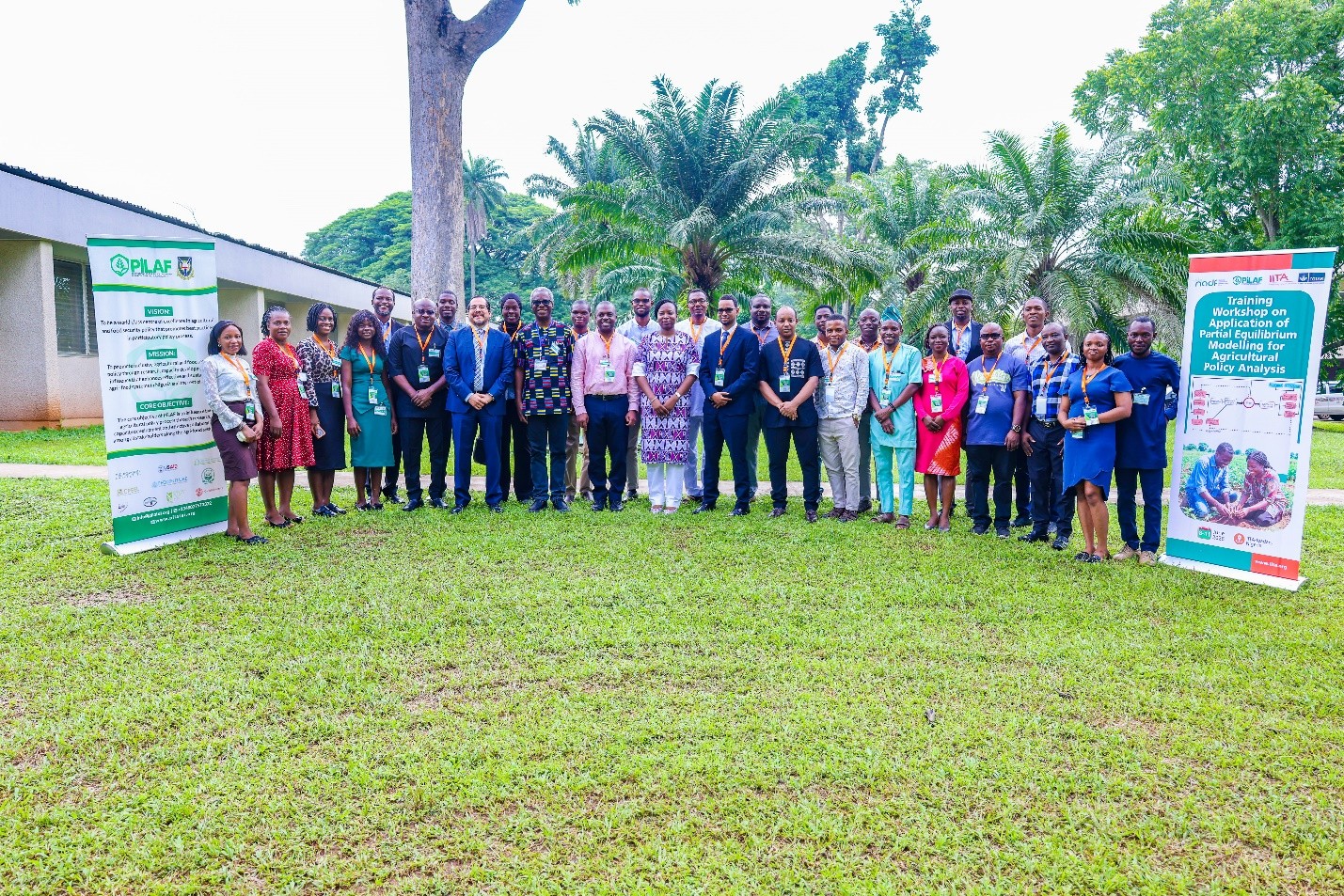
Stakeholders and participants at the launch of the Partial Equilibrium Market and Policy Model Workshop.

A four-day capacity-building workshop on the application of agricultural market and policy models for policy analysis in Nigeria was officially launched on 8 June 2026. The joint initiative by the IITA-CGIAR Socioeconomics Unit, the Innovation Lab for Policy Leadership in Agriculture and Food Security (PiLAF), the National Agricultural Development Fund (NADF), and the Food and Agriculture Organization of the United Nations (FAO), Rome. 

Beyond training, the workshop represented a strategic investment in Nigeria’s ability to plan, forecast, and transform its agrifood systems using robust, evidence-based approaches. It brought together stakeholders committed to strengthening agricultural and food systems through data-driven policy and forward-looking analysis. The training was facilitated by FAO technical experts Sergio René and Abdi Ali. 
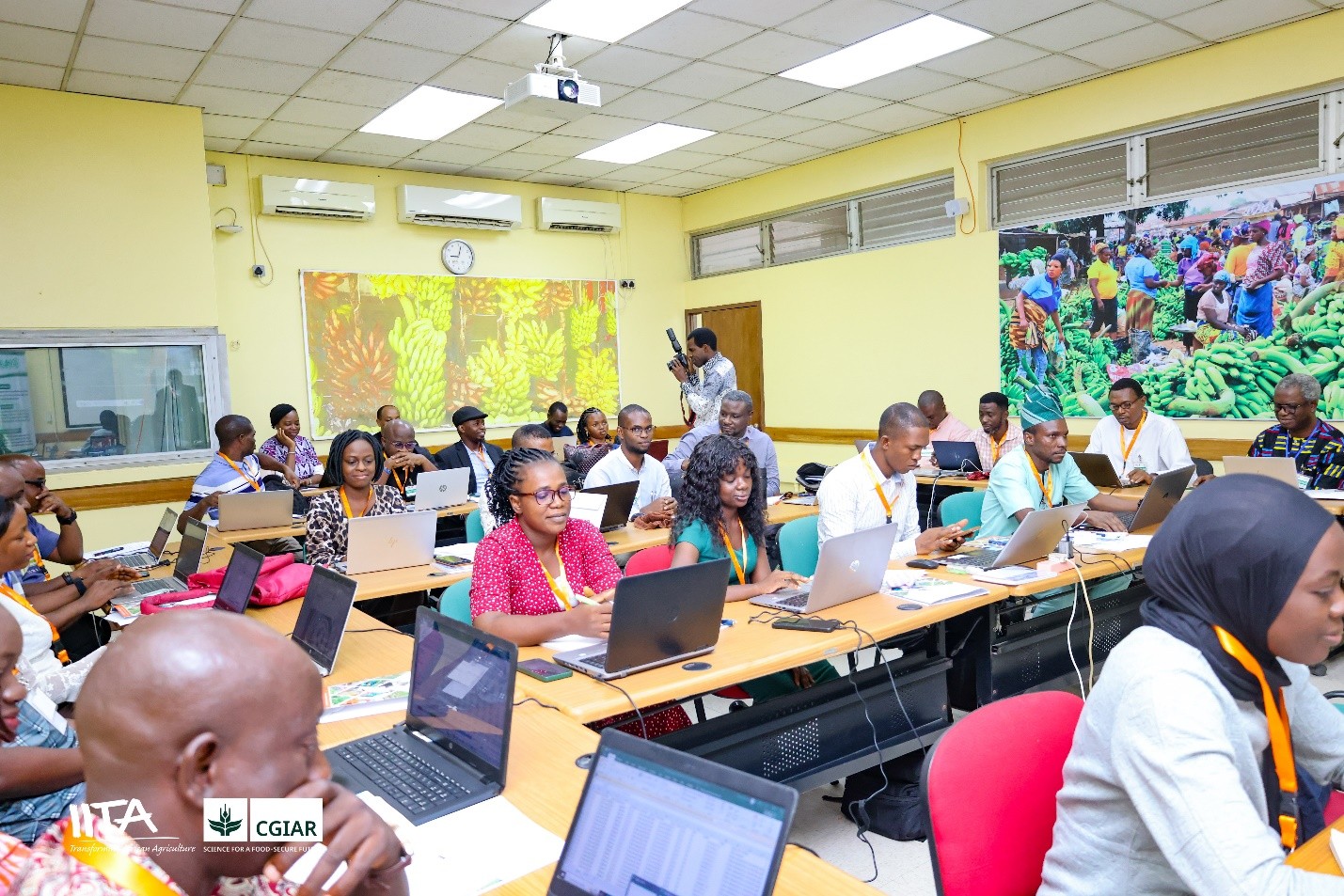
Stakeholders and participants during the launch of the Partial Equilibrium Market and Policy Model Workshop.

Speaking at the opening ceremony, the Executive Secretary of NADF, Muhammed Abu Ibrahim, represented by Emmanuel Saseun, underscored the initiative’s significance. He noted that incomplete or fragmented data have often constrained agricultural policy decisions in Nigeria. 

“For too long, critical agricultural policy decisions have been made with incomplete or fragmented data. A baseline Agrifood Outlook for Nigeria, built on rigorous partial equilibrium modeling and scenario analysis, will enable both policy actors and private sector players to answer ‘what if’ questions,” he said. 

Also addressing participants, PiLAF’s Principal Investigator, Prof. Olusanya Olubusoye, welcomed attendees and acknowledged the collaborative efforts of NADF and IITA. He emphasized the importance of grounding policies in reliable data, rigorous analysis, and a clear understanding of future risks and opportunities. 

Prof. Olubusoye highlighted that Nigeria’s agrifood system is undergoing rapid transformation, driven by population growth, urbanization, climate change, technological advancements, evolving consumer preferences, and shifting market dynamics. In this context, he stressed that anticipating future trends and assessing policy impacts is no longer optional but essential. 

He further described the development of Nigeria’s Baseline Agrifood Outlook as a critical step toward institutionalizing forward-looking analysis to guide investments, enhance policy coherence, strengthen food security, and support sustainable agricultural transformation. 

“PiLAF remains committed to influencing the agrifood system by providing platforms for knowledge exchange, supporting policy innovation, strengthening institutional capacity, and promoting evidence-informed decision-making,” he added. 

Delivering remarks on behalf of IITA’s Deputy Director General for Partnerships for Delivery and Scaling, Dr Tahirou Abdoulaye, the Head of Capacity Development Office, Sore Sougrynoma Zainatou, welcomed participants and emphasized the relevance of building analytical capacity in Nigeria. 

She pointed out that Nigeria has demonstrated strong policy ambition through frameworks such as the National Development Plan (2021–2025) and the National Agricultural Technology and Innovation Policy (NATIP) (2022–2027), both of which promote institutional strengthening, inclusive growth, and economic diversification. 

However, she noted that policymakers are increasingly faced with complex decisions involving investment prioritization, reform sequencing, and trade-offs between productivity, climate resilience, inclusion, and nutrition. 

“The missing piece in providing rapid responses to government is having strong, in-country expertise to develop dynamic system-level models that can generate evidence on policy shocks and supply responses linked to improved agricultural technologies,” she said. 

A key highlight of the opening ceremony was the signing of a Memorandum of Understanding (MoU) between IITA and PiLAF. The agreement reinforces collaboration in advancing agricultural policy research, capacity development, and evidence-driven decision-making for sustainable agrifood system transformation in Nigeria. 

The workshop features a combination of technical lectures and hands-on training sessions. Discussions are structured across four days, covering the foundations of partial equilibrium modeling; crop modeling, including baseline projections and scenario analysis; livestock modeling and system integration; and advanced modeling applications, culminating in discussions on the way forward. 

Participants and facilitators alike emphasized the importance of strengthening local capacity in modeling tools to support national planning and investment decision-making. They agreed that enhancing Nigeria’s analytical capacity will enable policymakers to better anticipate and respond to emerging challenges and opportunities in the agrifood sector. 

Contributed by ‘Timilehin Osunde  


Contributed by

Related news

No items found
Scroll to Top
Olaosebikan, Olamide

Olamide Deborah Nwanze is a Senior Research Associate specializing in gender mainstreaming research to inform participatory and inclusive breeding, variety development, and seed systems policies regarding root, tuber, and banana (RTB) crops in the International Institute of Tropical Agriculture Headquarters, Ibadan, Nigeria. She is a PhD candidate at the University of Ibadan and holds an MSc and B. Agric in Agricultural Extension and Rural Development. Olamide is a fellow of the African Women in Agricultural Research and Development – Gender Responsive Agricultural Systems Policy (AWARD-GRASP) and the Gender Responsive Researchers Equipped for Agricultural Transformation (GREAT). She seeks to apply her gender-mainstreaming learnings, gender-responsive research, and policy development, and review expertise to facilitate women, youth, children, and vulnerable social group’s access to and adoption of agricultural Innovations that guarantee food, nutrition, income, and livelihood security in Africa. Her current roles include mentoring research fellows, development of guides and training manuals, implementation and adaptation of gender frameworks and tools, value chain actors’ engagement as citizen science partners, policy review and redesign, data management, and analysis. Her current research explores mixed methods and participatory and interdisciplinary approaches to capture and highlight gender dynamics, needs, preferences, and challenges stakeholders face within the agricultural livelihood value chain to prioritize gender-inclusive strategies in breeding programs, policy design, and implementation.

At IITA, she contributes to the implementation of the CGIAR Accelerated Breeding Initiative and Genetic Innovation Programs; participatory and gender research within the NextGen CassavaHarvestPlusRTBFoods, and Tricot-ClimMob 1000Farms Projects; and gender knowledge communication via the G-LENS webinar series, video documentary, policy briefspublications, and blogs.


Recent publications

de Sousa, K., van Etten, J., Manners, R. Bello, A., Teeken, B., Olaosebikan, O., et al. 2024. The tricot approach: an agile framework for decentralized on-farm testing supported by citizen science. A retrospective. Agron. Sustain. Dev. 44, 8. https://doi.org/10.1007/s13593-023-00937-1

Madu, T., Onwuka, S., Nwafor, S., Onyemauwa, N., Ejechi, M., Ofoeze, M., Ukeje, B., Eluagu, C., Olaosebikan, O., Okoye, B., 2024. Gender-Inclusive Consumer Studies Improve Cassava Breeding in Nigeria in: Frontiers in Sociology, volume 9, number: 1224504, doi: 10.3389/fsoc.2024.1224504

Olaosebikan, O.; Bello, A.; Utoblo, O.; Okoye, B.; Olutegbe, N.; Garner, E.; Teeken, B.; Bryan, E.; Forsythe, L.; Cole, S.; Madu, T. 2023.  Stressors and Resilience within the Cassava Value Chain in Nigeria: Preferred Cassava Variety Traits and Response Strategies of Men and Women to Inform Breeding. Sustainability 15, 7837. https://doi.org/10.3390/su15107837

Okoye, B., Ofoeze, M., Ejechi, M., Onwuka, S., Nwafor, S., Onyemauwa, N., Ukeje, B., Eluagu, C., Obidiegwu, J.*, Olaosebikan, O., Madu, T.* 2023. Prioritizing preferred traits in the yam value chain in Nigeria: a gender situation analysis in: Frontiers in Sociology, volume 8, number: 1232626, pages 1 – 9, ISSN 2297-7775, 2023. https://www.frontiersin.org/articles/10.3389/fsoc.2023.1232626/full

Olaosebikan, O., Bello, A. A., de Sousa, K., Ndjouenkeu, R., Adesokan, M., Alamu, E. O., Agbona, A., van Etten, J., Kegah, F. N.*, Dufour, D., Bouniol, A., Teeken, B. 2023. Consumer acceptability of cassava gari-eba food products across cultural and environmental settings using the triadic comparison of technologies approach (tricot) in: Journal of the Science of Food and Agriculture,

Teeken, B., Olaosebikan, O., Bello, A. A., Madu, T.*, Cole, S. M. 2023. Qualitative assessment on the positionality and preferences of dyads in relation to cassava-related activities: working with tricot trial citizen scientists https://hdl.handle.net/10568/138326 Type: Manual

Bouniol, A., Ceballos, H., Bello, A. A., Teeken, B., Olaosebikan, O., Owoade, D., Agbona, A., Fotso Kuate, A., Madu, T.*, Okoye, B.*, Ofoeze, M.*, Nwafor, S.*, Onyemauwa, N.*, Adinsi, L.*, Forsythe, L., Dufour, D. 2023. Varietal impact on women’s labour, workload and related drudgery in processing root, tuber and banana crops: focus on cassava in sub-Saharan Africa in: Journal of the Science of Food and Agriculture, pages 1 – 25, ISSN 0022-5142,

Bello, A. A., Agbona, A., Olaosebikan, O., Edughaen, G., Dufour, D., Bouniol, A., Iluebbey, P., Ndjouenkeu, R.*, Rabbi, I. Y., Teeken, B. 2023. Genetic and environmental effects on processing productivity and food product yield: drudgery of women’s work in: Journal of the Science of Food and Agriculture, pages 1 – 32, ISSN 0022-5142, 5

Cavicchioli, M., Zimbiti, T., Teeken, B., Nwanze, D.O., Liani, M., Parkes, E. & Bello, A. 2023. IITA-Gender Responsive Breeding Training Report. Genetic Resources Center, IITA-HQ, Ibadan, 21-23 September, 2022. Ibadan, Nigeria: IITA, (34 p.).https://hdl.handle.net/10568/131368

Agbona, A. Peteti P., Teeken B., Olaosebikan O. Bello, A. A., Parkes, E., Rabbi, I. Y., Mueller, L., Egesi, C., Kulakow, P. 2022. Data Management in Multi-disciplinary African RTB Crop Breeding Programs. In: Williamson, H.F., Leonelli, S. (eds) Towards Responsible Plant Data Linkage: Data Challenges for Agricultural Research and Development. Springer, Cham. https://doi.org/10.1007/978-3-031-13276-6_5

Lora Forsythe, Pricilla Marimo, Sarah Mayanja, Olamide D. Olaosebikan, Esme Stuart, Bela Teeken, Benjamin Okoye, Tessy Madu, (2021). Cross-product Gender Analysis of RTBfoods Step 2 Gendered Food Mapping on RTB Products. Understanding the Drivers of Trait Preferences and the Development of Multi-user RTB Product Profiles, WP1. London, UK: RTBfoods Field Scientific Report, 30 p.

Teeken, B., Garner, E., Agbona, A., Balogun, I., Olaosebikan, O., Bello, A., Madu, T., Okoye, B., Egesi, C., Kulakow, P. and Tufan, H.A. 2021. Beyond “Women’s Traits”: Exploring How Gender, Social Difference, and Household Characteristics Influence Trait Preferences. Frontiers Sustainable Food Systems 5:740926. https://doi.org/10.3389/fsufs.2021.740926

Teeken, B., Agbona, A., Bello, A., Olaosebikan, O., Alamu, E., Adesokan, M., Awoyale, W., Madu, T., Okoye, B., Chijioke, U., Owoade, D., Okoro, M., Bouniol, A., Dufour, D., Hershey, C., Rabbi, I., Maziya‐Dixon, B., Egesi, C., Tufan, H. and Kulakow, P. (020. Understanding cassava varietal preferences through pairwise ranking of gari‐eba and fufu prepared by local farmer–processors. Int J Food Sci Technol. https://doi.org/10.1111/ijfs.14862

Bela Teeken, Olamide Olaosebikan, Ireti Balogun, Benjamin Okoye, Tessy Madu, Steven Cole, Abolore Bello, Elizabeth Parkes. (2020). Piloting the G+ customer and product profile tools for gender-responsive cassava breeding in Nigeria. Nigeria: International Institute of Tropical Agriculture (IITA). https://hdl.handle.net/20.500.11766/13000