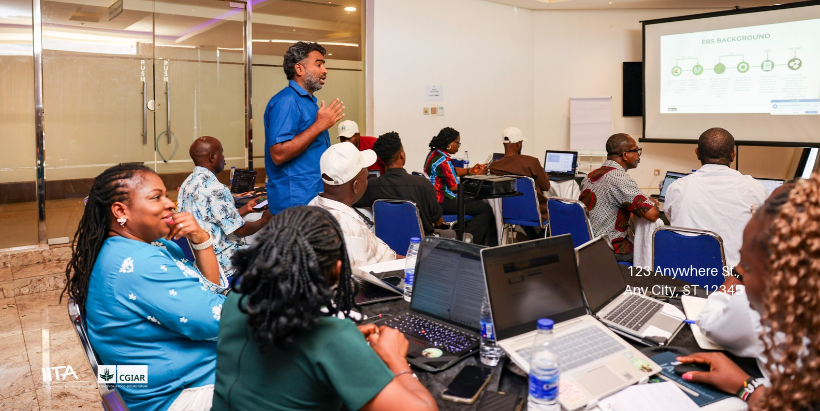
Taro breeders and research partners under the VACS Breeding Project have received practical training in the Enterprise Breeding System (EBS), a key CGIAR breeding data management platform, to strengthen research data management, track genetic gains, and accelerate the development and delivery of improved taro varieties.
The training, held in Abuja, Nigeria, on 12-13 November, provided participants with hands-on experience in navigating the Core Breeding Platform, managing breeding data, creating experiments, and using digital tools to support the different stages of crop improvement.
In his introductory remarks, Vish Banda, IITA Product Manager for Crop Variety Development, highlighted the growing importance of EBS within the CGIAR breeding platform, describing its adoption as an important direction for breeding programs. He encouraged participants to make the most of the training opportunity, emphasizing the need for the team to harness the platform and strengthen its capacity to demonstrate research progress and results. He also noted the platform’s relevance to the broader funding and investment framework, including the need to demonstrate breeding progress in line with grant requirements and approvals.
Facilitated by Peteti Prasad, IITA Breeding Database Programmer and Manager, the training focused on strengthening participants’ capacity in breeding data management, data flow, data capture, storage, management, sharing, and utilization. Preceding sessions also covered Bioflow and familiarization with the Seed Tracker App, facilitated by Ekanem Ukoabasi and Prince Ajayi, respectively, providing participants with an understanding of how these interconnected tools support breeding data management, research production, and seed delivery.
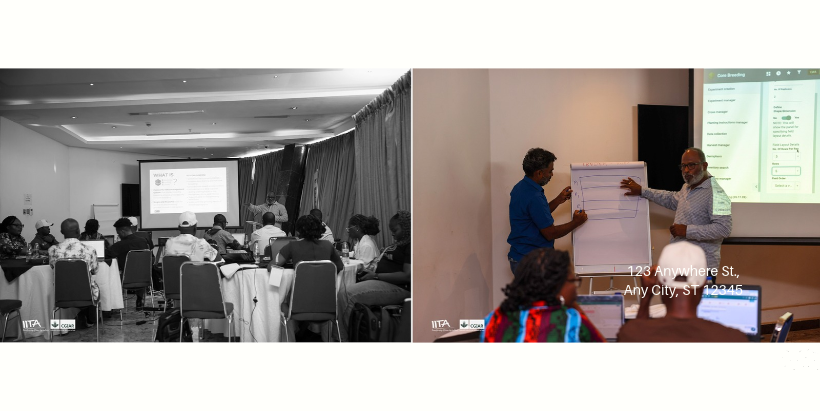
Prasad emphasized that agricultural research depends heavily on reliable data to develop crop varieties with improved yields and disease resistance. However, breeding data is expensive and time-consuming to generate, making its effective management essential to sustaining research investments and delivering results. He stressed four fundamental requirements for research data: it must be properly captured, stored, shared, and trusted.
Through EBS, breeding programs can organize and manage their data, monitor progress, and make information available for assessment across the CGIAR breeding network. With more than 800,000 accessions represented within the broader breeding data ecosystem, effective data management and sharing are increasingly important for research collaboration and decision-making.
Participants explored the Core Breeding Platform and its navigation features, including Breeding Analytics, the EBS Data Browser, germplasm and trait searches, and the List Manager. They also received practical instruction in experimental design, covering different experiment categories such as crossing blocks, crossing parent nurseries, breeding trials, and observations.
Attention was given to breeding trials and observations, which are especially relevant to taro breeding. Participants learned how to select experiment types, review metadata, add entries, and apply the appropriate planting, trait, management, and harvest protocols. They also explored how experimental naming conventions are generated according to the unique codes used by individual breeding programs.
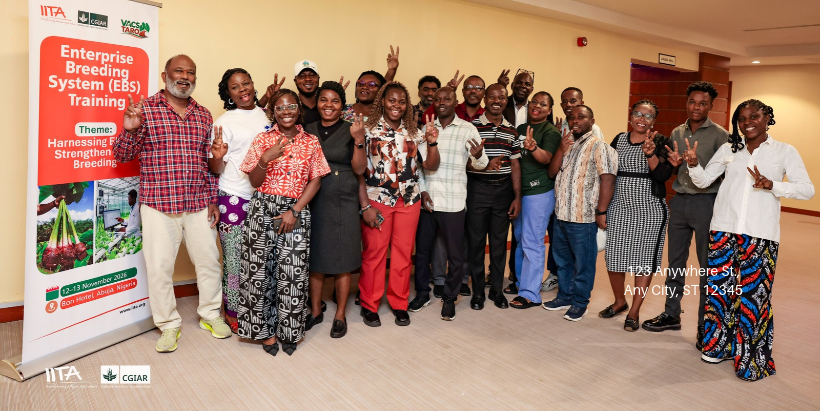
The sessions demonstrated how experiment creation can be reviewed at different stages before final submission and how completed trials are subsequently accessed through the Experiment Manager. Participants practiced these processes through demonstrations and hands-on exercises.
Another important component was the introduction to Bioflow, which enables researchers to work with phenotypic and genotypic data from different sources, including existing crop databases. The training highlighted how data uploaded and managed through EBS can support information sharing with Bioflow and the Breeding Portal, providing a more transparent system for assessing breeding results and using them to inform investment and funding decisions.
Beyond the technical sessions, Dr Lava Kumar, IITA Head of the Germplasm Health Unit and the Virology and Molecular Diagnostics Unit, provided participants with a broader perspective on taro’s global importance, diversity, and commercial potential. He highlighted India’s rich taro diversity and the crop’s widespread cultivation across Southeast Asia and other parts of the world, including temperate regions. Discussing taro production in Africa, he noted that Nigeria, Ethiopia, and China are among the countries where more organized field cultivation takes place, alongside the widespread backyard production found in several other countries.
He also drew attention to the different taro types, including Dasheen and Edo, and the crop’s nutritional potential. With its edible leaves and roots and its gluten-free characteristics, taro has considerable potential to be positioned as a nutritious superfood and a commercially important tuber crop. However, despite its potential, taro remains underrepresented in mainstream agricultural markets. Dr Kumar described its current market positioning as somewhat orphaned: traditional, widely available, yet lacking a clearly established place in mainstream commercial food systems. He encouraged stakeholders to explore opportunities to reposition taro as a staple crop, with stronger market visibility and consumer demand, particularly in major urban markets like Abuja.
The discussions reinforced the importance of connecting breeding research with effective seed production and market delivery. While EBS supports research and breeding production trials, the Seed Tracker Pro platform provides tools to support seed production trials and improve the tracking and availability of planting materials.
The training also highlighted the importance of building a stronger evidence base for future investment in taro. Participants were encouraged to contribute breeding data and research results from different regions to strengthen the case for continued investment and support for the crop, including the longer-term development ambitions. By strengthening participants’ capacity to manage and share reliable breeding data, the training represents an important step towards more coordinated taro research, measurable genetic gains, and faster delivery of improved varieties.
Together, these systems offer opportunities to strengthen the pathway from research breakthroughs and improved varieties to accessible seeds and wider adoption by farmers and consumers. Ultimately, the ambition goes beyond introducing digital tools. It is about ensuring that valuable research data translates into improved varieties, accessible planting materials, stronger commercial opportunities, and the wider recognition of taro as a nutritious crop with significant potential for food security and livelihoods.
Related story:
https://iita.org/news-item/empowering-breeders-iita-hosts-hands-on-hybridization-training-on-bambara-groundnut/https://iita.org/news-item/enterprise-breeding-system-training-strengthens-breeding-innovation/