
Jobs

Projects

Accelerating Impacts of CGIAR Climate Research for Africa (AICCRA) – Ghana program

The Accelerating Impacts of CGIAR Climate Research for Africa (AICCRA) program seeks to make proven CGIAR climate‑smart agriculture (CSA) innovations and climate information services (CIS) accessible to millions of African smallholder farmers.  AICCRA leverages 50+ years of CGIAR innovation to scale CSA practices and CIS; it works with national and regional partners to provide smallholders with enhanced climate information and validated technologies so they can anticipate weather events, adopt resilient practices and safeguard livelihoods.

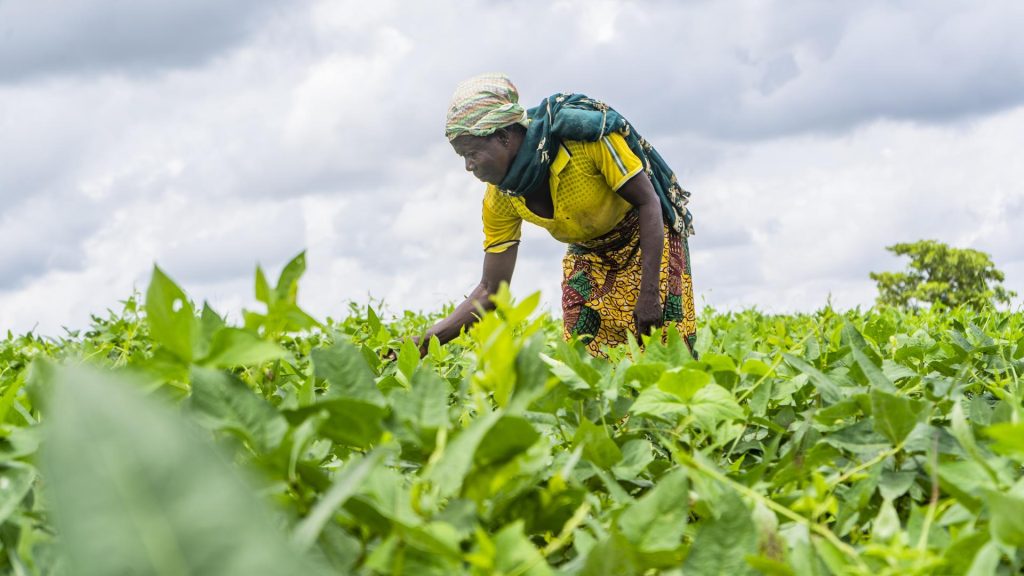
IITA leads the Ghana cluster of AICCRA. The Ghana program addresses vulnerabilities in a rain‑fed, smallholder‑dominated agricultural sector that is exposed to erratic rainfall, prolonged dry spells and rising temperatures.  Structural bottlenecks—weak extension systems, fragmented climate governance, poor data sharing and socio‑economic barriers that disproportionately affect women and low‑literacy farmers —limit the uptake of climate‑smart innovations.  The Ghana cluster enhances institutional capacity, coordinates pathways to scale CSA and CIS innovations, and aligns interventions with national climate policy frameworks.  It also integrates gender and social inclusion to ensure women farmers gain equitable access to climate‑smart technologies.
Expected results

AICCRA‑Ghana works through a blend of demonstration parks, radio broadcasts, digital platforms and public–private partnerships to scale CSA and CIS innovations.  Expected results include:

  • Scaling CSA innovations through technology parks – working with the Crops Research Institute (CRI‑CSIR) and Ghana’s Department of Agriculture, AICCRA‑Ghana has established 31 technology parks for maize, cowpea, sweet potato, tomato and yam.  Farmer field days at these parks have exposed over 2,400 farmers in 20 communities across six regions to improved crop varieties and One‑Health practices.
  • Training and capacity building – more than 45,000 farmers (59.2 % women) have received face‑to‑face training on CSA and CIS practices.  The program has also trained 219 extension agents and lead farmers and 68 journalists to support climate‑smart decision‑making on land preparation, seed selection, soil treatment, planting and harvesting.
  • Mass communication and digital advisories – a 20‑episode radio programme produced with Farm Radio International and eight community radio stations reached more than 245,000 farmers (39 % women).  Through the digital platform managed with Esoko, seasonal forecasts, pest and disease advisories and early‑warning announcements have been disseminated to over 100,000 farmers via text and voice messages.
  • Decision‑support and data systems – in partnership with the Plant Protection Services Directorate (PPRSD) of Ghana’s Ministry of Food and Agriculture, AICCRA is operationalising a national Early Warning & Rapid Response System for Pests and Diseases (EWRRSPD) .  The program is also co‑developing the Ag‑Innovation Data Hub (AIDH‑Ghana) with CSIR‑INSTI to provide a demand‑driven digital platform for data sharing and decision support.
  • Scaling One Health and CSA innovations – the program works with the Biotechnology and Nuclear Agricultural Research Institute (GAEC), the Crops Research Institute, CABI and PPRSD to scale biopesticides (e.g., neem leaf extract), aeroponics‑generated seed yam and disease‑free sweet potato vines.  These innovations aim to control pests, viral infestations and disease pressure while improving yields.
  • Mainstreaming gender and social inclusion – AICCRA‑Ghana prioritises climate information and innovations for women’s crops such as cowpea, vegetables and groundnuts .  Working with the Women in Agriculture Development (WIAD) directorate and village savings and loans associations, the program builds women’s climate resilience and ensures women farmers comprise roughly half of all participants.
  • Institutional strengthening and collaboration – the Ghana cluster has strengthened inter‑institutional collaboration through district and community CSA hubs, regular content validation routines and co‑production processes.  Investments in interactive voice response (IVR), SMS and USSD systems and the AgData Hub improve real‑time dissemination and analytics‑based decision‑making.
  • Enhanced adoption and resilience – AICCRA’s blended scaling model (radio programmes, interactive phone‑ins, IVR in local languages, community information centres, demonstration plots and lead‑farmer networks) has improved farmers’ access to timely, contextualised CSA and CIS advisories .  Farmers report greater trust in advisories, improved understanding of forecast implications and increased early adoption of climate‑smart practices such as timely planting, fertiliser scheduling and integrated pest management.

Significance

AICCRA‑Ghana demonstrates how coordinated, multi‑actor systems combined with inclusive dissemination pathways can strengthen climate resilience at scale.  By 2025 the program aims to have provided climate‑smart advisories and technologies to hundreds of thousands of farmers across Ghana, with an emphasis on women and marginalised communities.  Sustained institutional commitments, improved data sharing and long‑term financing are essential to ensure the continuity and scaling of these innovations.

Project leader:  Ghislain Tepa‑Yotto

Start date: February 1, 2021
End date: December 31, 2025

Partners: 

AICCRA‑Ghana is led by IITA in collaboration with a consortium of national and international partners:

Location: Ghana

Team members: 

The Ghana cluster is supported by a multidisciplinary team from IITA.  In addition to the Country Coordinator, key team members include:


Scroll to Top
Olaosebikan, Olamide

Olamide Deborah Nwanze is a Senior Research Associate specializing in gender mainstreaming research to inform participatory and inclusive breeding, variety development, and seed systems policies regarding root, tuber, and banana (RTB) crops in the International Institute of Tropical Agriculture Headquarters, Ibadan, Nigeria. She is a PhD candidate at the University of Ibadan and holds an MSc and B. Agric in Agricultural Extension and Rural Development. Olamide is a fellow of the African Women in Agricultural Research and Development – Gender Responsive Agricultural Systems Policy (AWARD-GRASP) and the Gender Responsive Researchers Equipped for Agricultural Transformation (GREAT). She seeks to apply her gender-mainstreaming learnings, gender-responsive research, and policy development, and review expertise to facilitate women, youth, children, and vulnerable social group’s access to and adoption of agricultural Innovations that guarantee food, nutrition, income, and livelihood security in Africa. Her current roles include mentoring research fellows, development of guides and training manuals, implementation and adaptation of gender frameworks and tools, value chain actors’ engagement as citizen science partners, policy review and redesign, data management, and analysis. Her current research explores mixed methods and participatory and interdisciplinary approaches to capture and highlight gender dynamics, needs, preferences, and challenges stakeholders face within the agricultural livelihood value chain to prioritize gender-inclusive strategies in breeding programs, policy design, and implementation.

At IITA, she contributes to the implementation of the CGIAR Accelerated Breeding Initiative and Genetic Innovation Programs; participatory and gender research within the NextGen CassavaHarvestPlusRTBFoods, and Tricot-ClimMob 1000Farms Projects; and gender knowledge communication via the G-LENS webinar series, video documentary, policy briefspublications, and blogs.


Recent publications

de Sousa, K., van Etten, J., Manners, R. Bello, A., Teeken, B., Olaosebikan, O., et al. 2024. The tricot approach: an agile framework for decentralized on-farm testing supported by citizen science. A retrospective. Agron. Sustain. Dev. 44, 8. https://doi.org/10.1007/s13593-023-00937-1

Madu, T., Onwuka, S., Nwafor, S., Onyemauwa, N., Ejechi, M., Ofoeze, M., Ukeje, B., Eluagu, C., Olaosebikan, O., Okoye, B., 2024. Gender-Inclusive Consumer Studies Improve Cassava Breeding in Nigeria in: Frontiers in Sociology, volume 9, number: 1224504, doi: 10.3389/fsoc.2024.1224504

Olaosebikan, O.; Bello, A.; Utoblo, O.; Okoye, B.; Olutegbe, N.; Garner, E.; Teeken, B.; Bryan, E.; Forsythe, L.; Cole, S.; Madu, T. 2023.  Stressors and Resilience within the Cassava Value Chain in Nigeria: Preferred Cassava Variety Traits and Response Strategies of Men and Women to Inform Breeding. Sustainability 15, 7837. https://doi.org/10.3390/su15107837

Okoye, B., Ofoeze, M., Ejechi, M., Onwuka, S., Nwafor, S., Onyemauwa, N., Ukeje, B., Eluagu, C., Obidiegwu, J.*, Olaosebikan, O., Madu, T.* 2023. Prioritizing preferred traits in the yam value chain in Nigeria: a gender situation analysis in: Frontiers in Sociology, volume 8, number: 1232626, pages 1 – 9, ISSN 2297-7775, 2023. https://www.frontiersin.org/articles/10.3389/fsoc.2023.1232626/full

Olaosebikan, O., Bello, A. A., de Sousa, K., Ndjouenkeu, R., Adesokan, M., Alamu, E. O., Agbona, A., van Etten, J., Kegah, F. N.*, Dufour, D., Bouniol, A., Teeken, B. 2023. Consumer acceptability of cassava gari-eba food products across cultural and environmental settings using the triadic comparison of technologies approach (tricot) in: Journal of the Science of Food and Agriculture,

Teeken, B., Olaosebikan, O., Bello, A. A., Madu, T.*, Cole, S. M. 2023. Qualitative assessment on the positionality and preferences of dyads in relation to cassava-related activities: working with tricot trial citizen scientists https://hdl.handle.net/10568/138326 Type: Manual

Bouniol, A., Ceballos, H., Bello, A. A., Teeken, B., Olaosebikan, O., Owoade, D., Agbona, A., Fotso Kuate, A., Madu, T.*, Okoye, B.*, Ofoeze, M.*, Nwafor, S.*, Onyemauwa, N.*, Adinsi, L.*, Forsythe, L., Dufour, D. 2023. Varietal impact on women’s labour, workload and related drudgery in processing root, tuber and banana crops: focus on cassava in sub-Saharan Africa in: Journal of the Science of Food and Agriculture, pages 1 – 25, ISSN 0022-5142,

Bello, A. A., Agbona, A., Olaosebikan, O., Edughaen, G., Dufour, D., Bouniol, A., Iluebbey, P., Ndjouenkeu, R.*, Rabbi, I. Y., Teeken, B. 2023. Genetic and environmental effects on processing productivity and food product yield: drudgery of women’s work in: Journal of the Science of Food and Agriculture, pages 1 – 32, ISSN 0022-5142, 5

Cavicchioli, M., Zimbiti, T., Teeken, B., Nwanze, D.O., Liani, M., Parkes, E. & Bello, A. 2023. IITA-Gender Responsive Breeding Training Report. Genetic Resources Center, IITA-HQ, Ibadan, 21-23 September, 2022. Ibadan, Nigeria: IITA, (34 p.).https://hdl.handle.net/10568/131368

Agbona, A. Peteti P., Teeken B., Olaosebikan O. Bello, A. A., Parkes, E., Rabbi, I. Y., Mueller, L., Egesi, C., Kulakow, P. 2022. Data Management in Multi-disciplinary African RTB Crop Breeding Programs. In: Williamson, H.F., Leonelli, S. (eds) Towards Responsible Plant Data Linkage: Data Challenges for Agricultural Research and Development. Springer, Cham. https://doi.org/10.1007/978-3-031-13276-6_5

Lora Forsythe, Pricilla Marimo, Sarah Mayanja, Olamide D. Olaosebikan, Esme Stuart, Bela Teeken, Benjamin Okoye, Tessy Madu, (2021). Cross-product Gender Analysis of RTBfoods Step 2 Gendered Food Mapping on RTB Products. Understanding the Drivers of Trait Preferences and the Development of Multi-user RTB Product Profiles, WP1. London, UK: RTBfoods Field Scientific Report, 30 p.

Teeken, B., Garner, E., Agbona, A., Balogun, I., Olaosebikan, O., Bello, A., Madu, T., Okoye, B., Egesi, C., Kulakow, P. and Tufan, H.A. 2021. Beyond “Women’s Traits”: Exploring How Gender, Social Difference, and Household Characteristics Influence Trait Preferences. Frontiers Sustainable Food Systems 5:740926. https://doi.org/10.3389/fsufs.2021.740926

Teeken, B., Agbona, A., Bello, A., Olaosebikan, O., Alamu, E., Adesokan, M., Awoyale, W., Madu, T., Okoye, B., Chijioke, U., Owoade, D., Okoro, M., Bouniol, A., Dufour, D., Hershey, C., Rabbi, I., Maziya‐Dixon, B., Egesi, C., Tufan, H. and Kulakow, P. (020. Understanding cassava varietal preferences through pairwise ranking of gari‐eba and fufu prepared by local farmer–processors. Int J Food Sci Technol. https://doi.org/10.1111/ijfs.14862

Bela Teeken, Olamide Olaosebikan, Ireti Balogun, Benjamin Okoye, Tessy Madu, Steven Cole, Abolore Bello, Elizabeth Parkes. (2020). Piloting the G+ customer and product profile tools for gender-responsive cassava breeding in Nigeria. Nigeria: International Institute of Tropical Agriculture (IITA). https://hdl.handle.net/20.500.11766/13000