
IITA partners with various African governments and the private sector to transform African agriculture, alleviate poverty, increase food security, and improve livelihoods. Over the years, IITA has developed new technologies and programs that draw the Institute closer to its goal. This activity has increased the interest of governments of various African countries to partner with IITA in improving their country’s economy through agriculture and agribusiness.
H.E. Felix Tshisekedi, the President of the Democratic Republic of Congo (DRC), is interested in partnering with IITA. He has decided to work with IITA and the African Development Bank (AfDB) to transform agriculture in Congo from subsistence to commercial. Hence, the President sent delegates to see IITA’s technologies and ongoing programs and observe areas where the government can fully work with IITA on the new project.
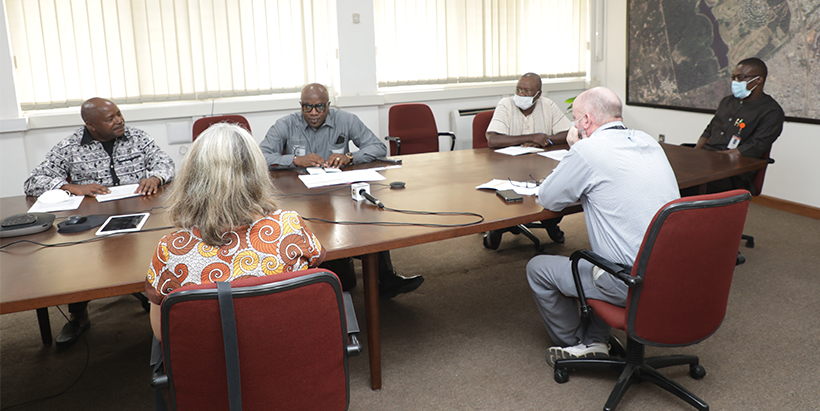
Mr Pacifique Kahasha Birindwa, an adviser to the DRC President, and his Assistant Mr Felix Karume Ntwali visited IITA Headquarters from 9 to 15 January. Following discussions with Dr Nteranya Sanginga, IITA Director General, and the management team about a partnership in upscaling agriculture in Congo, they visited various laboratories to see available technologies.
At the Genetic Resources Center (GRC), they saw the seed banks, long- and short-term storage rooms, and laboratory for seed selection and preservation. At the Bioscience Lab, they saw the sequencing machine, PCR machine, Real-time PCR machine, Ploidy analyzer, and Lyophilizer. Other laboratories visited include the Virology and Molecular Diagnostics Lab and Germplasm Health Unit (GHU) – Import and Export Lab.
The delegates were also interested in the Institute’s youth programs. They visited the youth group, including IITA Youth Agripreneurs (IYA) for young graduates and the Start Them Early Program (STEP) for secondary school students. Following presentations from the team leads to highlight their activities—how they started, the challenges faced, and the successes achieved—some beneficiaries of the projects showcased their products and shared how they started and how far they have gone with IITA’s assistance.
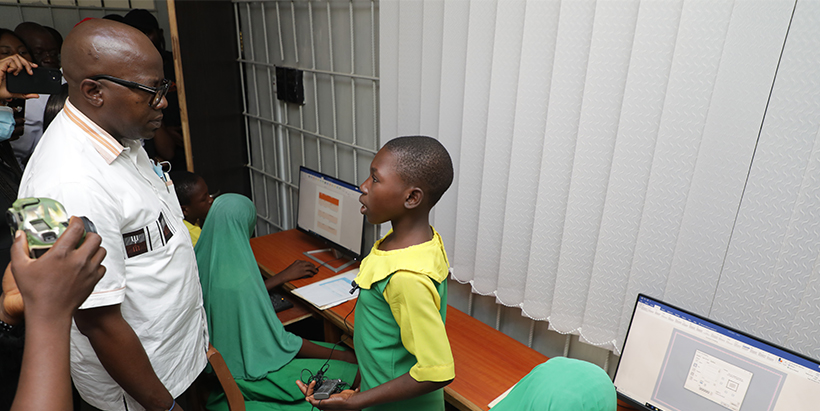
The delegates also visited projects under the youth programs that have been established in communities around the Institute. Visiting Fasola Secondary School under STEP, they toured the upgraded and newly built facilities like classrooms, toilets, borehole, agribusiness hub, and ICT training facilities, done by IITA to make the learning environment more conducive for students. Students also gave testimonies of what they have learned in crop production, value addition, ICT training, and how they have started their own agribusinesses with support from IITA.
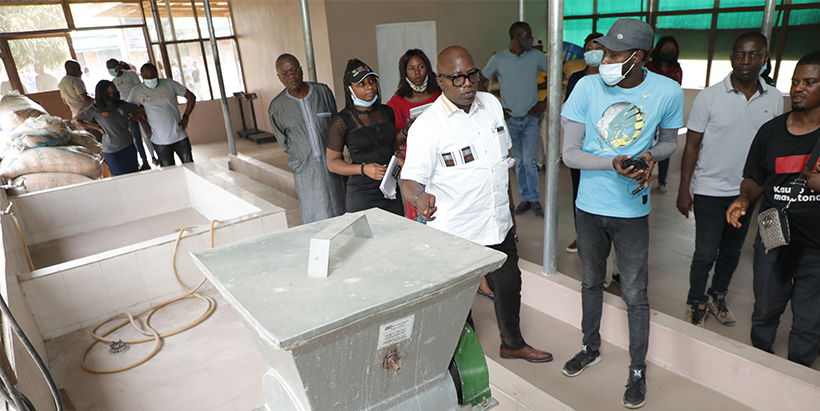
At Awe under IYA, Mr Pacifique and his assistant visited a two-hectare cassava field; a vegetable greenhouse for cucumber, tomato, and pepper; an animal pen for goats and sheep; and a processing center. Through a short presentation, the team showed the work being done in capacity building for youth on agriculture and production for commercial purposes and how the Awe Community people have benefited from the project.
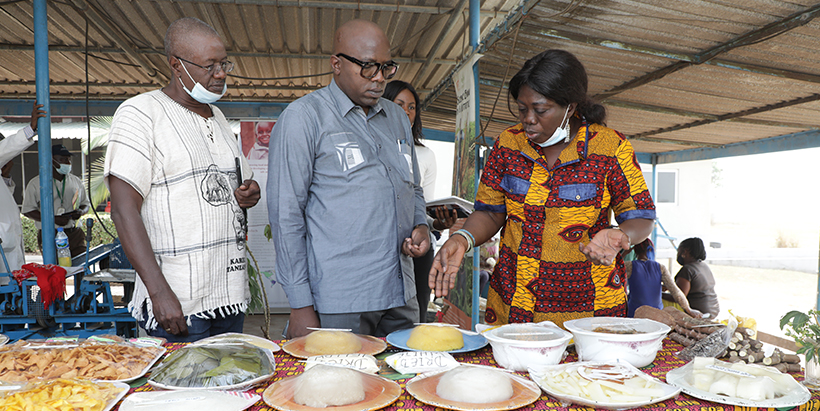
The delegates also visited other IITA units of interest, such as the Business Incubation Platform. They learned about Aflasafe, a product that IITA produces to mitigate aflatoxin in crops, and NoduMax for increasing plant yields. At the Cassava Breeding Unit, there was an exhibition of various machines such as the peeler/washer, grinder, presser, and dryer for manual and modern cassava processing into multiple products. There was also an exhibition of final products from cassava such as boiled vitamin A cassava, cake, chin-chin, and cassava flour.
Impressed with the technologies and programs in IITA, Mr Pacifique said, “We want DG Sanginga to replicate these programs not only in DRC but also in other countries of Africa. We want to train people who will train others so that we can take control of our economy.”
Contributed by
Recent stories