
Since the establishment of the IITA BoT Awards in 2012, the Pathology and Mycotoxin/Aflasafe Unit of IITA–CGIAR has been frequently recognized for the science, partnerships, and teamwork that are resulting in safer food for millions of consumers and higher income for tens of thousands of farmers who are moving from subsistence to commercial agriculture. The team has achieved the unique milestone of winning IITA BoT awards in all five categories, four of them twice.
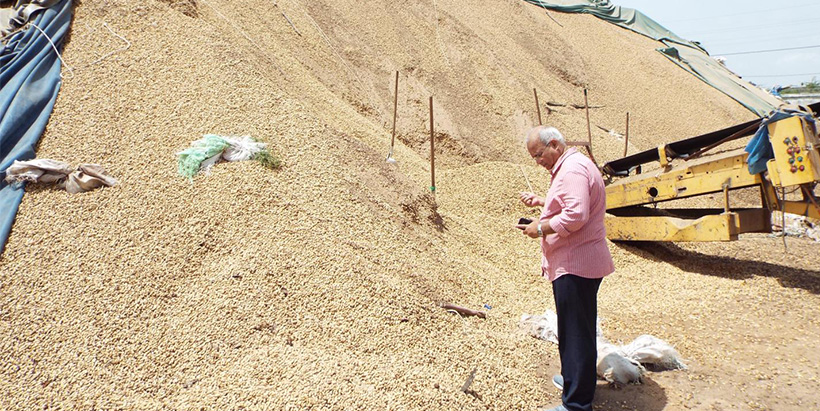
The first Outstanding Scientist award was conferred on IITA Emeritus Scientist Ranajit Bandyopadhyay in 2012 for the management of seemingly intractable plant disease problems of all IITA mandate crops in many African countries and for the promising results of the Aflasafe technology, which translated into the Aflasafe Initiative (that he co-founded in 2002) now being recognized as the world authority in aflatoxin biocontrol. In 2021, George Mahuku, Senior Plant Pathologist for East Africa, was recognized as the Outstanding Scientist for his multiple contributions to mycotoxin management in maize and groundnut, Aflasafe activities in Tanzania and Uganda, and research for control of multiple maize (i.e., maize lethal necrosis) and banana diseases (e.g., black Sigatoka, Fusarium wilt, Xanthomonas wilt).
In the category of Outstanding Support Staff, Titilayo Falade, now an Associate Scientist, was recognized in 2013 for excellent contributions to the Aflasafe program, which were critical to achieving current progress: development, testing, registration, and technology transfer of Aflasafe products in multiple countries. In 2022, Lawrence Kaptoge, Process Engineer, was recognized for enabling the moving of the Aflasafe technology from the laboratory to a world-class industrialized technology. He has been instrumental in setting up Aflasafe manufacturing plants and research laboratories in multiple countries; he also provides technical, engineering, and processing oversight to several IITA Units and led the renovation of IITA Golf Course towards an eco-friendly course.
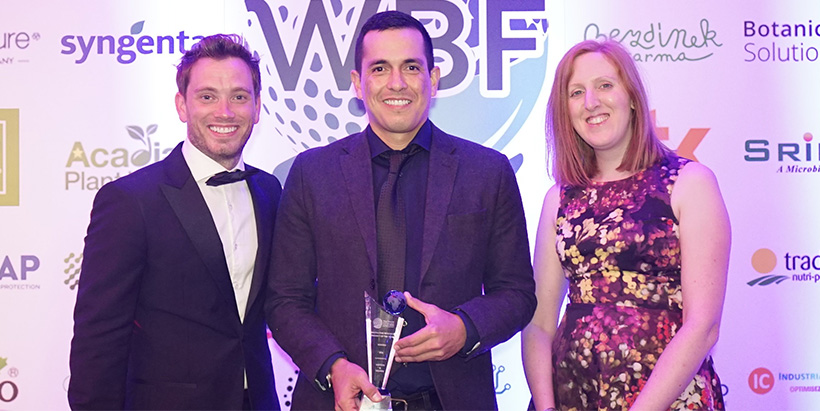
In 2019 and 2020, Alejandro Ortega-Beltran, now a Senior Plant Pathologist, was awarded the Outstanding Young Scientist award for his contributions to developing, testing, and registering Aflasafe products with regulatory authorities; for technology transfer efforts to private sector partners in multiple countries. This was also a recognition for work on aflatoxin resistance, cowpea bacterial blight, maize foliar diseases, among others. He is the first and only scientist to receive an IITA BoT award twice.
In 2016, the team was awarded Outstanding Scientific Article for the publication “Environmental distribution and genetic diversity of vegetative compatibility groups determine biocontrol strategies to mitigate aflatoxin contamination of maize by Aspergillus flavus” (Atehnkeng et al., Microbial Biotechnology.) The paper reported strategies to select and deploy native atoxigenic isolates to mitigate aflatoxin contamination in maize in Nigeria, which were adopted in other countries where the Aflasafe Initiative operates. In 2017, the team was awarded Outstanding Scientific Article for the publication “Biological control of aflatoxins in Africa: current status and potential challenges in the face of climate change” (Bandyopadhyay et al., World Mycotoxin Journal.) It is a highly quoted state-of-the-art review on aflatoxin mitigation strategies across Africa, summarizing past activities of the Aflasafe Initiative, challenges, and opportunities.
In 2013, the Aflasafe team earned the Outstanding Team award for progress on aflatoxin mitigation strategies in multiple countries. In addition to all Unit members, other IITA scientists, considered part of the extended Aflasafe Initiative, were part of the awarded team: Bussie Maziya-Dixon, Abebe Menkir, Lava Kumar, Tahirou Abdoulaye, and Godwin Atser.
Overall, the work of the team allows fulfillment of several core objectives of IITA: the transference of technologies to partners, reduced rural poverty through generated income, reduced malnutrition by making safer foods available, and improved both income and trade opportunities of farmers, aggregators, distributors, and traders in several countries. All these have been possible through forming a strong multidisciplinary team comprising biological scientists, engineers, social scientists, communication experts, extension agencies, policymakers, regulators, business development specialists, private sector investors, among others, which is allowing sustainable use of the aflatoxin biocontrol technology.
Contributed by Alejandro Ortega-Beltran
Contributed by
Recent stories