
The Agricultural Transformation in the Nigerian Federal States and Togolese Regions Towards Achieving Zero Hunger Project was officially Launched in Togo on 12 October at the Ministry of Agriculture, Livestock and Rural Development complex in Lome, Togo.
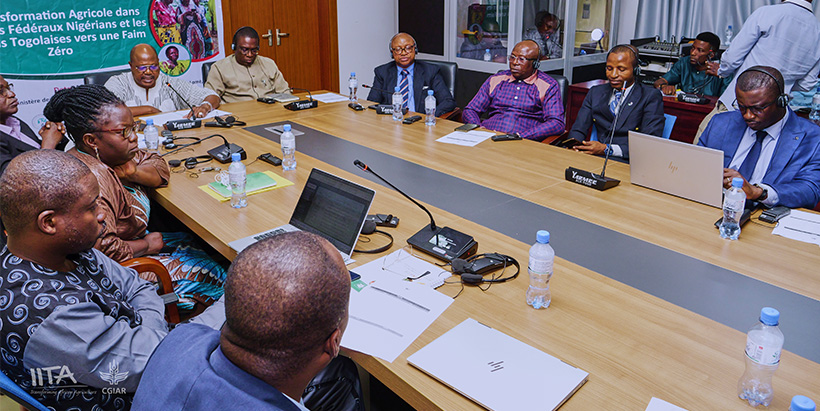
The project, being implemented by IITA and AfricaRice, is funded by the International Fund for Agricultural Development (IFAD). The Zero Hunger Project aims to contribute to achieving the Sustainable Development Goal (SDG) 2—Zero Hunger by 2030—through the development and dissemination of improved agricultural technologies and practices.
In his remarks, the Honorable Minister of Agriculture, Livestock and Rural Development, Antoine Lekpa Gbegbeni, represented by the Permanent Secretary in the Ministry of Agriculture, indicated that Togo has a roadmap for 2025 to use agriculture as a growth engine for the country. He sees the Zero Hunger Project’s importance in helping to build stakeholder capacities and deploy proven technologies to enhance farmers’ and processors’ livelihoods. He charged the project team to give mechanization a special focus.
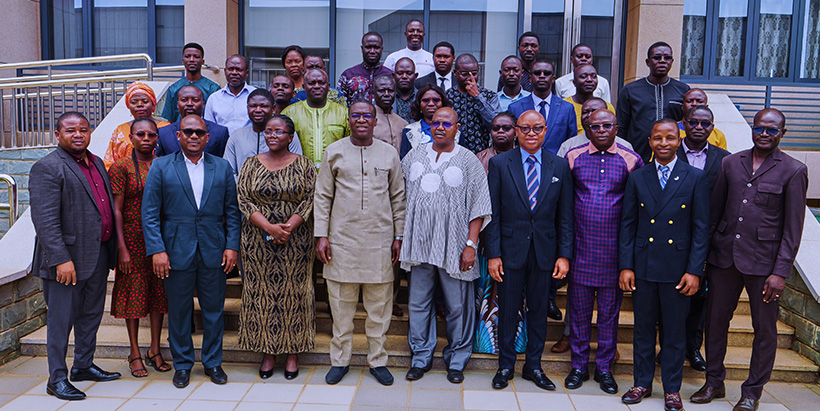
Project Lead and IITA Business Incubation Platform CEO Dr Debo Akande thanked the Honorable Minister, other government officials, and the focal points for making the project launch a reality. He highlighted the importance of using improved innovations to enhance farmers’ livelihoods and promote the digitalization of farmers’ records for accountability and tracking of project beneficiaries. In response to the Ministers’ request to focus on mechanization, he said a mechanization needs study will be conducted to ensure intervention in that area is data-driven and meets the real needs of the people.
The Zero Hunger Project Co-Lead and AfricaRice Regional Representative and Coordinator for Nigeria, Dr Francis Nwilene, underscored the importance of orchestrating agricultural transformation through a progressive sequence encompassing production, processing, marketing, and policy as enablers. He emphasized the array of available technologies (improved seeds, digital tools, equipment, good agronomic practices) that can be harnessed for this transformation. He encouraged the Togolese government to invest additional funds to support the seed fund provided by IFAD to ensure the technologies and innovations to be deployed reach more stakeholders.
The project is expected to benefit 9000 farmers, processors, fabricators, and food vendors in the country.Contributed by
Recent stories