
Cassava is sub-Saharan Africa’s (SSA) second most important staple food crop after maize. It is often referred to as a “woman’s crop,” a label derived from numerous factors, including the low market value of cassava as an established staple food mainly grown and consumed at home, along with characteristics such as its low input requirements and drought tolerance.
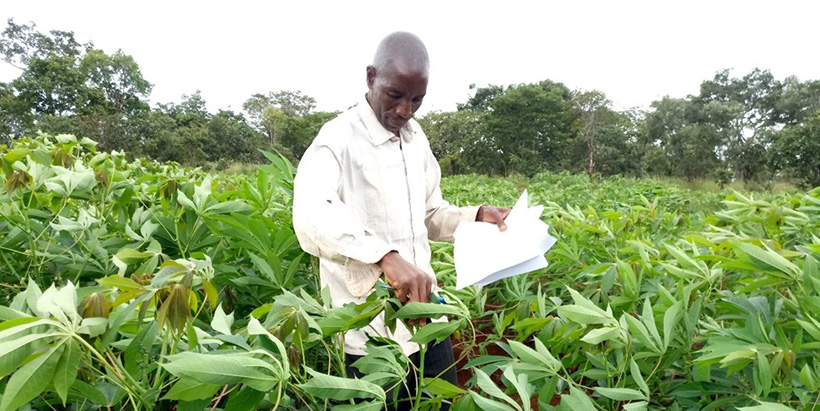
In Tanzania, cassava is considered an “emerging market” commodity. However, it suffers from low farm productivity, partly due to the use of local varieties that are highly susceptible to Cassava Mosaic Disease (CMD) and Cassava Brown Streak Disease (CBSD). Productivity can be enhanced if farmers adopt improved high-yielding and CMD- and CBSD-tolerant cassava varieties and utilize good agronomic practices.
To meet the growing demand for cassava, the Government of Tanzania has emphasized the need to work toward increasing overall production by developing a 10-year (2020-2030) National Cassava Development Strategy. The strategy aims to create a commercialized cassava sub-sector for food security and income generation by promoting improved technologies across the value chain and increasing cassava productivity, profitability, and employment opportunities.
Through partnerships with non-governmental organizations and the private sector, the Government has begun to set up a commercially sustainable cassava seed system. One well-known initiative is the establishment of networks of cassava seed entrepreneurs (CSEs) consisting of smallholder farmers who produce, promote, and enhance access to planting material (stem cuttings) of improved high-yielding and disease-tolerant varieties to nearby cassava farmers as a means of generating additional income.
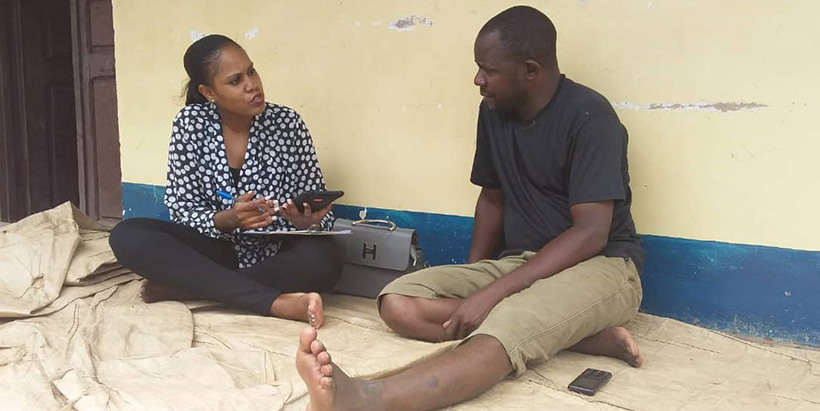
In one of the initiatives, the “Building an Economically Sustainable Seed System in Tanzania for Cassava” (BEST) project, researchers from IITA and other partner organizations recognized the disparity between the importance of cassava to women and their abilities to potentially profit from it at the highest levels of the seed system. As a result, a study was conducted to formally document some barriers and constraints that created gender inequalities in the cassava seed system to better understand women’s low representation and experiences in commercialized cassava seed production. This study was documented in a journal authored by IITA Postdoctoral Fellow, Gender Research (Cassava), Millicent Liani.
The study was carried out in the Southern, Eastern, and Lake Zones of Tanzania, covering 11 cassava-growing regions, including Coast, Geita, Kagera, Kigoma, Lindi, Mara, Mtwara, Morogoro, Mwanza, Ruvuma, and Tanga. The study targeted two main groups during interviews: women and men farmers who were operating as CSEs in the project regions producing commercial or quality declared cassava seed for sale in their locales; and women and men farmers who were referred by the District Council for consideration as CSEs but who were not selected by the project because they did not ultimately meet all the criteria used by the project to inform their selection.
The collected data highlighted several challenges women faced as they operated their cassava seed production businesses, such as lower access to and control over land and financial resources (capital) due to factors such as marital status, age, and positional hierarchy in the family. Married women CSEs have the additional burden of dealing with strong gender norms around women’s family-centered roles that limit their mobility outside their communities, hindering them from attending agronomic training on seed production.
Some women CSEs, however, expressed positive outcomes that have accrued from their participation in CSE work, including enhanced social status in their communities and improved living standards characterized by better housing, increased food security, and the ability to afford children’s school fees and purchase land and household goods.
The researchers advised that for the commercialized cassava seed system to be more socially inclusive and sustainable, there is a need to adopt gender-aware approaches to address the underlying barriers and biases that exclude women and other social groups. They also suggested that development efforts should consider combining social change innovations with seed system interventions to address the inequitable norms and power relations that create unique constraints for women to operate effectively as seed entrepreneurs.
Contributed by
Recent stories