
IITA partners with French Ministry of Foreign Affairs to enhance women’s livelihoods
July 3, 2021
On 11 June, IITA officially launched the Support to Women Entrepreneurship in the Agrifood Sector in Nigeria (SWEAN) project at its headquarters in Ibadan with the Ambassador of France and the Oyo State Governor. The project was awarded to Nigeria by the French Ministry for Europe and Foreign Affairs (Embassy of France in Nigeria) through IITA, the implementing partner. The project seeks to empower women agripreneurs, improve their skills, and facilitate their inclusion in market networks in Oyo and Kaduna states.
During the event moderated by Zainatou Soré is the Coordinator of the SWEAN project,
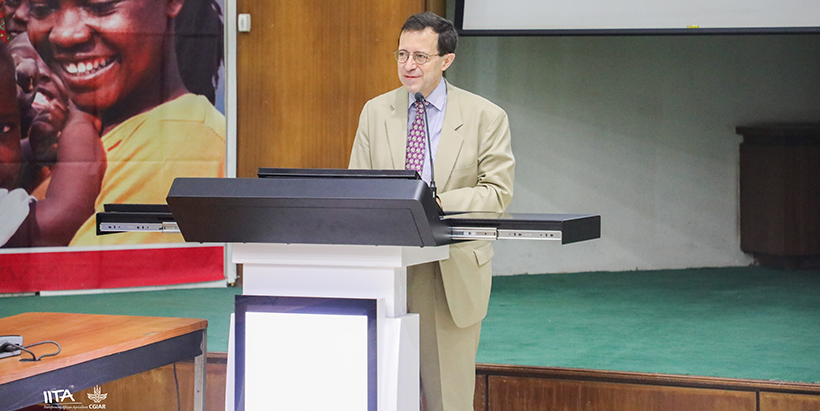
In the opening, Kenton Dashiell, IITA Deputy Director General, Partnerships for Delivery, acknowledged partners and the current relationship with Oyo State. “This project fits squarely into the strategic plan of IITA and reflects the Institute’s core beliefs,” he stated.
Jerome Pasquier, Ambassador of France, expressed delight in having one more project with Oyo State, with the support of the Governor and his administration. He said the project, developed in Kaduna and Oyo states, representing Nigeria’s northern and southern geopolitical zones, respectively, is a good response to some big challenges in the country. He congratulated the women’s associations on taking steps to improve women’s daily lives.
Furthermore, he mentioned how agriculture could help save foreign currency by limiting imports and creating employment for women. “We are very pleased that the French ambassador is involved in this program in cooperation with French colleges. I hope that this cooperation will be long term,” the Ambassador said.
 Jacob Ojekunle, Commissioner for Agriculture, Oyo State, stated in his remarks that developing agriculture in Nigeria through this project is a good strategy by the French Ministry for Europe and Foreign Affairs. The women in the agriculture and food sectors who are taking part in the project expressed an interest in food processing and fortification, branding and packaging, and market and export opportunities. These unique areas of intervention will ensure the project’s sustainability in the two states. He assured the French ambassador that “the involvement of Oyo State women will continually make you proud.”
Halima Lawal, Commissioner for Agriculture, Kaduna State, reminded attendees that ending hunger and poverty is one of the sustainable development goals. Hence, empowering women in business will certainly stimulate the Nigerian economy. Moreover, she said the project provides a realistic solution to diversify Nigeria’s economy by making women participate in agriculture, thus providing better benefits to the country. She urged the government to extend the scope of the project “to equipment supply, facilitation of market linkages, and shared facilities, to enable the women to add value and get better prices for their products.”
Jacob Ojekunle, Commissioner for Agriculture, Oyo State, stated in his remarks that developing agriculture in Nigeria through this project is a good strategy by the French Ministry for Europe and Foreign Affairs. The women in the agriculture and food sectors who are taking part in the project expressed an interest in food processing and fortification, branding and packaging, and market and export opportunities. These unique areas of intervention will ensure the project’s sustainability in the two states. He assured the French ambassador that “the involvement of Oyo State women will continually make you proud.”
Halima Lawal, Commissioner for Agriculture, Kaduna State, reminded attendees that ending hunger and poverty is one of the sustainable development goals. Hence, empowering women in business will certainly stimulate the Nigerian economy. Moreover, she said the project provides a realistic solution to diversify Nigeria’s economy by making women participate in agriculture, thus providing better benefits to the country. She urged the government to extend the scope of the project “to equipment supply, facilitation of market linkages, and shared facilities, to enable the women to add value and get better prices for their products.”
 Adebowale Akande, Director General, Oyo State Agribusiness Development Agency, stated in his talk that the priority given to agriculture has dovetailed into many other areas, including Oyo State programs on agribusiness policy and governance, youth in agribusiness, and regional agribusiness development. SWEAN is one of the projects that cut across these programs.
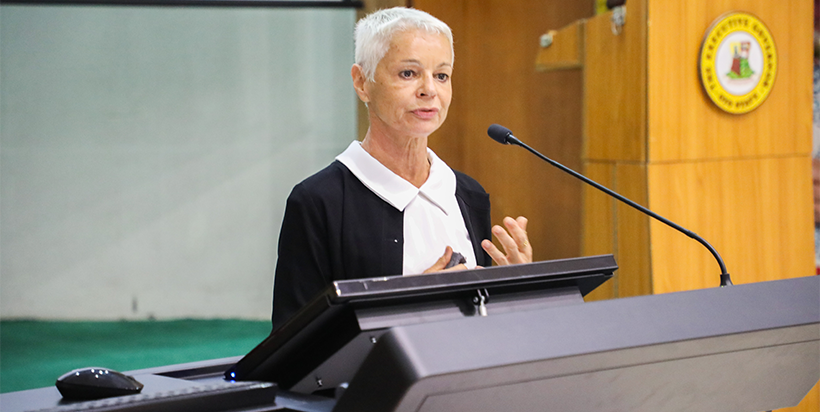
Sonia Darracq, Regional Agriculture Counsellor, French Embassy, said that the project would be the beginning of expanding women’s empowerment over the next two years.
“We are building training modules to train 300 women, which will be used by technical colleges of agriculture throughout the region,” she stated. “Some of the women trained will become trainers at the federal level,” she added.
Adebowale Akande, Director General, Oyo State Agribusiness Development Agency, stated in his talk that the priority given to agriculture has dovetailed into many other areas, including Oyo State programs on agribusiness policy and governance, youth in agribusiness, and regional agribusiness development. SWEAN is one of the projects that cut across these programs.
Sonia Darracq, Regional Agriculture Counsellor, French Embassy, said that the project would be the beginning of expanding women’s empowerment over the next two years.
“We are building training modules to train 300 women, which will be used by technical colleges of agriculture throughout the region,” she stated. “Some of the women trained will become trainers at the federal level,” she added.
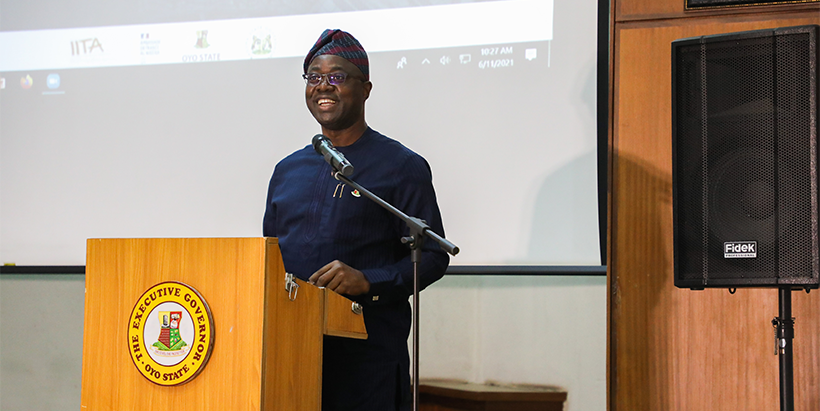 Seyi Makinde, Executive Governor of Oyo State, where IITA is located, explained that the French ambassador had pinpointed the vast potential of Oyo State in both human and natural resources, which led to the collaboration on developing the agricultural sector between Oyo State and the French government. “When the right people are given the right opportunities, they thrive,” he stated.
Moreover, he said, “I know that the women beneficiaries chosen were carefully selected and will put in their best to be worthy ambassadors of Oyo and Kaduna states,” he added.
Seyi Makinde, Executive Governor of Oyo State, where IITA is located, explained that the French ambassador had pinpointed the vast potential of Oyo State in both human and natural resources, which led to the collaboration on developing the agricultural sector between Oyo State and the French government. “When the right people are given the right opportunities, they thrive,” he stated.
Moreover, he said, “I know that the women beneficiaries chosen were carefully selected and will put in their best to be worthy ambassadors of Oyo and Kaduna states,” he added.
Sonia Darracq highlighting expectations for the next two years.
Jerome Pasquier notes that agriculture will “save our currency” by limiting imports and creating employment for women.
Governor Seyi Makinde flagging off the SWEAN project.
Contributed by
Recent stories
No items found