
Policymakers approve Aflasafe testing in Burundi
June 25, 2021
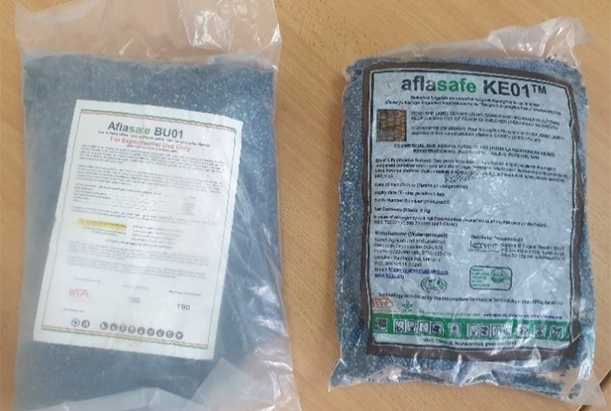
IITA-Burundi officially unveiled Aflasafe by presenting two Aflasafe products—Aflasafe BU01, a country-specific product, and Aflasafe KE01, the regional product—for field testing in Burundi. The Institute presented the products to stakeholders at the IITA-Burundi office in April.
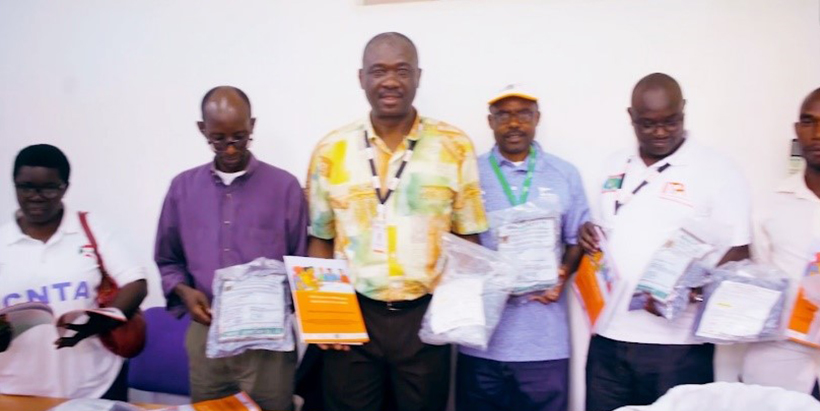
The IITA Country Representative, Emmanuel Njukwe, urged national and development partners to adopt practices that minimize aflatoxin contamination, particularly in maize and groundnut. Subject matter experts explained the results of the laboratory work on isolating non-toxic Aspergillus spp. from Burundi. The products were handed over to the Ministry of Environment, Agriculture, and Livestock, represented by Eliachim Sakayoya.
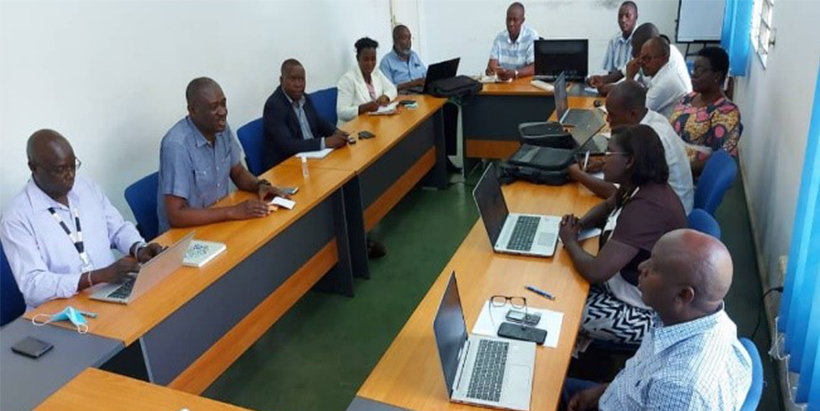 In attendance were representatives from the Institut des Sciences Agronomiques du Burundi (ISABU), Direction de la Protection des Végétaux (DPV), Organisation Nationale de Contrôle et de Certification des Semences (ONCCS), Centre National de Technologie Alimentaire (CNTA), Projet Régional de Développement Agricole Intégré dans les Grands Lacs (PRDAIGL), Direction Générale de l’Agriculture (DGA), Ministry of Agriculture and Livestock, and the IITA-Burundi research and management team.
IITA Pathologist Joseph Atehnkeng explained that the strains contained in both Aflasafe products are natural and exist in Burundi soils and crops. He further highlighted the development processes of Aflasafe, explaining its composition, distribution within the country, and mode of field application.
In attendance were representatives from the Institut des Sciences Agronomiques du Burundi (ISABU), Direction de la Protection des Végétaux (DPV), Organisation Nationale de Contrôle et de Certification des Semences (ONCCS), Centre National de Technologie Alimentaire (CNTA), Projet Régional de Développement Agricole Intégré dans les Grands Lacs (PRDAIGL), Direction Générale de l’Agriculture (DGA), Ministry of Agriculture and Livestock, and the IITA-Burundi research and management team.
IITA Pathologist Joseph Atehnkeng explained that the strains contained in both Aflasafe products are natural and exist in Burundi soils and crops. He further highlighted the development processes of Aflasafe, explaining its composition, distribution within the country, and mode of field application.
 The approval to test Aflasafe KE01 follows the East African Community (EAC) policy and guidelines on testing and registration in the region. IITA Principal Scientist (Plant Pathology) and Leader of the Africa-wide Aflasafe Initiative, Ranajit Bandyopadhyay, noted that finding Aflasafe KE01 effective and subsequently registering it in Burundi makes it the first Aflasafe product that can be used in three countries (Kenya, Uganda, and Burundi).
“The launch was done at the right time, given the challenge that aflatoxin is causing in the country,” said Sakayoya. The CNTA representative Madam Pelagie Nimbona reiterated: “I am honored to participate in this launch, and it was time for the arrival of Aflasafe because a big proportion of maize harvest was going to waste because of aflatoxin.”
The approval to test Aflasafe KE01 follows the East African Community (EAC) policy and guidelines on testing and registration in the region. IITA Principal Scientist (Plant Pathology) and Leader of the Africa-wide Aflasafe Initiative, Ranajit Bandyopadhyay, noted that finding Aflasafe KE01 effective and subsequently registering it in Burundi makes it the first Aflasafe product that can be used in three countries (Kenya, Uganda, and Burundi).
“The launch was done at the right time, given the challenge that aflatoxin is causing in the country,” said Sakayoya. The CNTA representative Madam Pelagie Nimbona reiterated: “I am honored to participate in this launch, and it was time for the arrival of Aflasafe because a big proportion of maize harvest was going to waste because of aflatoxin.”
 Aflatoxins are highly carcinogenic poisons that may cause liver cancer, stunted growth in children, and even death in humans. They also impact poultry, increasing mortality and reducing productivity. Aflatoxin contamination also affects trade within and between countries, leading to shipment rejection, the extra cost incurred for testing products, and reduced marketable volumes. IITA, the United States Department of Agriculture–Agricultural Research Service (USDA-ARS), and the Institut des Sciences Agronomiques du Burundi (ISABU), as part of the USAID-funded APPEAR project and World Bank-funded project Régional de Développement Agricole Intégré dans les Grands Lacs (PRDAIGL), developed these products to address these challenges.
Aflasafe is a safe and effective natural product for managing aflatoxin in maize, groundnut, and sorghum value chains in Burundi. The availability of biocontrol technologies for commercial use is critical for Burundians, especially the farming community, as aflatoxins constitute a significant challenge to maize, groundnut, and sorghum production and efforts to secure food supplies and improve the health and well-being of its people.
Adopting Aflasafe in Burundi, combined with other good management practices by farmers, will reduce aflatoxin contamination by over 80% in maize, groundnut, and sorghum. This will increase crop value, improve children’s and women’s health, ensure food safety in the country, and obtain products that meet export market standards.
Aflatoxins are highly carcinogenic poisons that may cause liver cancer, stunted growth in children, and even death in humans. They also impact poultry, increasing mortality and reducing productivity. Aflatoxin contamination also affects trade within and between countries, leading to shipment rejection, the extra cost incurred for testing products, and reduced marketable volumes. IITA, the United States Department of Agriculture–Agricultural Research Service (USDA-ARS), and the Institut des Sciences Agronomiques du Burundi (ISABU), as part of the USAID-funded APPEAR project and World Bank-funded project Régional de Développement Agricole Intégré dans les Grands Lacs (PRDAIGL), developed these products to address these challenges.
Aflasafe is a safe and effective natural product for managing aflatoxin in maize, groundnut, and sorghum value chains in Burundi. The availability of biocontrol technologies for commercial use is critical for Burundians, especially the farming community, as aflatoxins constitute a significant challenge to maize, groundnut, and sorghum production and efforts to secure food supplies and improve the health and well-being of its people.
Adopting Aflasafe in Burundi, combined with other good management practices by farmers, will reduce aflatoxin contamination by over 80% in maize, groundnut, and sorghum. This will increase crop value, improve children’s and women’s health, ensure food safety in the country, and obtain products that meet export market standards.
Participants representing the Ministries and National Institutes during the results-sharing meeting.
Picture of packaged brands of Aflasafe BU01 and KE01.
During the uveiling (L-R) Madame Pelagie Nimbona Representative of CNTA, Mr Eliachim Sakayoya Representative of the Ministry of Environment, Agriculture and livestock, Emmanuel Njukwe (IITA Country Representative), Joseph Atehnkeng (IITA pathologist), Patrick Mutuo ( IITA scientist) and MR Eric Nijimbere (Technician CNTA).
Contributed by
Recent stories
No items found