
SEFAN/SWEAN stakeholders develop empowerment strategies for women in agribusiness
April 30, 2021
The Support to Women Entrepreneurship in the Agri-food Sector in Nigeria (SEFAN/SWEAN) project hosted a writeshop for stakeholders from several institutions to brainstorm practical training solutions to empower women in agribusiness in Kaduna and Oyo states from May 2021. The training is in line with the fulfillment of the project’s mandate over the next 16 months.
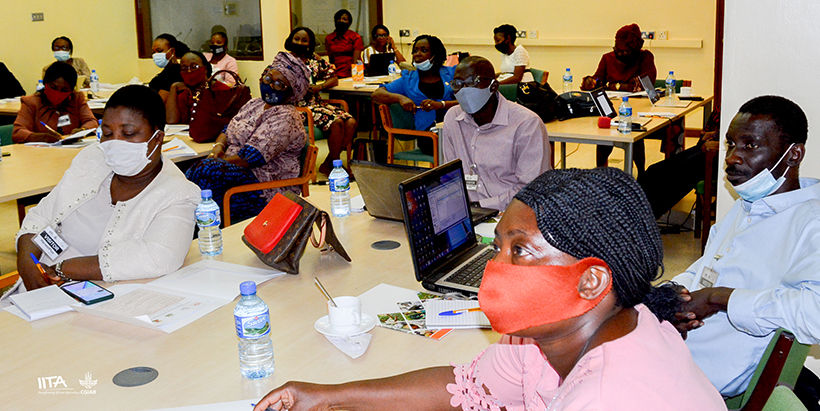
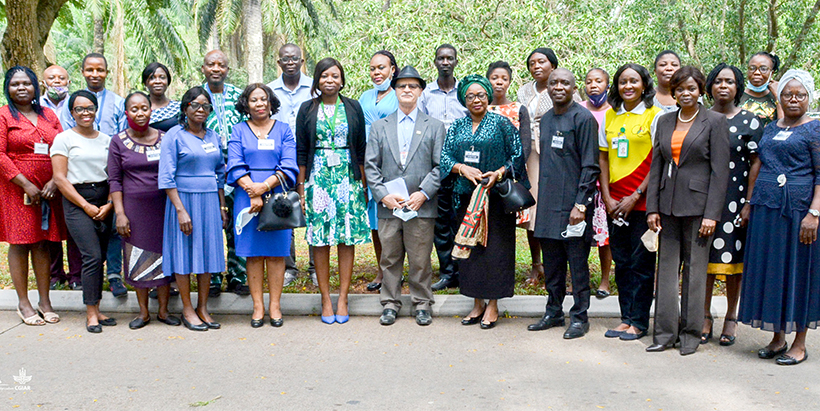
Stakeholders from Federal Institute of Industrial Research (Oshodi), Nigerian Stored Product Research Institute (NSPRI), Small and Medium Enterprise Development Agency of Nigeria (SMEDAN), Standard Organization of Nigeria (SON), Nigerian Export Promotion Council (NEPC), National Agency for Food and Drug Administration and Control (NAFDAC), and IITA came together in the two-day writeshop organized by the SEFAN/SWEAN project in collaboration with IITA on 27 and 28 April. They identified key messages and strategic support to pass on to women in the agrifood sector to empower them in their food production, processing, and business ventures.
 The project is in partnership with Oyo and Kaduna State Government Development Programmes and is funded by the French Ministry of Europe and Foreign Affairs in Nigeria. The project manager, Zainatou Sore, said, ”The project targets women entrepreneurs from often marginalized groups who are involved in different sectors of the agricultural value chain from farm to table.”
Prof. Lateef Sanni, a Professor of Food Science and Technology and Project Manager of the BASICS-II project in IITA, moderated the writeshop, interactively engaging and getting contributions from the participants. He said the training manual to be developed at the end of the writeshop would cover the specific sectors women in agribusiness had requested training on.
Presenters from the different institutions brought out developmental issues in the areas requested by the women in the agrifood sector, notably: food processing and fortification, branding and packaging, regulation and certification, standards, market and export opportunities, leadership, team building, and financial management that would help the women advance and become successful in their agribusiness ventures.
The project is in partnership with Oyo and Kaduna State Government Development Programmes and is funded by the French Ministry of Europe and Foreign Affairs in Nigeria. The project manager, Zainatou Sore, said, ”The project targets women entrepreneurs from often marginalized groups who are involved in different sectors of the agricultural value chain from farm to table.”
Prof. Lateef Sanni, a Professor of Food Science and Technology and Project Manager of the BASICS-II project in IITA, moderated the writeshop, interactively engaging and getting contributions from the participants. He said the training manual to be developed at the end of the writeshop would cover the specific sectors women in agribusiness had requested training on.
Presenters from the different institutions brought out developmental issues in the areas requested by the women in the agrifood sector, notably: food processing and fortification, branding and packaging, regulation and certification, standards, market and export opportunities, leadership, team building, and financial management that would help the women advance and become successful in their agribusiness ventures.
 In May, the first set of women would be trained in two locations in Ibadan by experts in the various fields highlighted. Collaboration with cooperatives was also suggested to be incorporated into the deliverables for the women to enable them to access loans and other cooperative benefits to drive their business successfully.
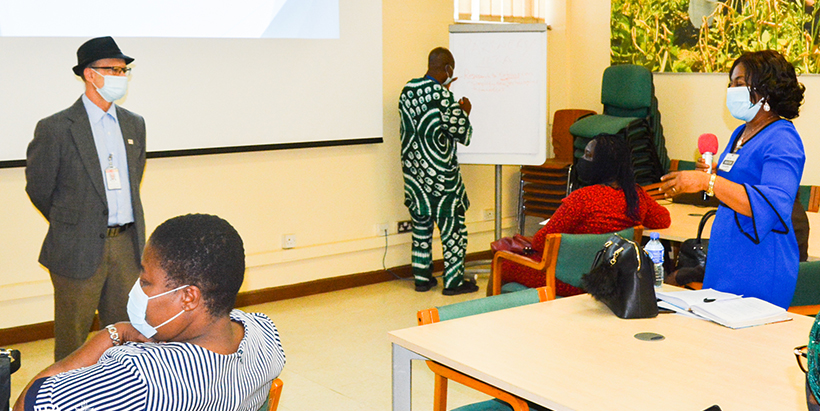
Kenton Dashiell, IITA’s Deputy Director General, Partnerships for Delivery, was present briefly to get feedback on the role IITA has played in developing agriculture and what IITA should do better. He appreciated the participants for their involvement and contributions to the empowerment of women in agriculture.
In May, the first set of women would be trained in two locations in Ibadan by experts in the various fields highlighted. Collaboration with cooperatives was also suggested to be incorporated into the deliverables for the women to enable them to access loans and other cooperative benefits to drive their business successfully.
Kenton Dashiell, IITA’s Deputy Director General, Partnerships for Delivery, was present briefly to get feedback on the role IITA has played in developing agriculture and what IITA should do better. He appreciated the participants for their involvement and contributions to the empowerment of women in agriculture.
 The Oyo State Permanent Secretary, Mrs Bolatumi Oloko, who was present on both days, expressed her enthusiasm and positive support for the project’s success and expansion. She said in her closing remarks that the content of the training being prepared for the small and medium-scale women agripreneurs is rich.
Participants in brainstorming session at the write-shop.
Kenton Dashiell getting participants’ contributions about IITA’s work.
Participants at the SEFAN/SWEAN write-shop, Day 2.
Contributed by
Recent stories
No items found