
IITA–CGIAR welcomed a US congressional delegation led by Senator Cory Booker of New Jersey to the IITA Eastern Africa Hub offices in Dar es Salaam, Tanzania. The visit highlighted the impactful work of US government-funded projects, particularly focusing on combating the Banana Bunchy Top Virus (BBTV) and managing aflatoxin using the biocontrol Aflasafe.
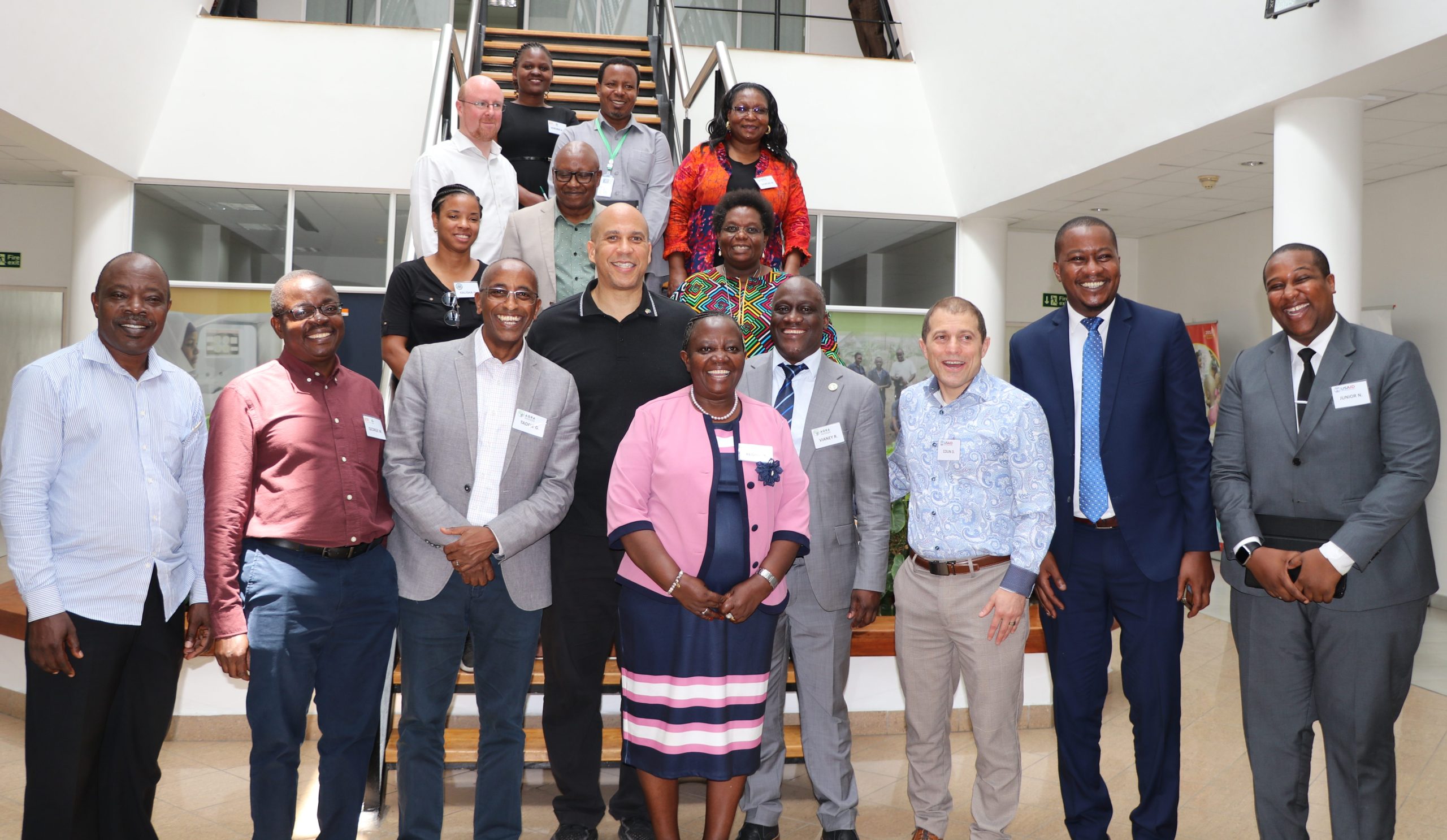
The visit provided firsthand learning of the efforts dedicated to enhancing food security, ensuring food safety, and improving the livelihoods of smallholder farmers in Tanzania. The delegation had the opportunity to witness innovative solutions being developed to address these challenges.
George Mahuku, IITA Plant Pathologist and the lead of the two projects, noted that IITA, with other research institutes and development organizations, is working to understand the emerging and invasive diseases that affect plants and cause food insecurity in the region.
“It is important to have improved and good crop varieties, effective seed systems, and access to fertilizers, but it is also crucial to protect the harvest by ensuring that the plants are protected from diseases that threaten food safety and productivity,” Mahuku explained.
Mahuku highlighted the importance of bananas in the Eastern Africa region, being a major staple crop that provides income and employment, contributes to dietary calories, and is widely consumed, making it an important food security crop. However, the emergence of BBTV threatens banana production in affected areas, leading farmers to abandon banana farming for other less lucrative crops.
“One of the farmers in the district hit hard by the disease used to harvest 80 to 100 bunches of bananas per month, earning approximately US$ 318 (TZS 800,000). He used to employ people to help him tend to his banana crop. But now, his farm has been devastated by BBTD, and he has lost all his banana plants. Now he has to look for jobs to raise money to feed his family,” Mahuku narrated.
Mahuku also explained IITA’s research initiative on Aflasafe, the biological control for preventing aflatoxin contamination of maize and groundnuts. In Tanzania, Aflasafe was developed by IITA in partnership with USDA-ARS and TPHPA and was officially registered for use in maize and groundnut cultivation in 2018. Correct use of Aflasafe prevents contamination from reaching dangerous levels and keeps foods safe.
“Aflatoxin affects health, trade, and agriculture. Farmers have started to understand the impact of Aflasafe, especially on trade, which is why we are working hard to scale up the innovation for wider adoption,” said Mahuku.
During this special visit, IITA partners—AGRA and ASPIRE Tanzania—shared key achievements under the Ukraine Supplemental Funds, highlighting significant progress in increasing local production and distribution of sunflower and wheat seeds on top of fertilizer. One of the notable achievements is the ongoing development of the seed and fertilizer strategy by USAID ASPIRES. This strategy is expected to be a game-changer, positioning Tanzania as the regional food basket and the fertilizer hub for both East and South Africa.
The visit included a tour of the Plant Pathology laboratory, showcasing research on BBTV and Aflatoxin, underscoring the importance of collaboration and research in tackling critical agricultural issues. Senator Booker expressed his admiration for the innovations showcased at IITA.
Senator Booker’s visit to IITA Tanzania signifies the importance of international partnerships and highlights the commitment to finding sustainable solutions to agricultural challenges, ultimately benefiting farmers and communities in Tanzania and beyond.
Contributed by Gloriana NdibalemaContributed by
Recent stories