
In a concerted effort to assess progress, identify gaps, and strategize on sustaining achievements in the International Fund for Agricultural Development (IFAD)-funded Zero Hunger project, stakeholders and implementing partners gathered for a high-level policy dialogue on 20 February. The dialogue, organized by the IITA Zero Hunger project with support from the CGIAR Transforming Agri-food Systems in West and Central Africa Initiative (TAFS-WCA), aimed to critically examine the intersection of policy and technology in the pursuit of Zero Hunger in Ogun State.
The Zero Hunger Project has been actively involved in agricultural transformation initiatives in Ogun State since 2021, focusing on the cassava value chain. Collaborating closely with key stakeholders such as the Ministry of Agriculture and Rural Development, the IFAD-Value Chain Development Program (VCDP), farmers’ associations, extension officers, banks, and other stakeholders, the project has made significant strides in addressing food security challenges.
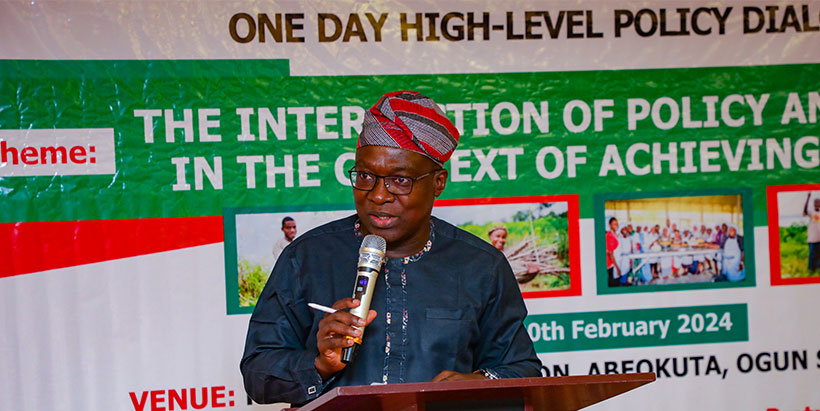
The policy dialogue witnessed the participation of representatives from various organizations, including IFAD, the World Food Programme (WFP), Ogun State IFAD Value Chain Development Program (IFAD-VCDP), Ogun State Agricultural Development Program (OGADEP), private sector entities, and the media. The dialogue was graced by the Honorable Commissioner for Agriculture, Ifebolu Owotomo, and the Permanent Secretary, Samuel Adeogun, who led the Ogun State Ministry of Agriculture and Rural Development. During his speech, Commissioner Owotomo highlighted some of the project’s achievements in the state and pledged continued support for the partnership.
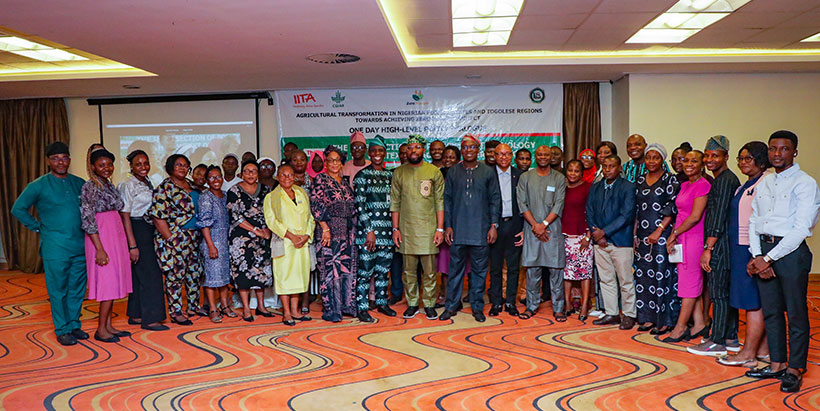
During the dialogue, stakeholders deliberated on key issues such as seed systems development, land use and tractor services, finance and insurance mechanisms, capacity building, mechanization and fabrication, land protection and enforcement, cluster development and gender inclusivity, equipment subsidies and support, and infrastructure development. These discussions resulted in a series of observations and recommendations to address existing challenges and maximize opportunities in the agricultural sector.
Among the recommendations, urgent action was called for in training young seed entrepreneurs, strengthening private sector involvement in tractor services, addressing challenges in finance and insurance, enhancing capacity-building initiatives, supporting fabricators, enforcing land protection laws, promoting cluster development and gender inclusivity, providing equipment subsidies, and investing in infrastructure development.
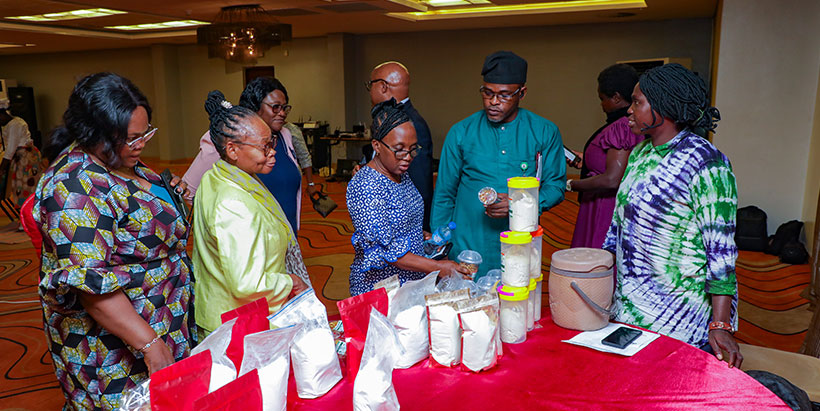
Zero Hunger Project Lead Debo Akande emphasized the importance of policy formulation at the state level to promote inclusivity, enhance productivity, and improve nutrition. The co-lead of the Zero Hunger project, Francis Nwilene, highlighted the vast opportunities in the rice value chain component of the project, while Zaina Sore, representing the CGIAR Transforming Agri-Food Systems in West and Central Africa initiative, pledged continued partnership with the project.
The participating stakeholders reaffirmed their commitment to collaborative action and multi-stakeholder engagement in advancing agricultural development in Ogun State. By implementing the recommendations outlined, the stakeholders anticipate that the identified gaps will be addressed, leading to sustainable growth and prosperity in the agricultural sector for the benefit of all stakeholders and the state at large.
The immediate outcome of the policy dialogue is the visit of the Honorable Commissioner and his team to forge a partnership with the IITA Business Incubation Platform.
Contributed by Oyewale AbioyeContributed by
Recent stories