
IITA NEWS

Transforming Soil Health in West Africa: A New Fertilizer and Soil Health Hub Takes Root in West Africa
September 13, 2024

by Simeon Ehui, Director General, IITA and Regional Director, Africa, CGIAR and Bernard Vanlauwe, Deputy Director General, Research for Development, IITA and Lead, Excellence in Agronomy, CGIAR

West Africa and the Sahel are grappling with a severe soil health crisis that threatens food security. Two-thirds of the region’s land is degraded, and fertilizer application rates remain far behind global averages. This has led to low crop yields and reduced agricultural productivity, particularly for smallholder farmers. Unsustainable farming practices and limited access to essential agricultural inputs have worsened this situation, putting regional food systems under severe strain.

The Africa Food Systems Forum (AFSF) 2024, held in Kigali, Rwanda, highlighted this urgency again, bringing together key stakeholders to confront the region’s soil health challenges head-on. The discussions at AFSF underscored the need for swift, decisive action in tackling soil degradation, emphasizing the imperative for establishing a transformative initiative that would elevate the region’s agricultural future.
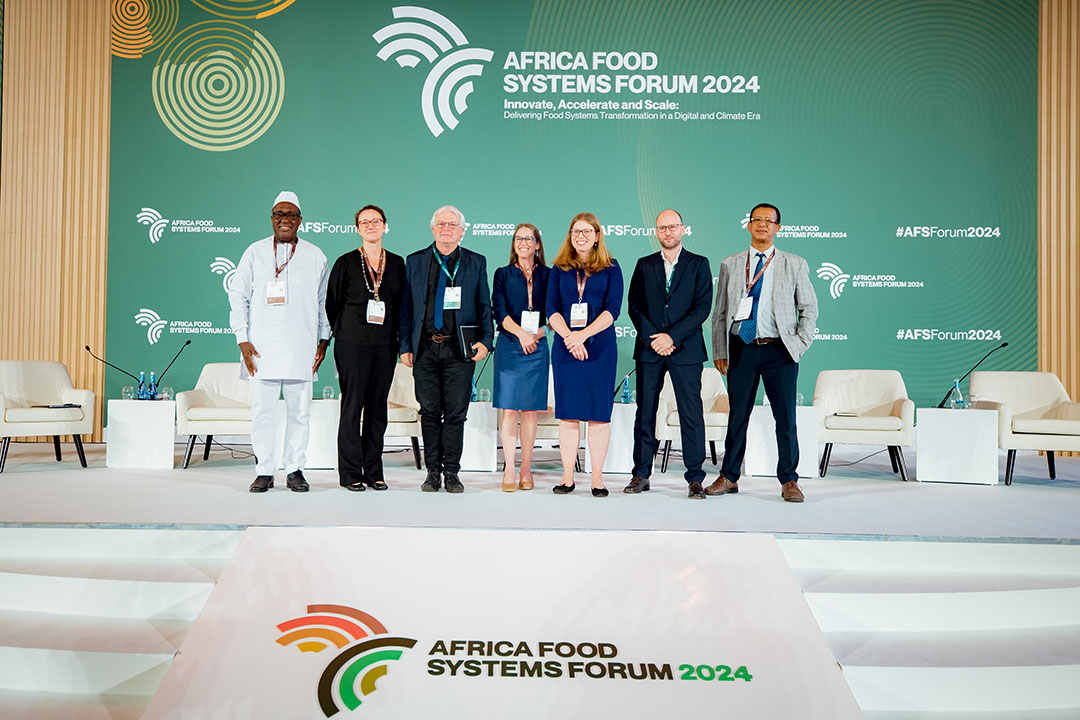
Simeon Ehui and Benard Vanlauwe with delegates who were part of the investing soil health panel at the Africa Food Systems Forum in Kigali.

A Unique Initiative for Transforming Agriculture

In response to this urgent crisis, a coalition of partners had earlier come together and set up  the Regional Hub for Fertilizer and Soil Health for West Africa and the Sahel. The hub, based at the International Institute of Tropical Agriculture (IITA) in Ibadan, Nigeria, was launched in June 2024, amid high hopes and optimism. The Hub is already making significant strides toward improving soil fertility and agricultural productivity and will provide the much-needed technical assistance, focusing on developing and implementing investment plans to improve soil health and fertility through best agronomic practices and soil management strategies.

The Regional Hub was established to address the specific needs of individual countries across the region, emphasizing integrated soil fertility management to optimize resource use and build resilience against climate change. Its strategy is firmly rooted in the priorities outlined in the Fertilizer and Soil Health Roadmap 2023 and the Nairobi Declaration from the Africa Fertilizer and Soil Health Summit 2024, two important documents that emphasize the value of this regional initiative.

With significant financial backing from the World Bank and OCP Africa, the Hub is proactively revitalizing West African agriculture. By prioritizing integrated soil fertility management and soil health restoration, the Hub is working towards a more resilient and food-secure region.

IITA leads Hub implementation

IITA, the leading agricultural research partner with a proven track record in advancing crop production in Africa, was selected to host the Hub. Since 1967, IITA has pioneered innovations in soil science in Africa, making it the ideal institution to spearhead this initiative.

By hosting this Regional Hub, IITA is taking a pivotal role in transforming agriculture in West Africa. Our extensive experience and innovative approach will drive this initiative forward, providing a platform for collaboration and progress that will empower farmers and improve soil health across the region.

The impact of the Hub is magnified by the collaboration of key partners, each contributing its unique strength. OCP Africa provides tailored, sustainable fertilizer solutions to meet the specific needs of local soils and crops essential for improving soil fertility and agricultural sustainability. The African Plant Nutrition Institute (APNI) advances plant nutrition research and develops training programs, helping farmers build knowledge and implement best practices in soil health management. The International Fertilizer Development Center (IFDC) supports the Hub with its expertise in developing and disseminating effective fertilizer technologies and fostering public-private partnerships to ensure that innovative solutions reach farmers.

Accelerating the Impact of CGIAR Climate Research for Africa (AICCRA) serves as a key knowledge partner, offering soil information, knowledge management, agronomy recommendations, capacity development, policy support, and advocacy. Mohammed VI Polytechnic University (UM6P) drives scientific and technical advancements through soil mapping, remote sensing, and precision agriculture tools. The Economic Community of West African States (ECOWAS) plays a crucial role in aligning the Hub’s activities with regional policies and promoting best practices across member states.
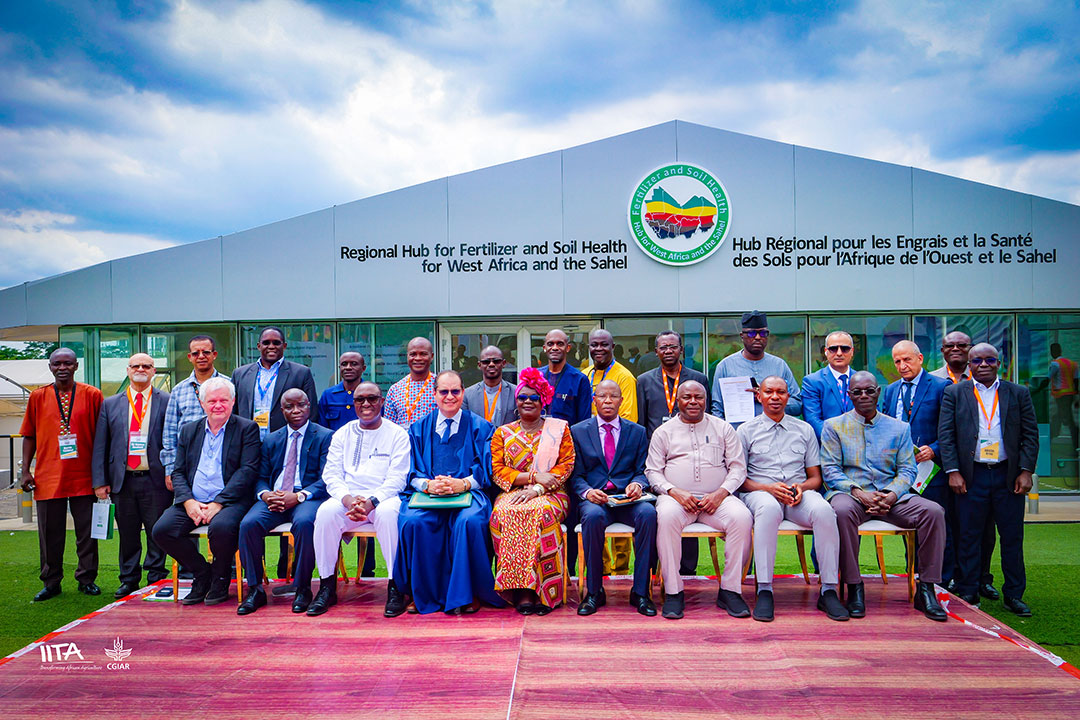
Delegates at the opening of the Regional Hub for Fertilizer and Soil Health for West Africa and the Sahel.

What’s next for the Hub?

Moving forward, our focus has shifted to implementation. Following the Hub’s launch, a Technical Launching Workshop was held in June 2024, bringing together representatives from Benin, Burkina Faso, Liberia, Mali, Niger, Nigeria, Senegal, and Togo, along with ECOWAS and key regional and international partners.

The next steps include gathering critical information and refining action plans tailored to each country’s specific needs. Bilateral meetings in each country will help define initial focus areas and actions for 2024.

The action-oriented momentum of AFSF 2024 continues to inspire the Hub’s forward-looking agenda. Stakeholders at the Forum were eager to translate the discussions into tangible interventions, emphasizing the need for urgent, on-the-ground impact. By 2033, the Hub aims to increase yields and income for three million farmers, enhance soil health across 1.5 million hectares, and help 1.5 million farmers adapt to climate change.

The Regional Hub for Fertilizer and Soil Health for West Africa and the Sahel represents a significant milestone in promoting sustainable agriculture. By addressing soil degradation and implementing scalable solutions, the Hub is set to make a lasting impact on West Africa’s agricultural landscape. The focus on improving soil health, building resilience, and enhancing food security promises a future where soil health is revitalized, crop yields are increased, and the agricultural sector is robust to withstand climate change challenges.

As the Regional Hub advances its mission, we do not just address today’s challenges but lay the groundwork for a resilient agricultural future in the region. With continued commitment, dedicated effort, and collaboration, we will achieve our vision of fertile, productive, and resilient soils in West Africa, paving the way for a brighter agricultural future.
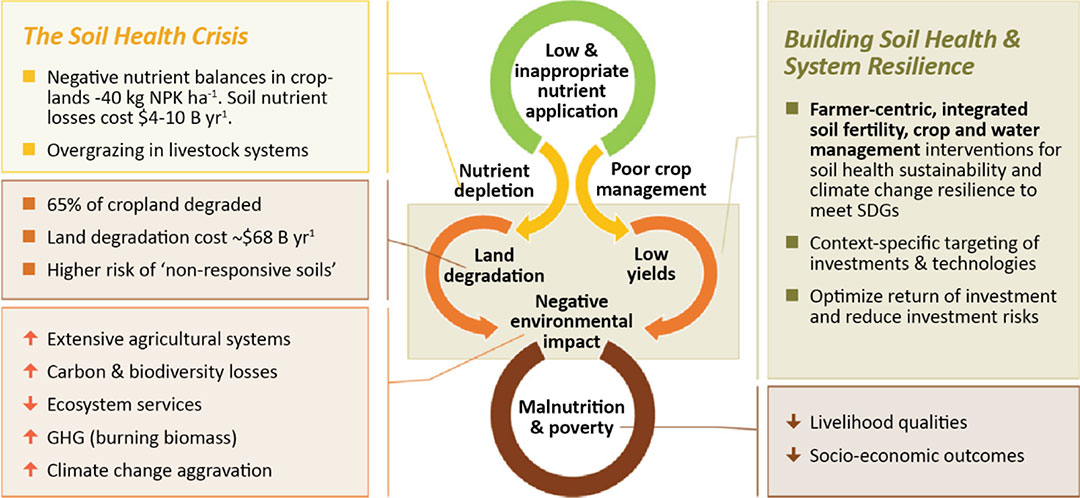
The vicious cycle of soil health decline, land degradation, poor crop yields, and ecosystem service loss underpinning the high incidence of malnutrition and poverty triggered by poor management of fertilizers and organic nutrient resources. Locally adapted integrated soil fertility and water management practices are critical for reversing the negative spiral and building soil health and resilience of crop production systems in Africa. Source: Zingore, 2022.

Conclusion: A path toward a resilient future

The establishment of the Regional Hub for Fertilizer and Soil Health for West Africa and the Sahel marks a significant milestone in addressing the region’s soil degradation crisis. By leveraging the collective strength of research institutions, governments, and private sector partners, the Hub is set to transform soil health, boost agricultural productivity, and enhance resilience to climate change.

As we look ahead, the Hub not only addresses today’s challenges but also promotes cross-learning and regional synergy by fostering knowledge sharing and collaboration through regional hubs. This reinforces the importance of a continent-wide approach to improving soil health, ensuring that best practices and innovations are shared across borders for greater impact.

AFSF 2024 highlighted the urgency and enthusiasm of stakeholders who are ready to take action. The discussions at AFSF 2024 signaled the  shift in how we are addressing the soil health crisis, moving from rhetoric to concrete action. With renewed energy and commitment, we are poised to tackle soil health challenges head-on, ensuring a resilient and food-secure future for West Africa. Through collaboration, innovation, and an unwavering commitment to sustainable agriculture, we are turning the tide on soil health in the region—one field at a time.


Contributed by

Related news

No items found

Leave a Reply

Your email address will not be published. Required fields are marked *

Scroll to Top
Olaosebikan, Olamide

Olamide Deborah Nwanze is a Senior Research Associate specializing in gender mainstreaming research to inform participatory and inclusive breeding, variety development, and seed systems policies regarding root, tuber, and banana (RTB) crops in the International Institute of Tropical Agriculture Headquarters, Ibadan, Nigeria. She is a PhD candidate at the University of Ibadan and holds an MSc and B. Agric in Agricultural Extension and Rural Development. Olamide is a fellow of the African Women in Agricultural Research and Development – Gender Responsive Agricultural Systems Policy (AWARD-GRASP) and the Gender Responsive Researchers Equipped for Agricultural Transformation (GREAT). She seeks to apply her gender-mainstreaming learnings, gender-responsive research, and policy development, and review expertise to facilitate women, youth, children, and vulnerable social group’s access to and adoption of agricultural Innovations that guarantee food, nutrition, income, and livelihood security in Africa. Her current roles include mentoring research fellows, development of guides and training manuals, implementation and adaptation of gender frameworks and tools, value chain actors’ engagement as citizen science partners, policy review and redesign, data management, and analysis. Her current research explores mixed methods and participatory and interdisciplinary approaches to capture and highlight gender dynamics, needs, preferences, and challenges stakeholders face within the agricultural livelihood value chain to prioritize gender-inclusive strategies in breeding programs, policy design, and implementation.

At IITA, she contributes to the implementation of the CGIAR Accelerated Breeding Initiative and Genetic Innovation Programs; participatory and gender research within the NextGen CassavaHarvestPlusRTBFoods, and Tricot-ClimMob 1000Farms Projects; and gender knowledge communication via the G-LENS webinar series, video documentary, policy briefspublications, and blogs.


Recent publications

de Sousa, K., van Etten, J., Manners, R. Bello, A., Teeken, B., Olaosebikan, O., et al. 2024. The tricot approach: an agile framework for decentralized on-farm testing supported by citizen science. A retrospective. Agron. Sustain. Dev. 44, 8. https://doi.org/10.1007/s13593-023-00937-1

Madu, T., Onwuka, S., Nwafor, S., Onyemauwa, N., Ejechi, M., Ofoeze, M., Ukeje, B., Eluagu, C., Olaosebikan, O., Okoye, B., 2024. Gender-Inclusive Consumer Studies Improve Cassava Breeding in Nigeria in: Frontiers in Sociology, volume 9, number: 1224504, doi: 10.3389/fsoc.2024.1224504

Olaosebikan, O.; Bello, A.; Utoblo, O.; Okoye, B.; Olutegbe, N.; Garner, E.; Teeken, B.; Bryan, E.; Forsythe, L.; Cole, S.; Madu, T. 2023.  Stressors and Resilience within the Cassava Value Chain in Nigeria: Preferred Cassava Variety Traits and Response Strategies of Men and Women to Inform Breeding. Sustainability 15, 7837. https://doi.org/10.3390/su15107837

Okoye, B., Ofoeze, M., Ejechi, M., Onwuka, S., Nwafor, S., Onyemauwa, N., Ukeje, B., Eluagu, C., Obidiegwu, J.*, Olaosebikan, O., Madu, T.* 2023. Prioritizing preferred traits in the yam value chain in Nigeria: a gender situation analysis in: Frontiers in Sociology, volume 8, number: 1232626, pages 1 – 9, ISSN 2297-7775, 2023. https://www.frontiersin.org/articles/10.3389/fsoc.2023.1232626/full

Olaosebikan, O., Bello, A. A., de Sousa, K., Ndjouenkeu, R., Adesokan, M., Alamu, E. O., Agbona, A., van Etten, J., Kegah, F. N.*, Dufour, D., Bouniol, A., Teeken, B. 2023. Consumer acceptability of cassava gari-eba food products across cultural and environmental settings using the triadic comparison of technologies approach (tricot) in: Journal of the Science of Food and Agriculture,

Teeken, B., Olaosebikan, O., Bello, A. A., Madu, T.*, Cole, S. M. 2023. Qualitative assessment on the positionality and preferences of dyads in relation to cassava-related activities: working with tricot trial citizen scientists https://hdl.handle.net/10568/138326 Type: Manual

Bouniol, A., Ceballos, H., Bello, A. A., Teeken, B., Olaosebikan, O., Owoade, D., Agbona, A., Fotso Kuate, A., Madu, T.*, Okoye, B.*, Ofoeze, M.*, Nwafor, S.*, Onyemauwa, N.*, Adinsi, L.*, Forsythe, L., Dufour, D. 2023. Varietal impact on women’s labour, workload and related drudgery in processing root, tuber and banana crops: focus on cassava in sub-Saharan Africa in: Journal of the Science of Food and Agriculture, pages 1 – 25, ISSN 0022-5142,

Bello, A. A., Agbona, A., Olaosebikan, O., Edughaen, G., Dufour, D., Bouniol, A., Iluebbey, P., Ndjouenkeu, R.*, Rabbi, I. Y., Teeken, B. 2023. Genetic and environmental effects on processing productivity and food product yield: drudgery of women’s work in: Journal of the Science of Food and Agriculture, pages 1 – 32, ISSN 0022-5142, 5

Cavicchioli, M., Zimbiti, T., Teeken, B., Nwanze, D.O., Liani, M., Parkes, E. & Bello, A. 2023. IITA-Gender Responsive Breeding Training Report. Genetic Resources Center, IITA-HQ, Ibadan, 21-23 September, 2022. Ibadan, Nigeria: IITA, (34 p.).https://hdl.handle.net/10568/131368

Agbona, A. Peteti P., Teeken B., Olaosebikan O. Bello, A. A., Parkes, E., Rabbi, I. Y., Mueller, L., Egesi, C., Kulakow, P. 2022. Data Management in Multi-disciplinary African RTB Crop Breeding Programs. In: Williamson, H.F., Leonelli, S. (eds) Towards Responsible Plant Data Linkage: Data Challenges for Agricultural Research and Development. Springer, Cham. https://doi.org/10.1007/978-3-031-13276-6_5

Lora Forsythe, Pricilla Marimo, Sarah Mayanja, Olamide D. Olaosebikan, Esme Stuart, Bela Teeken, Benjamin Okoye, Tessy Madu, (2021). Cross-product Gender Analysis of RTBfoods Step 2 Gendered Food Mapping on RTB Products. Understanding the Drivers of Trait Preferences and the Development of Multi-user RTB Product Profiles, WP1. London, UK: RTBfoods Field Scientific Report, 30 p.

Teeken, B., Garner, E., Agbona, A., Balogun, I., Olaosebikan, O., Bello, A., Madu, T., Okoye, B., Egesi, C., Kulakow, P. and Tufan, H.A. 2021. Beyond “Women’s Traits”: Exploring How Gender, Social Difference, and Household Characteristics Influence Trait Preferences. Frontiers Sustainable Food Systems 5:740926. https://doi.org/10.3389/fsufs.2021.740926

Teeken, B., Agbona, A., Bello, A., Olaosebikan, O., Alamu, E., Adesokan, M., Awoyale, W., Madu, T., Okoye, B., Chijioke, U., Owoade, D., Okoro, M., Bouniol, A., Dufour, D., Hershey, C., Rabbi, I., Maziya‐Dixon, B., Egesi, C., Tufan, H. and Kulakow, P. (020. Understanding cassava varietal preferences through pairwise ranking of gari‐eba and fufu prepared by local farmer–processors. Int J Food Sci Technol. https://doi.org/10.1111/ijfs.14862

Bela Teeken, Olamide Olaosebikan, Ireti Balogun, Benjamin Okoye, Tessy Madu, Steven Cole, Abolore Bello, Elizabeth Parkes. (2020). Piloting the G+ customer and product profile tools for gender-responsive cassava breeding in Nigeria. Nigeria: International Institute of Tropical Agriculture (IITA). https://hdl.handle.net/20.500.11766/13000