
IITA NEWS

IARSAF inaugural networking event prepares researchers for broader career impact
July 25, 2025

The IARSAF President, Victor Diekade, who led the organizing of the event said, “The networking event was initiated to create a space for young researchers to engage meaningfully with IARSAF alumni and professionals who have successfully navigated diverse career paths. Events like this are critical, not just for career guidance, but for inspiring confidence in IARSAF members to explore opportunities beyond traditional academic roles.”
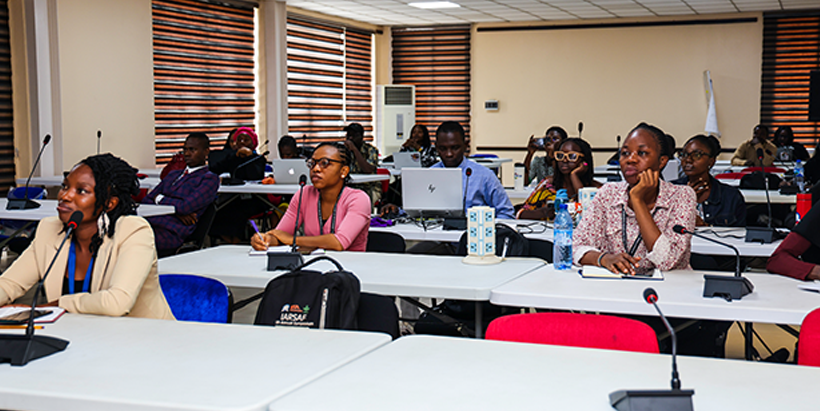
Young researchers during the IARSAF symposium at IITA headquarters in Ibadan.

Networking remains a cornerstone of academic and professional growth, offering far-reaching benefits beyond social connection. It enhances the visibility and credibility of one’s research, unlocks access to funding opportunities, supports career mobility, and fosters innovation through new ideas and collaborations.

Recognizing the power of networking and the evolving landscape of research careers, the IITACGIAR International Association of Research Scholars and Fellows (IARSAF) organised a one-day symposium themed “Thriving Beyond Academia: Career Options for Researchers” on 17 July at the Institute’s headquarters in Ibadan. The event brought together current IARSAF members and alumni, both physically and virtually, creating an avenue for dialogue, reflection, and career exploration.

The symposium served as a unique platform for attendees to connect with professionals who have successfully transitioned from the early stages of their careers into leadership roles in both academia and industry. Through engaging discussions with experienced mentors and peers, attendees gained invaluable insights into navigating the uncertainties of research careers while building sustainable and fulfilling paths forward. The event fostered collaboration, professional development, and a renewed sense of purpose.
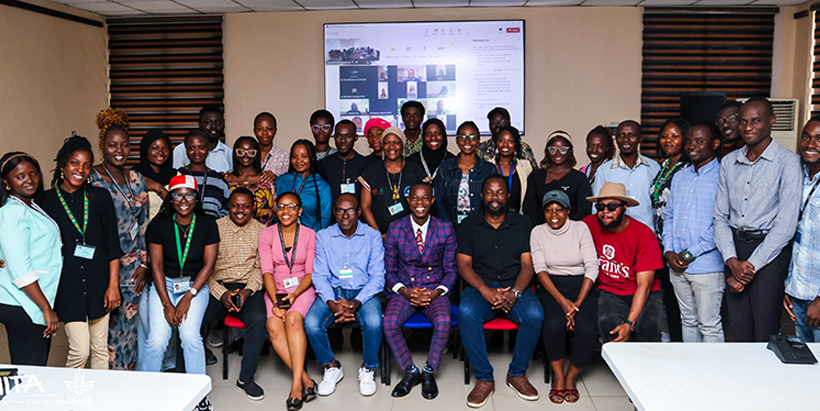
Cross section of participants of the IARSAF symposium.

Giving the keynote address, Dr Abidemi Talabi, Senior Food Scientist at Silal Food and Technology, encouraged attendees to explore diverse thematic areas including agribusiness and food technology, policy and international development, entrepreneurship, and the digital knowledge economy. Drawing from his experience as a Plant Breeder, he highlighted the most in-demand specializations in plant sciences and stressed the importance of integrating cost-benefit analysis into research planning. “The future belongs to hybrid scientists—those who merge plant biology with technology and business expertise,” he noted, urging participants to view their degrees as stepping-stones for innovation, value creation, and long-term impact.

Dr Anthony Job, Head of Agronomy and Seed Development at Flour Mills of Nigeria, shared his transitioning from IITA into the private sector. His story emphasized the value of courage, curiosity, and the willingness to apply expertise in unconventional settings. He encouraged young researchers to step beyond their comfort zones, seek skill-driven opportunities, and pursue their careers with boldness and clarity of purpose.

A panel discussion titled “Building an impactful career in research: Strategies for managing career advancement, family, and work-life balance” offered practical strategies to sustaining professional momentum while navigating personal responsibilities. Panelists shared techniques for effective networking, leveraging digital platforms, and building cross-border collaborations.

One of the panelists, IITA Plant Breeder Olakunle Sansa, highlighted excellence as the foundation of a successful scientific career, stating, “Excellence sets the stage.” He emphasized intentionality’s importance in research and relationships, advising researchers to adopt a growth-oriented mindset, stay adaptable, and cultivate meaningful collaborations. Above all, he reaffirmed the need for high-quality, impactful research as the cornerstone of credibility and relevance in the scientific community.

“It was encouraging to witness the enthusiasm, curiosity, and determination among participants, as well as the valuable connections formed. This gathering reaffirmed IARSAF’s commitment to supporting early-career researchers through mentorship, capacity building, and networking opportunities that position them for long-term success and impact,” Diekade said.

Ultimately, the symposium inspired participants to broaden their perspectives, strengthen their networks, and take bold steps toward shaping impactful careers while thriving well beyond the traditional boundaries of academia.

Contributed by Anita Akinyomade


Contributed by

Related news

No items found

Leave a Reply

Your email address will not be published. Required fields are marked *

Scroll to Top
Olaosebikan, Olamide

Olamide Deborah Nwanze is a Senior Research Associate specializing in gender mainstreaming research to inform participatory and inclusive breeding, variety development, and seed systems policies regarding root, tuber, and banana (RTB) crops in the International Institute of Tropical Agriculture Headquarters, Ibadan, Nigeria. She is a PhD candidate at the University of Ibadan and holds an MSc and B. Agric in Agricultural Extension and Rural Development. Olamide is a fellow of the African Women in Agricultural Research and Development – Gender Responsive Agricultural Systems Policy (AWARD-GRASP) and the Gender Responsive Researchers Equipped for Agricultural Transformation (GREAT). She seeks to apply her gender-mainstreaming learnings, gender-responsive research, and policy development, and review expertise to facilitate women, youth, children, and vulnerable social group’s access to and adoption of agricultural Innovations that guarantee food, nutrition, income, and livelihood security in Africa. Her current roles include mentoring research fellows, development of guides and training manuals, implementation and adaptation of gender frameworks and tools, value chain actors’ engagement as citizen science partners, policy review and redesign, data management, and analysis. Her current research explores mixed methods and participatory and interdisciplinary approaches to capture and highlight gender dynamics, needs, preferences, and challenges stakeholders face within the agricultural livelihood value chain to prioritize gender-inclusive strategies in breeding programs, policy design, and implementation.

At IITA, she contributes to the implementation of the CGIAR Accelerated Breeding Initiative and Genetic Innovation Programs; participatory and gender research within the NextGen CassavaHarvestPlusRTBFoods, and Tricot-ClimMob 1000Farms Projects; and gender knowledge communication via the G-LENS webinar series, video documentary, policy briefspublications, and blogs.


Recent publications

de Sousa, K., van Etten, J., Manners, R. Bello, A., Teeken, B., Olaosebikan, O., et al. 2024. The tricot approach: an agile framework for decentralized on-farm testing supported by citizen science. A retrospective. Agron. Sustain. Dev. 44, 8. https://doi.org/10.1007/s13593-023-00937-1

Madu, T., Onwuka, S., Nwafor, S., Onyemauwa, N., Ejechi, M., Ofoeze, M., Ukeje, B., Eluagu, C., Olaosebikan, O., Okoye, B., 2024. Gender-Inclusive Consumer Studies Improve Cassava Breeding in Nigeria in: Frontiers in Sociology, volume 9, number: 1224504, doi: 10.3389/fsoc.2024.1224504

Olaosebikan, O.; Bello, A.; Utoblo, O.; Okoye, B.; Olutegbe, N.; Garner, E.; Teeken, B.; Bryan, E.; Forsythe, L.; Cole, S.; Madu, T. 2023.  Stressors and Resilience within the Cassava Value Chain in Nigeria: Preferred Cassava Variety Traits and Response Strategies of Men and Women to Inform Breeding. Sustainability 15, 7837. https://doi.org/10.3390/su15107837

Okoye, B., Ofoeze, M., Ejechi, M., Onwuka, S., Nwafor, S., Onyemauwa, N., Ukeje, B., Eluagu, C., Obidiegwu, J.*, Olaosebikan, O., Madu, T.* 2023. Prioritizing preferred traits in the yam value chain in Nigeria: a gender situation analysis in: Frontiers in Sociology, volume 8, number: 1232626, pages 1 – 9, ISSN 2297-7775, 2023. https://www.frontiersin.org/articles/10.3389/fsoc.2023.1232626/full

Olaosebikan, O., Bello, A. A., de Sousa, K., Ndjouenkeu, R., Adesokan, M., Alamu, E. O., Agbona, A., van Etten, J., Kegah, F. N.*, Dufour, D., Bouniol, A., Teeken, B. 2023. Consumer acceptability of cassava gari-eba food products across cultural and environmental settings using the triadic comparison of technologies approach (tricot) in: Journal of the Science of Food and Agriculture,

Teeken, B., Olaosebikan, O., Bello, A. A., Madu, T.*, Cole, S. M. 2023. Qualitative assessment on the positionality and preferences of dyads in relation to cassava-related activities: working with tricot trial citizen scientists https://hdl.handle.net/10568/138326 Type: Manual

Bouniol, A., Ceballos, H., Bello, A. A., Teeken, B., Olaosebikan, O., Owoade, D., Agbona, A., Fotso Kuate, A., Madu, T.*, Okoye, B.*, Ofoeze, M.*, Nwafor, S.*, Onyemauwa, N.*, Adinsi, L.*, Forsythe, L., Dufour, D. 2023. Varietal impact on women’s labour, workload and related drudgery in processing root, tuber and banana crops: focus on cassava in sub-Saharan Africa in: Journal of the Science of Food and Agriculture, pages 1 – 25, ISSN 0022-5142,

Bello, A. A., Agbona, A., Olaosebikan, O., Edughaen, G., Dufour, D., Bouniol, A., Iluebbey, P., Ndjouenkeu, R.*, Rabbi, I. Y., Teeken, B. 2023. Genetic and environmental effects on processing productivity and food product yield: drudgery of women’s work in: Journal of the Science of Food and Agriculture, pages 1 – 32, ISSN 0022-5142, 5

Cavicchioli, M., Zimbiti, T., Teeken, B., Nwanze, D.O., Liani, M., Parkes, E. & Bello, A. 2023. IITA-Gender Responsive Breeding Training Report. Genetic Resources Center, IITA-HQ, Ibadan, 21-23 September, 2022. Ibadan, Nigeria: IITA, (34 p.).https://hdl.handle.net/10568/131368

Agbona, A. Peteti P., Teeken B., Olaosebikan O. Bello, A. A., Parkes, E., Rabbi, I. Y., Mueller, L., Egesi, C., Kulakow, P. 2022. Data Management in Multi-disciplinary African RTB Crop Breeding Programs. In: Williamson, H.F., Leonelli, S. (eds) Towards Responsible Plant Data Linkage: Data Challenges for Agricultural Research and Development. Springer, Cham. https://doi.org/10.1007/978-3-031-13276-6_5

Lora Forsythe, Pricilla Marimo, Sarah Mayanja, Olamide D. Olaosebikan, Esme Stuart, Bela Teeken, Benjamin Okoye, Tessy Madu, (2021). Cross-product Gender Analysis of RTBfoods Step 2 Gendered Food Mapping on RTB Products. Understanding the Drivers of Trait Preferences and the Development of Multi-user RTB Product Profiles, WP1. London, UK: RTBfoods Field Scientific Report, 30 p.

Teeken, B., Garner, E., Agbona, A., Balogun, I., Olaosebikan, O., Bello, A., Madu, T., Okoye, B., Egesi, C., Kulakow, P. and Tufan, H.A. 2021. Beyond “Women’s Traits”: Exploring How Gender, Social Difference, and Household Characteristics Influence Trait Preferences. Frontiers Sustainable Food Systems 5:740926. https://doi.org/10.3389/fsufs.2021.740926

Teeken, B., Agbona, A., Bello, A., Olaosebikan, O., Alamu, E., Adesokan, M., Awoyale, W., Madu, T., Okoye, B., Chijioke, U., Owoade, D., Okoro, M., Bouniol, A., Dufour, D., Hershey, C., Rabbi, I., Maziya‐Dixon, B., Egesi, C., Tufan, H. and Kulakow, P. (020. Understanding cassava varietal preferences through pairwise ranking of gari‐eba and fufu prepared by local farmer–processors. Int J Food Sci Technol. https://doi.org/10.1111/ijfs.14862

Bela Teeken, Olamide Olaosebikan, Ireti Balogun, Benjamin Okoye, Tessy Madu, Steven Cole, Abolore Bello, Elizabeth Parkes. (2020). Piloting the G+ customer and product profile tools for gender-responsive cassava breeding in Nigeria. Nigeria: International Institute of Tropical Agriculture (IITA). https://hdl.handle.net/20.500.11766/13000