AICCRA displays climate adaptation innovations at the Zambia agriculture and commercial show
August 2, 2025
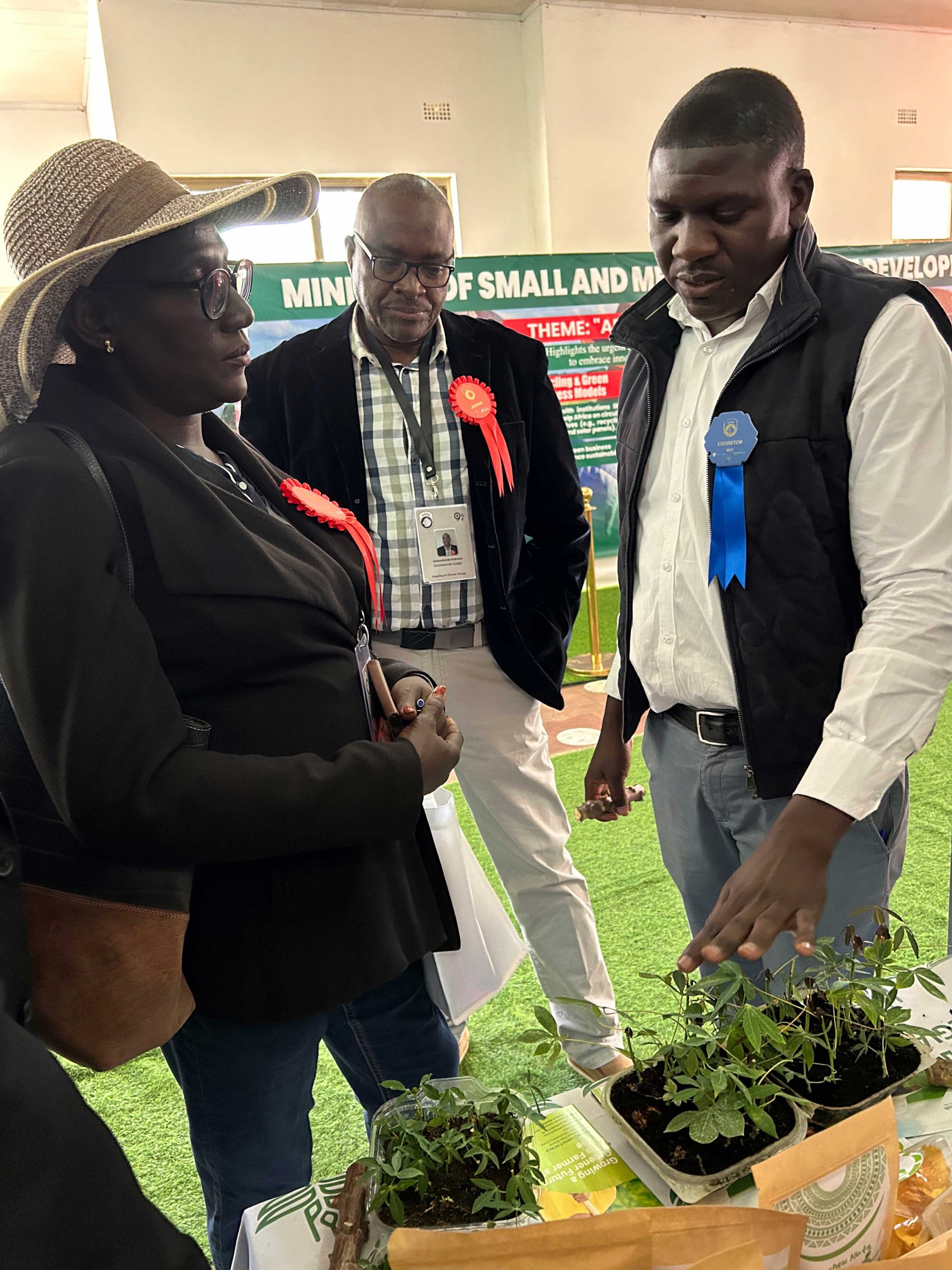
Sibeso Consent showing visitors some of the existing technologies in cassava seed systems.
As part of efforts to support and encourage MSMEs, cooperatives, and stakeholders to showcase products and services that respond to climate-related challenges in the agriculture sector, the Zambia Ministry of Small and Medium Enterprise provided an enabling space for key actors at the 2025 Zambia Agriculture and Commercial Show under the theme “Adapting to Climate Change.”
From 30 July to 4 August, the show with a theme, which strongly resonates with the mission of the Accelerating Impacts of CGIAR Climate Research for Africa (AICCRA) Zambia project, will help participants connect with last mile users. With AICCRA at the forefront of helping smallholder farmers adapt to climate change through science-based, locally tailored solutions, the 97th Zambia Agriculture and Commercial Show creates the platform for displaying five key innovations designed to address critical challenges facing Zambia agriculture sector.
As Zambia continues to face climate-related threats ranging from erratic rainfall and prolonged droughts to extreme heat, AICCRA Zambia is equipping farmers with climate-smart agriculture (CSA), innovative technologies, and climate information services.
With over 300,000 smallholder farmers reached, more than a third of whom are women, AICCRA is actively contributing to building climate resilience, improving livelihoods, and ensuring sustainable agricultural growth across the country.
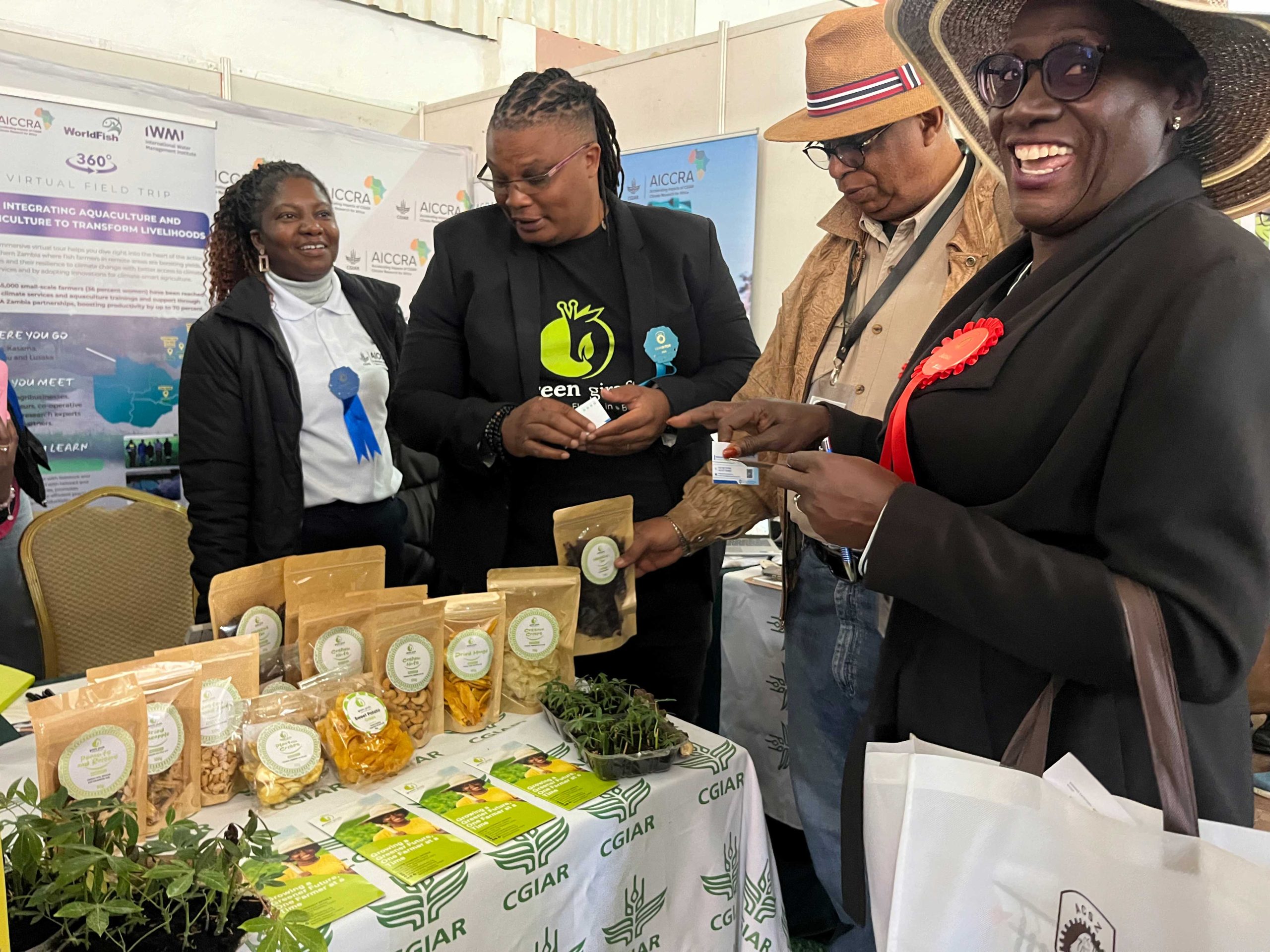
Visitors at the AICCRA booth during the Zambia agriculture and commercial show.
By working with public and private partners, AICCRA Zambia empowers farmers especially women and youth to anticipate and respond to climate shocks. One of the initiative’s cornerstones is its Accelerator Program, which mitigates the risks of climate investments and helps agribusinesses scale CSA technologies, such as solar-powered irrigation systems, multi-stress tolerant seed varieties, sustainable water management, and mechanization.
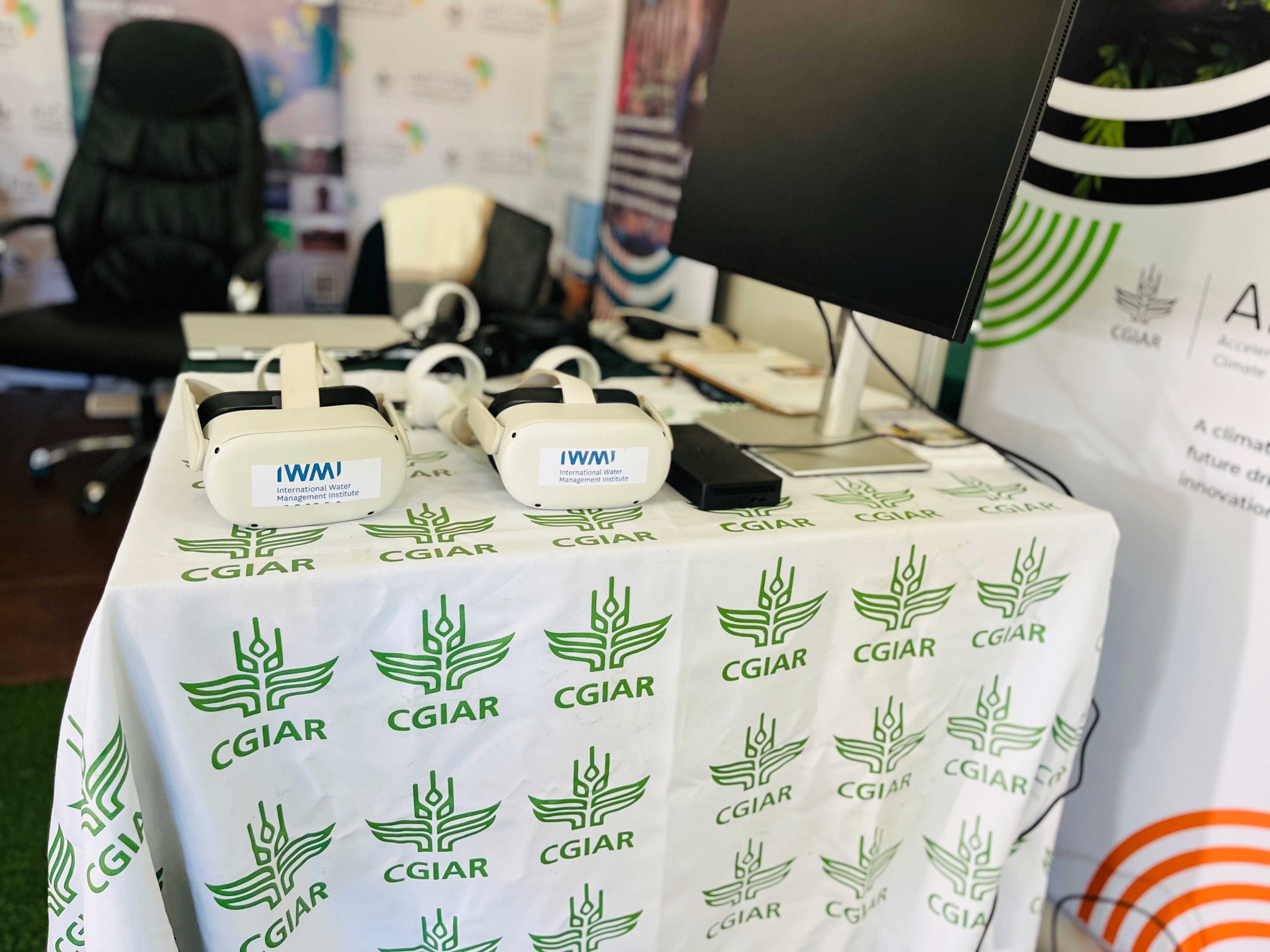
The IWMI display stand at the Zambia agriculture and commercial show.
The project’s bundled innovation approach tailor solutions to specific challenges in key value chains including groundnuts, maize, soybeans, livestock, and aquaculture. These solutions enhance resource efficiency, promote diversification, and introduce labor-saving technologies ensuring farmers are equipped to maintain productivity and improve livelihoods in the face of an evolving climate.
At this year’s show, AICCRA Zambia is displaying five key innovations:
Agricultural Water Management(IWMI) – Increasing biophysical, social, and economic water productivity through scale-appropriate and context-specific water use interventions for smallholders.
Integrated Aquaculture-Agriculture Systems(WorldFish) – Promoting sustainable integration of fish farming, crop production, and livestock, including access to resilient fish seed and training for producers. A virtual field trip will spotlight farmer success stories from Mansa, Luwingu, and Kasama.
Climate-Smart Seed Varieties(IITA) – Enhancing access to drought- and disease-tolerant crop varieties through partnerships across the seed value chain.
Mechanization for Smallholders(CIMMYT) – Reducing labor intensity and boosting productivity with accessible machinery tailored to small-scale farmers.
Youth Innovation(Green Giraffe –i2G Program) – Supporting young entrepreneurs through AICCRA Zambia’s Innovation and Internship Grant (i2G), which nurtures local climate-smart innovations. Green Giraffe, a top performer in the 2023 innovation challenge, is now commercially producing climate solutions born from the program.
As Zambia rallies to adapt its agriculture sector to the climate crisis, AICCRA Zambia stands as a leading example of science and innovation in action, forging a pathway for others to follow through partnerships, inclusivity, and community-driven change.
Contributed by Rachel Namukolo-Nali
Olamide Deborah Nwanze is a Senior Research Associate specializing in gender mainstreaming research to inform participatory and inclusive breeding, variety development, and seed systems policies regarding root, tuber, and banana (RTB) crops in the International Institute of Tropical Agriculture Headquarters, Ibadan, Nigeria. She is a PhD candidate at the University of Ibadan and holds an MSc and B. Agric in Agricultural Extension and Rural Development. Olamide is a fellow of the African Women in Agricultural Research and Development – Gender Responsive Agricultural Systems Policy (AWARD-GRASP) and the Gender Responsive Researchers Equipped for Agricultural Transformation (GREAT). She seeks to apply her gender-mainstreaming learnings, gender-responsive research, and policy development, and review expertise to facilitate women, youth, children, and vulnerable social group’s access to and adoption of agricultural Innovations that guarantee food, nutrition, income, and livelihood security in Africa. Her current roles include mentoring research fellows, development of guides and training manuals, implementation and adaptation of gender frameworks and tools, value chain actors’ engagement as citizen science partners, policy review and redesign, data management, and analysis. Her current research explores mixed methods and participatory and interdisciplinary approaches to capture and highlight gender dynamics, needs, preferences, and challenges stakeholders face within the agricultural livelihood value chain to prioritize gender-inclusive strategies in breeding programs, policy design, and implementation.
de Sousa, K., van Etten, J., Manners, R. Bello, A., Teeken, B., Olaosebikan, O., et al. 2024. The tricot approach: an agile framework for decentralized on-farm testing supported by citizen science. A retrospective. Agron. Sustain. Dev. 44, 8. https://doi.org/10.1007/s13593-023-00937-1
Madu, T., Onwuka, S., Nwafor, S., Onyemauwa, N., Ejechi, M., Ofoeze, M., Ukeje, B., Eluagu, C., Olaosebikan, O., Okoye, B., 2024. Gender-Inclusive Consumer Studies Improve Cassava Breeding in Nigeria in: Frontiers in Sociology, volume 9, number: 1224504, doi: 10.3389/fsoc.2024.1224504
Olaosebikan, O.; Bello, A.; Utoblo, O.; Okoye, B.; Olutegbe, N.; Garner, E.; Teeken, B.; Bryan, E.; Forsythe, L.; Cole, S.; Madu, T. 2023. Stressors and Resilience within the Cassava Value Chain in Nigeria: Preferred Cassava Variety Traits and Response Strategies of Men and Women to Inform Breeding. Sustainability 15, 7837. https://doi.org/10.3390/su15107837
Okoye, B., Ofoeze, M., Ejechi, M., Onwuka, S., Nwafor, S., Onyemauwa, N., Ukeje, B., Eluagu, C., Obidiegwu, J.*, Olaosebikan, O., Madu, T.* 2023. Prioritizing preferred traits in the yam value chain in Nigeria: a gender situation analysis in: Frontiers in Sociology, volume 8, number: 1232626, pages 1 – 9, ISSN 2297-7775, 2023. https://www.frontiersin.org/articles/10.3389/fsoc.2023.1232626/full
Olaosebikan, O., Bello, A. A., de Sousa, K., Ndjouenkeu, R., Adesokan, M., Alamu, E. O., Agbona, A., van Etten, J., Kegah, F. N.*, Dufour, D., Bouniol, A., Teeken, B. 2023. Consumer acceptability of cassava gari-eba food products across cultural and environmental settings using the triadic comparison of technologies approach (tricot) in: Journal of the Science of Food and Agriculture,
Teeken, B., Olaosebikan, O., Bello, A. A., Madu, T.*, Cole, S. M. 2023. Qualitative assessment on the positionality and preferences of dyads in relation to cassava-related activities: working with tricot trial citizen scientists https://hdl.handle.net/10568/138326 Type: Manual
Bouniol, A., Ceballos, H., Bello, A. A., Teeken, B., Olaosebikan, O., Owoade, D., Agbona, A., Fotso Kuate, A., Madu, T.*, Okoye, B.*, Ofoeze, M.*, Nwafor, S.*, Onyemauwa, N.*, Adinsi, L.*, Forsythe, L., Dufour, D. 2023. Varietal impact on women’s labour, workload and related drudgery in processing root, tuber and banana crops: focus on cassava in sub-Saharan Africa in: Journal of the Science of Food and Agriculture, pages 1 – 25, ISSN 0022-5142,
Bello, A. A., Agbona, A., Olaosebikan, O., Edughaen, G., Dufour, D., Bouniol, A., Iluebbey, P., Ndjouenkeu, R.*, Rabbi, I. Y., Teeken, B. 2023. Genetic and environmental effects on processing productivity and food product yield: drudgery of women’s work in: Journal of the Science of Food and Agriculture, pages 1 – 32, ISSN 0022-5142, 5
Cavicchioli, M., Zimbiti, T., Teeken, B., Nwanze, D.O., Liani, M., Parkes, E. & Bello, A. 2023. IITA-Gender Responsive Breeding Training Report. Genetic Resources Center, IITA-HQ, Ibadan, 21-23 September, 2022. Ibadan, Nigeria: IITA, (34 p.).https://hdl.handle.net/10568/131368
Agbona, A. Peteti P., Teeken B., Olaosebikan O. Bello, A. A., Parkes, E., Rabbi, I. Y., Mueller, L., Egesi, C., Kulakow, P. 2022. Data Management in Multi-disciplinary African RTB Crop Breeding Programs. In: Williamson, H.F., Leonelli, S. (eds) Towards Responsible Plant Data Linkage: Data Challenges for Agricultural Research and Development. Springer, Cham. https://doi.org/10.1007/978-3-031-13276-6_5
Lora Forsythe, Pricilla Marimo, Sarah Mayanja, Olamide D. Olaosebikan, Esme Stuart, Bela Teeken, Benjamin Okoye, Tessy Madu, (2021). Cross-product Gender Analysis of RTBfoods Step 2 Gendered Food Mapping on RTB Products. Understanding the Drivers of Trait Preferences and the Development of Multi-user RTB Product Profiles, WP1. London, UK: RTBfoods Field Scientific Report, 30 p.
Teeken, B., Garner, E., Agbona, A., Balogun, I., Olaosebikan, O., Bello, A., Madu, T., Okoye, B., Egesi, C., Kulakow, P. and Tufan, H.A. 2021. Beyond “Women’s Traits”: Exploring How Gender, Social Difference, and Household Characteristics Influence Trait Preferences. Frontiers Sustainable Food Systems 5:740926. https://doi.org/10.3389/fsufs.2021.740926
Teeken, B., Agbona, A., Bello, A., Olaosebikan, O., Alamu, E., Adesokan, M., Awoyale, W., Madu, T., Okoye, B., Chijioke, U., Owoade, D., Okoro, M., Bouniol, A., Dufour, D., Hershey, C., Rabbi, I., Maziya‐Dixon, B., Egesi, C., Tufan, H. and Kulakow, P. (020. Understanding cassava varietal preferences through pairwise ranking of gari‐eba and fufu prepared by local farmer–processors. Int J Food Sci Technol.https://doi.org/10.1111/ijfs.14862
Bela Teeken, Olamide Olaosebikan, Ireti Balogun, Benjamin Okoye, Tessy Madu, Steven Cole, Abolore Bello, Elizabeth Parkes. (2020). Piloting the G+ customer and product profile tools for gender-responsive cassava breeding in Nigeria. Nigeria: International Institute of Tropical Agriculture (IITA). https://hdl.handle.net/20.500.11766/13000