
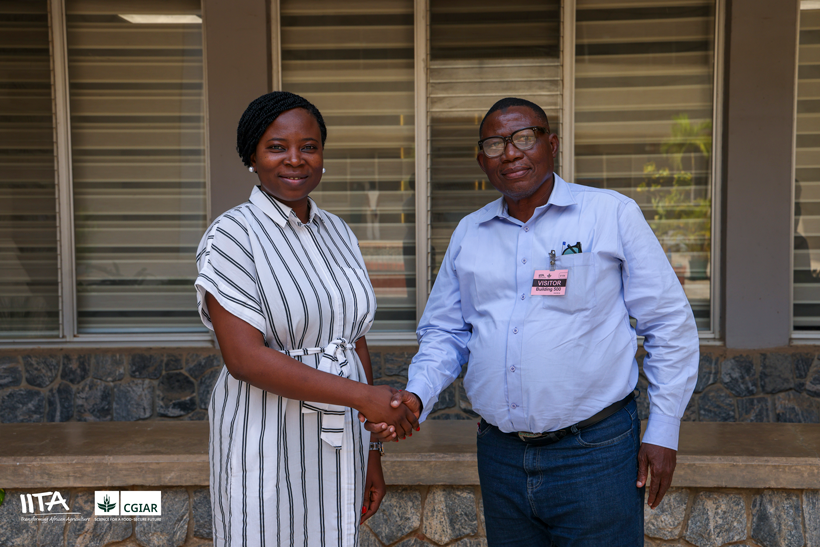
As part of efforts to advance agricultural development, nutrition, and human capacity building in northeastern Nigeria, a representative of the Nigerian Army University (NAUB), Biu, Borno State, paid a fact-finding visit to IITA-CGIAR on 26 January to explore potential areas of collaboration.
Adeoba Abdulkarim Umar, who represented NAUB during the visit, said the mission aimed to initiate conversations that could lead to structured partnerships between the University and IITA-CGIAR, particularly in agricultural research, academic development, and community-focused interventions for the people of Biu and the wider NAUB community.
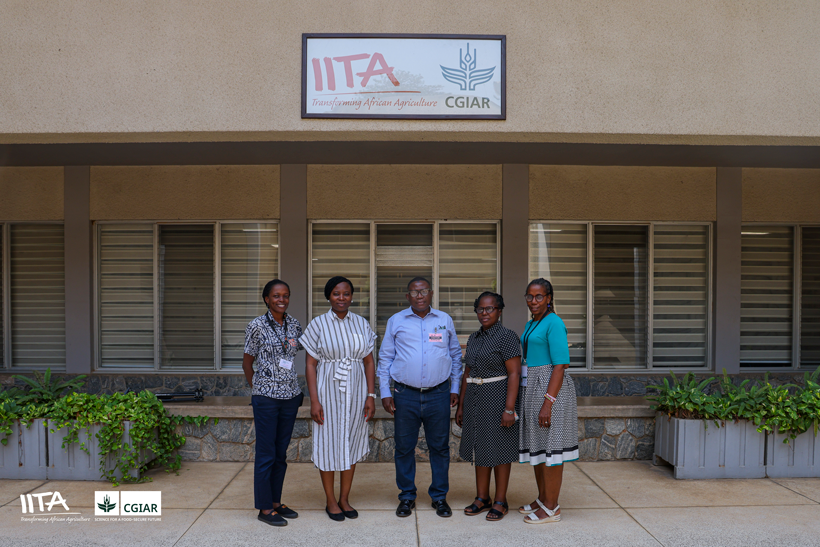
Receiving the visitor on behalf of Dr Tahirou Abdoulaye, IITA Deputy Director General, Partnerships for Delivery, Zainatou Sore, IITA Head, Capacity Development Office, provided an overview of IITA-CGIAR’s mandate and its extensive experience in strengthening human capital across Africa. She highlighted the Institute’s long-standing investments in capacity development, research-embedded training, and tailored programs designed to meet the needs of partner institutions.
During discussions, Adeoba noted that NAUB possesses vast expanses of land suitable for agricultural development and is located within a predominantly farming community. However, despite Biu’s rich agro-ecological potential, the University is yet to establish a fully developed Faculty of Agriculture. He emphasized that this gap presents a unique opportunity for partnership, in which IITA-CGIAR could provide technical direction, research support, and strategic guidance to help drive scale and impact.
“Biu is essentially a farming community, but there is a strong need for nutrition interventions,” Adeoba said, adding that the University could serve as a critical platform for delivering agricultural and nutrition solutions to surrounding communities. He also pointed to the added advantage of NAUB’s affiliation with the Nigerian Army, noting that this creates opportunities to leverage logistical support, infrastructure, and security to enable successful program implementation.
Potential areas of collaboration discussed during the visit included shared research initiatives, exchange of material and human resources, academic and teaching development for staff and students, and access to laboratory equipment and inputs required for practical training. These, Adeoba noted, would help produce well-trained graduates and strengthen institutional capacity.
In response, Zainatou reaffirmed IITA-CGIAR’s strong track record in capacity strengthening. “Historically, capacity development has been a core strength of IITA-CGIAR,” she said. “From the 1970s through the 1990s, there were strong donor investments in human capacity development, and over time, this evolved into embedding training within research programs. Today, training options are largely delivered through ongoing programs, including group trainings and co-supervision of student research projects.”
She added that NAUB could benefit from joint supervision of postgraduate students, staff exchange programs, and participation in IITA-CGIAR-led training initiatives. She also noted that further areas of collaboration would likely emerge as discussions continue, and as NAUB gains deeper exposure to IITA-CGIAR’s work.
The visit aligns with IITA-CGIAR’s 2024 – 2030 Strategy, which identifies Climate Change and Nutrition as two of its key strategic pillars, underscoring the relevance of the proposed collaboration in addressing pressing development challenges in Biu and beyond.
Contributed by Folake Oduntan
Contributed by
Recent stories