
IITA NEWS

CGIAR and FARA put Africa at the center of agricultural vision at AASW9
August 12, 2026
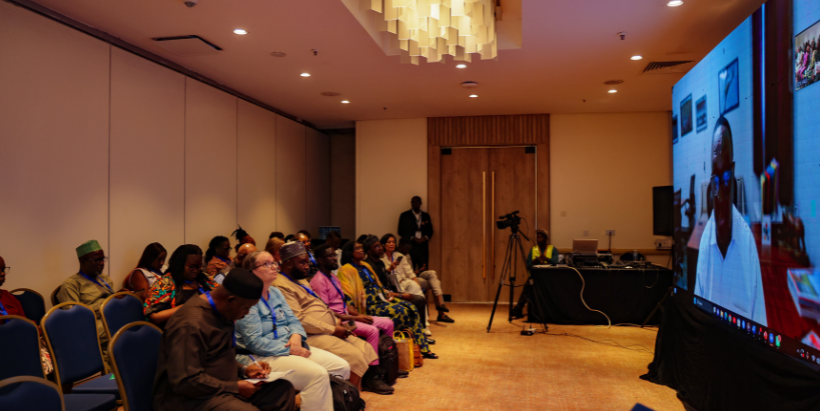
IITA Director General and CGIAR Regional Director for Continental Africa, Dr Simeon Ehui giving a virtual address.

On the sidelines of the just-concluded 9th Africa Agriculture Science Week (AASW9) and the 10th FARA General Assembly in Abuja, CGIAR presented the draft Strategy for Africa to partners and stakeholders, aimed at shaping the future of African agriculture.

From scientists to representatives of farmers’ organizations, the discussions converged on a single question during the draft strategy presentation: What would it take for Africa to truly lead its own agricultural transformation? During the side event jointly convened by CGIAR and the Forum for Agricultural Research in Africa (FARA), discussions focused on the future of agricultural research on the continent and the role African institutions should play in driving it.

With the CGIAR’s draft Strategy for Africa, the continent now has a roadmap that seeks to reposition one of the world’s largest agricultural research partnerships from being primarily a project implementer to becoming a catalyst for stronger African institutions.

Opening the session, Dr Namukolo Covic, Head of CGIAR’s Liaison Office for Africa, made it clear that the document was still evolving. The discussions at the event, she said, were designed to gather feedback from stakeholders whose perspectives would help refine the strategy before the next presentation at the Africa Food Systems Forum.

That invitation set the tone for the conversations that followed.

Joining virtually from Washington, CGIAR Regional Director for Africa, Dr Simeon Ehui, challenged participants to rethink how success in agricultural development should be measured. Rather than counting projects implemented or completed, or innovations launched, Dr Ehui said the real legacy of CGIAR should be reflected in the strength of Africa’s own research institutions, universities, and innovation systems.

The strategy envisions that by 2045, the CGIAR will have a smaller operational footprint but greater influence and be more closely aligned with continental priorities.

Presenting the draft Strategy, Dr Steve Omamo of the International Food Policy Research Institute (IFPRI), in his presentation, identified six proposed Strategic Priorities: reducing food import dependence, strengthening resilient trade corridors, transforming national research and delivery systems, advancing digital transformation, delivering healthy and affordable diets, and restoring natural resources and climate resilience. Targets include upgrading 10 to 15 national agricultural research institutes to capacities comparable to those of globally respected institutions such as Brazil’s EMBRAPA or India’s ICAR. It also proposes establishing an Africa-wide agricultural data commons to improve collaboration, evidence generation, and decision-making across countries.
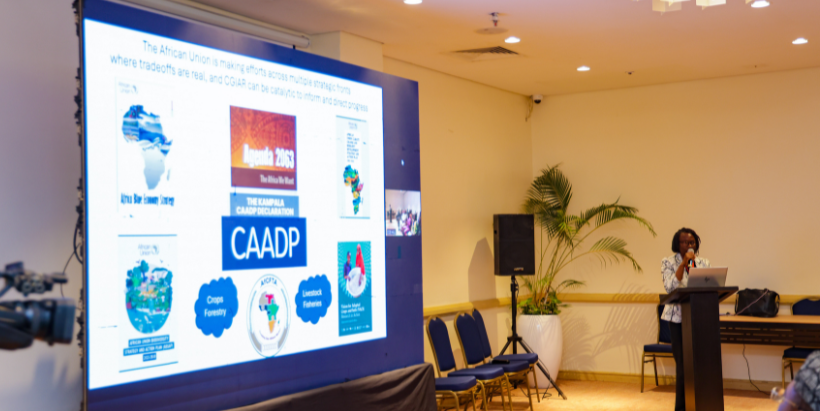
Head, Liaison Office for Africa, CGIAR System Organization, Dr Namukolo Covic during her address.

For FARA’s Executive Director, Dr Aggrey Agumya, the importance of the strategy lies not only in its ambition but also in its execution.

Placing the strategy in context, he noted that it builds on earlier efforts, citing the 2012 CAADP Science Agenda and the 2022 Abidjan consultations. According to Dr Agumya, while both generated important commitments, implementation failed to match ambition. The current process, he suggested, would be judged by the same standard, not by the quality of its language but by the impact it creates.

That reality shaped the breakout discussions, where participants examined the Strategy’s overall direction and the practicality of its proposed priorities.

Participants welcomed the emphasis on strengthening African institutions but argued that capacity development should extend beyond researchers to include farmers and local innovation actors who are essential for translating science into impact.

Reporting for one of the breakout groups, Vivian Atakos observed that women remain concentrated in lower-value, highly perishable crop production while continuing to face limited opportunities in more profitable agricultural value chains. Participants called for stronger scientific support for women’s income generation and nutrition-sensitive agriculture, arguing that inclusive growth must be deliberately designed.

Discussions also raised concerns that have accompanied agricultural research in Africa. Participants said organizations like CGIAR should broaden their attention to indigenous and underutilized crops with significant potential for nutrition, climate resilience, and diversified livelihoods. Also recommending deeper co-creation with the private sector and continued value delivery beyond individual project lifespans.

Others argued that Africa’s digital transformation should not create new forms of dependency. Digital solutions, they said, should be built on local skills, ownership, and capacity to remain sustainable long after donor-funded projects have ended.
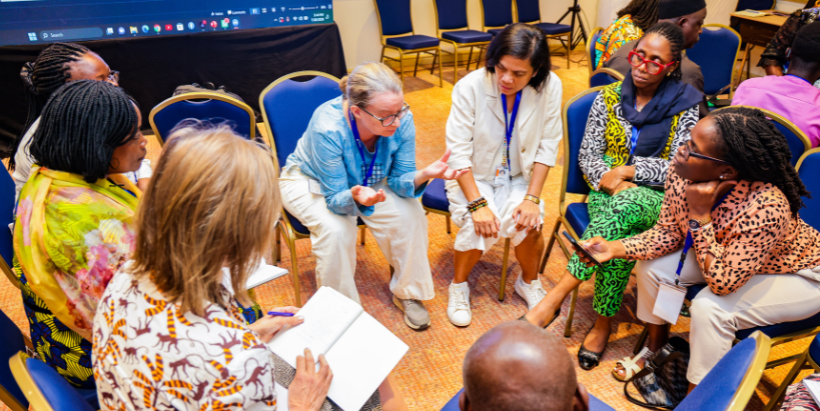
Participants during one of the breakout sessions.

Several participants challenged the Strategy to pay greater attention to the parts of the agricultural value chain that frequently receive less investment—post-harvest handling, processing, storage, and market access—where substantial losses continue to erode farmers’ incomes and national food security.

Financing emerged as another recurring area of discussion, with participants noting that the shift to African-led implementation is not yet clear on how it will be financed, even as much of the current investment in agricultural research continues to originate from outside the continent. They called for clearer pathways that encourage stronger domestic resource mobilization.

As the discussions drew to a close, Dr Ehui acknowledged that the consultation had generated valuable recommendations on partnerships, financing mechanisms, and measurable targets for women and youth. Contributions that would shape the next version of the Strategy will be presented at the Africa Food Systems Forum (AFSF), alongside early discussions on CGIAR’s broader 2040 strategy process.

In his closing remarks, Dr Agumya, having spent six years within the CGIAR system before leading FARA, described the proposed shift as a bold departure from convention. He emphasized that a system choosing to become less central, in service of strengthening African institutions, is embracing a fundamentally different understanding of partnership.

Whether that vision ultimately succeeds will depend not only on the strategy itself but also on the willingness of governments, research institutions, universities, the private sector, and development partners to turn its aspirations into lasting change. Judging by the candor of the discussions in Abuja, stakeholders appear determined to ensure that this strategy becomes more than another well-written document but a roadmap that genuinely places Africa at the center of its own agricultural future.


Scroll to Top
Olaosebikan, Olamide

Olamide Deborah Nwanze is a Senior Research Associate specializing in gender mainstreaming research to inform participatory and inclusive breeding, variety development, and seed systems policies regarding root, tuber, and banana (RTB) crops in the International Institute of Tropical Agriculture Headquarters, Ibadan, Nigeria. She is a PhD candidate at the University of Ibadan and holds an MSc and B. Agric in Agricultural Extension and Rural Development. Olamide is a fellow of the African Women in Agricultural Research and Development – Gender Responsive Agricultural Systems Policy (AWARD-GRASP) and the Gender Responsive Researchers Equipped for Agricultural Transformation (GREAT). She seeks to apply her gender-mainstreaming learnings, gender-responsive research, and policy development, and review expertise to facilitate women, youth, children, and vulnerable social group’s access to and adoption of agricultural Innovations that guarantee food, nutrition, income, and livelihood security in Africa. Her current roles include mentoring research fellows, development of guides and training manuals, implementation and adaptation of gender frameworks and tools, value chain actors’ engagement as citizen science partners, policy review and redesign, data management, and analysis. Her current research explores mixed methods and participatory and interdisciplinary approaches to capture and highlight gender dynamics, needs, preferences, and challenges stakeholders face within the agricultural livelihood value chain to prioritize gender-inclusive strategies in breeding programs, policy design, and implementation.

At IITA, she contributes to the implementation of the CGIAR Accelerated Breeding Initiative and Genetic Innovation Programs; participatory and gender research within the NextGen CassavaHarvestPlusRTBFoods, and Tricot-ClimMob 1000Farms Projects; and gender knowledge communication via the G-LENS webinar series, video documentary, policy briefspublications, and blogs.


Recent publications

de Sousa, K., van Etten, J., Manners, R. Bello, A., Teeken, B., Olaosebikan, O., et al. 2024. The tricot approach: an agile framework for decentralized on-farm testing supported by citizen science. A retrospective. Agron. Sustain. Dev. 44, 8. https://doi.org/10.1007/s13593-023-00937-1

Madu, T., Onwuka, S., Nwafor, S., Onyemauwa, N., Ejechi, M., Ofoeze, M., Ukeje, B., Eluagu, C., Olaosebikan, O., Okoye, B., 2024. Gender-Inclusive Consumer Studies Improve Cassava Breeding in Nigeria in: Frontiers in Sociology, volume 9, number: 1224504, doi: 10.3389/fsoc.2024.1224504

Olaosebikan, O.; Bello, A.; Utoblo, O.; Okoye, B.; Olutegbe, N.; Garner, E.; Teeken, B.; Bryan, E.; Forsythe, L.; Cole, S.; Madu, T. 2023.  Stressors and Resilience within the Cassava Value Chain in Nigeria: Preferred Cassava Variety Traits and Response Strategies of Men and Women to Inform Breeding. Sustainability 15, 7837. https://doi.org/10.3390/su15107837

Okoye, B., Ofoeze, M., Ejechi, M., Onwuka, S., Nwafor, S., Onyemauwa, N., Ukeje, B., Eluagu, C., Obidiegwu, J.*, Olaosebikan, O., Madu, T.* 2023. Prioritizing preferred traits in the yam value chain in Nigeria: a gender situation analysis in: Frontiers in Sociology, volume 8, number: 1232626, pages 1 – 9, ISSN 2297-7775, 2023. https://www.frontiersin.org/articles/10.3389/fsoc.2023.1232626/full

Olaosebikan, O., Bello, A. A., de Sousa, K., Ndjouenkeu, R., Adesokan, M., Alamu, E. O., Agbona, A., van Etten, J., Kegah, F. N.*, Dufour, D., Bouniol, A., Teeken, B. 2023. Consumer acceptability of cassava gari-eba food products across cultural and environmental settings using the triadic comparison of technologies approach (tricot) in: Journal of the Science of Food and Agriculture,

Teeken, B., Olaosebikan, O., Bello, A. A., Madu, T.*, Cole, S. M. 2023. Qualitative assessment on the positionality and preferences of dyads in relation to cassava-related activities: working with tricot trial citizen scientists https://hdl.handle.net/10568/138326 Type: Manual

Bouniol, A., Ceballos, H., Bello, A. A., Teeken, B., Olaosebikan, O., Owoade, D., Agbona, A., Fotso Kuate, A., Madu, T.*, Okoye, B.*, Ofoeze, M.*, Nwafor, S.*, Onyemauwa, N.*, Adinsi, L.*, Forsythe, L., Dufour, D. 2023. Varietal impact on women’s labour, workload and related drudgery in processing root, tuber and banana crops: focus on cassava in sub-Saharan Africa in: Journal of the Science of Food and Agriculture, pages 1 – 25, ISSN 0022-5142,

Bello, A. A., Agbona, A., Olaosebikan, O., Edughaen, G., Dufour, D., Bouniol, A., Iluebbey, P., Ndjouenkeu, R.*, Rabbi, I. Y., Teeken, B. 2023. Genetic and environmental effects on processing productivity and food product yield: drudgery of women’s work in: Journal of the Science of Food and Agriculture, pages 1 – 32, ISSN 0022-5142, 5

Cavicchioli, M., Zimbiti, T., Teeken, B., Nwanze, D.O., Liani, M., Parkes, E. & Bello, A. 2023. IITA-Gender Responsive Breeding Training Report. Genetic Resources Center, IITA-HQ, Ibadan, 21-23 September, 2022. Ibadan, Nigeria: IITA, (34 p.).https://hdl.handle.net/10568/131368

Agbona, A. Peteti P., Teeken B., Olaosebikan O. Bello, A. A., Parkes, E., Rabbi, I. Y., Mueller, L., Egesi, C., Kulakow, P. 2022. Data Management in Multi-disciplinary African RTB Crop Breeding Programs. In: Williamson, H.F., Leonelli, S. (eds) Towards Responsible Plant Data Linkage: Data Challenges for Agricultural Research and Development. Springer, Cham. https://doi.org/10.1007/978-3-031-13276-6_5

Lora Forsythe, Pricilla Marimo, Sarah Mayanja, Olamide D. Olaosebikan, Esme Stuart, Bela Teeken, Benjamin Okoye, Tessy Madu, (2021). Cross-product Gender Analysis of RTBfoods Step 2 Gendered Food Mapping on RTB Products. Understanding the Drivers of Trait Preferences and the Development of Multi-user RTB Product Profiles, WP1. London, UK: RTBfoods Field Scientific Report, 30 p.

Teeken, B., Garner, E., Agbona, A., Balogun, I., Olaosebikan, O., Bello, A., Madu, T., Okoye, B., Egesi, C., Kulakow, P. and Tufan, H.A. 2021. Beyond “Women’s Traits”: Exploring How Gender, Social Difference, and Household Characteristics Influence Trait Preferences. Frontiers Sustainable Food Systems 5:740926. https://doi.org/10.3389/fsufs.2021.740926

Teeken, B., Agbona, A., Bello, A., Olaosebikan, O., Alamu, E., Adesokan, M., Awoyale, W., Madu, T., Okoye, B., Chijioke, U., Owoade, D., Okoro, M., Bouniol, A., Dufour, D., Hershey, C., Rabbi, I., Maziya‐Dixon, B., Egesi, C., Tufan, H. and Kulakow, P. (020. Understanding cassava varietal preferences through pairwise ranking of gari‐eba and fufu prepared by local farmer–processors. Int J Food Sci Technol. https://doi.org/10.1111/ijfs.14862

Bela Teeken, Olamide Olaosebikan, Ireti Balogun, Benjamin Okoye, Tessy Madu, Steven Cole, Abolore Bello, Elizabeth Parkes. (2020). Piloting the G+ customer and product profile tools for gender-responsive cassava breeding in Nigeria. Nigeria: International Institute of Tropical Agriculture (IITA). https://hdl.handle.net/20.500.11766/13000