
NEWS

Strengthening seed systems to bridge yam production and demand gaps
September 18, 2026
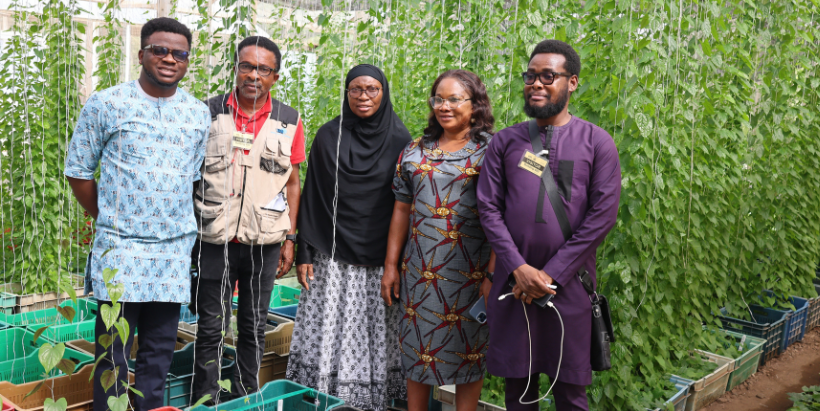
Some of the stakeholders in a yam screen house during a facility tour

Yams remain one of the most important staple crops in Nigeria and across West Africa, supporting food security, livelihoods, local markets, processing, and trade. As demand continues to grow among farmers, consumers, markets, industries, and export markets, ensuring a consistent supply of yams year-round requires a reliable seed system that provides farmers with enough high-quality planting materials when needed.

To address it, a stakeholder interaction on “Early generation seed yam demand estimation and production planning” brought together key actors from National Root Crop Research Institute (NRCRI), National Agricultural Seeds Council (NASC) and IITA, on 28 August to discuss findings from the field seed requirement survey and explore approaches to strengthen production planning. The meeting provided an opportunity to examine how improved seed yam technologies and more coordinated seed systems can help increase the availability of quality planting materials, enabling farmers to scale production and respond to growing demand for yams for food, markets, local industries, and export.

The meeting also provided an opportunity to demonstrate planning tools that can support early-generation seed producers in working toward target seed volumes and better align seed production with demand.

In his opening address, James Legg, IITA Seed System Lead, explained that the Inclusive Delivery area of work is part of the Breeding for Tomorrow (B4T) Science Program, which develops climate-resilient, nutritious, and market-preferred products for smallholder farmers. As one of the program’s five areas of work, Inclusive Delivery supports the strengthening of seed systems and their capacity to deliver high-quality seed by working with national partners.
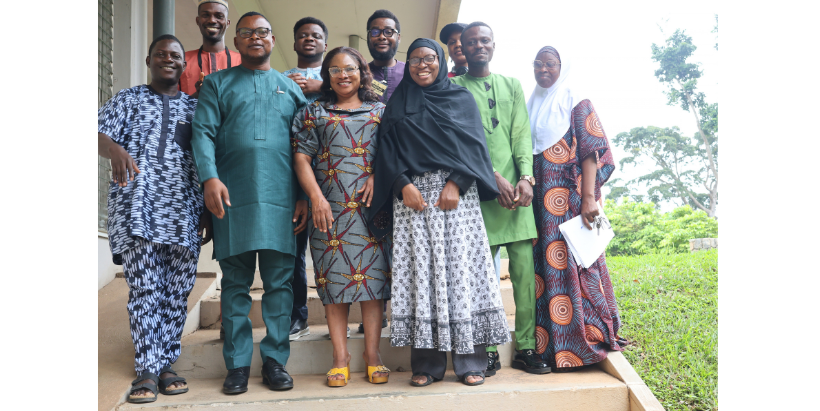
The IITA team and stakeholders from NRCRI and NASC after the meeting

He explained that the goal is to establish a network of seed producers capable of running profitable, sustainable businesses while meeting the needs of farmers who depend on high-quality seed of improved, registered varieties for lasting, and transformative impact, particularly for high-value crops such as yams.

IITA Breeding Lead, Hapson Mushoriwa, in his remarks, expressed appreciation to the participants and stakeholders for their contributions and continued commitment to strengthening yam seed systems. He emphasized that while significant progress has been made in developing improved yam varieties, the success of breeding efforts ultimately depends on farmers having timely access to sufficient quantities of quality planting materials.

The meeting therefore provided an opportunity to strengthen the link between breeding, seed demand, production, and variety deployment. Collaboration among breeders, seed producers, national programs, regulators, the private sector, development partners, and farmers remain essential to building a responsive seed system that can meet the needs of the yam value chain.

“From the breeding perspective, IITA is committed to ensuring that breeding decisions increasingly align with seed production realities, farmers’ demand, market needs, and the capacity of partners to deliver,” he added. “The goal should be to move from reactive seed production to a coordinated, demand-driven, and forward-looking seed system.”

Asrat Amale, Head of Yam Breeding, highlighted efforts to promote released varieties by showcasing their production potential and food quality to farmers. He explained that farmers are also being linked with seed producers and processors to better connect market demand with production capacity and seed availability. Some varieties have been prioritized based on their seed production productivity and nutritional value. He noted that two new varieties have been released since the beginning of the year.

Prof. Morufat explained that under Inclusive Delivery, efforts also focus on addressing the gap between the supply of high-quality seed and demand from the e-market segment. She noted that the team, together with partners, had populated the Seed Requirement Estimation (SRE) tool to support seed yam production planning and deployment in target areas of Nigeria and Ghana. She emphasized the importance of using the tool collaboratively with partners to improve planning and ensure seed production responds to actual demand.

Pelemo Olugboyega, who works with IITA’s Yam Improvement Program, explained that the meeting was also aimed at assessing the volume of seed currently available, identifying the varieties across different seed classes, and determining how the scale and number of varieties available could be increased.

He noted that strengthening the seed system requires ensuring that farmers have access to certified seed and that certified seed producers have access to sufficient foundation seed. Foundation seed growers have adequate breeder seeds. This coordinated flow across the different seed classes, he explained, is essential for scaling improved varieties and ultimately meeting farmers’ needs, local market and industry demand, and the country’s export requirements.


Scroll to Top
Olaosebikan, Olamide

Olamide Deborah Nwanze is a Senior Research Associate specializing in gender mainstreaming research to inform participatory and inclusive breeding, variety development, and seed systems policies regarding root, tuber, and banana (RTB) crops in the International Institute of Tropical Agriculture Headquarters, Ibadan, Nigeria. She is a PhD candidate at the University of Ibadan and holds an MSc and B. Agric in Agricultural Extension and Rural Development. Olamide is a fellow of the African Women in Agricultural Research and Development – Gender Responsive Agricultural Systems Policy (AWARD-GRASP) and the Gender Responsive Researchers Equipped for Agricultural Transformation (GREAT). She seeks to apply her gender-mainstreaming learnings, gender-responsive research, and policy development, and review expertise to facilitate women, youth, children, and vulnerable social group’s access to and adoption of agricultural Innovations that guarantee food, nutrition, income, and livelihood security in Africa. Her current roles include mentoring research fellows, development of guides and training manuals, implementation and adaptation of gender frameworks and tools, value chain actors’ engagement as citizen science partners, policy review and redesign, data management, and analysis. Her current research explores mixed methods and participatory and interdisciplinary approaches to capture and highlight gender dynamics, needs, preferences, and challenges stakeholders face within the agricultural livelihood value chain to prioritize gender-inclusive strategies in breeding programs, policy design, and implementation.

At IITA, she contributes to the implementation of the CGIAR Accelerated Breeding Initiative and Genetic Innovation Programs; participatory and gender research within the NextGen CassavaHarvestPlusRTBFoods, and Tricot-ClimMob 1000Farms Projects; and gender knowledge communication via the G-LENS webinar series, video documentary, policy briefspublications, and blogs.


Recent publications

de Sousa, K., van Etten, J., Manners, R. Bello, A., Teeken, B., Olaosebikan, O., et al. 2024. The tricot approach: an agile framework for decentralized on-farm testing supported by citizen science. A retrospective. Agron. Sustain. Dev. 44, 8. https://doi.org/10.1007/s13593-023-00937-1

Madu, T., Onwuka, S., Nwafor, S., Onyemauwa, N., Ejechi, M., Ofoeze, M., Ukeje, B., Eluagu, C., Olaosebikan, O., Okoye, B., 2024. Gender-Inclusive Consumer Studies Improve Cassava Breeding in Nigeria in: Frontiers in Sociology, volume 9, number: 1224504, doi: 10.3389/fsoc.2024.1224504

Olaosebikan, O.; Bello, A.; Utoblo, O.; Okoye, B.; Olutegbe, N.; Garner, E.; Teeken, B.; Bryan, E.; Forsythe, L.; Cole, S.; Madu, T. 2023.  Stressors and Resilience within the Cassava Value Chain in Nigeria: Preferred Cassava Variety Traits and Response Strategies of Men and Women to Inform Breeding. Sustainability 15, 7837. https://doi.org/10.3390/su15107837

Okoye, B., Ofoeze, M., Ejechi, M., Onwuka, S., Nwafor, S., Onyemauwa, N., Ukeje, B., Eluagu, C., Obidiegwu, J.*, Olaosebikan, O., Madu, T.* 2023. Prioritizing preferred traits in the yam value chain in Nigeria: a gender situation analysis in: Frontiers in Sociology, volume 8, number: 1232626, pages 1 – 9, ISSN 2297-7775, 2023. https://www.frontiersin.org/articles/10.3389/fsoc.2023.1232626/full

Olaosebikan, O., Bello, A. A., de Sousa, K., Ndjouenkeu, R., Adesokan, M., Alamu, E. O., Agbona, A., van Etten, J., Kegah, F. N.*, Dufour, D., Bouniol, A., Teeken, B. 2023. Consumer acceptability of cassava gari-eba food products across cultural and environmental settings using the triadic comparison of technologies approach (tricot) in: Journal of the Science of Food and Agriculture,

Teeken, B., Olaosebikan, O., Bello, A. A., Madu, T.*, Cole, S. M. 2023. Qualitative assessment on the positionality and preferences of dyads in relation to cassava-related activities: working with tricot trial citizen scientists https://hdl.handle.net/10568/138326 Type: Manual

Bouniol, A., Ceballos, H., Bello, A. A., Teeken, B., Olaosebikan, O., Owoade, D., Agbona, A., Fotso Kuate, A., Madu, T.*, Okoye, B.*, Ofoeze, M.*, Nwafor, S.*, Onyemauwa, N.*, Adinsi, L.*, Forsythe, L., Dufour, D. 2023. Varietal impact on women’s labour, workload and related drudgery in processing root, tuber and banana crops: focus on cassava in sub-Saharan Africa in: Journal of the Science of Food and Agriculture, pages 1 – 25, ISSN 0022-5142,

Bello, A. A., Agbona, A., Olaosebikan, O., Edughaen, G., Dufour, D., Bouniol, A., Iluebbey, P., Ndjouenkeu, R.*, Rabbi, I. Y., Teeken, B. 2023. Genetic and environmental effects on processing productivity and food product yield: drudgery of women’s work in: Journal of the Science of Food and Agriculture, pages 1 – 32, ISSN 0022-5142, 5

Cavicchioli, M., Zimbiti, T., Teeken, B., Nwanze, D.O., Liani, M., Parkes, E. & Bello, A. 2023. IITA-Gender Responsive Breeding Training Report. Genetic Resources Center, IITA-HQ, Ibadan, 21-23 September, 2022. Ibadan, Nigeria: IITA, (34 p.).https://hdl.handle.net/10568/131368

Agbona, A. Peteti P., Teeken B., Olaosebikan O. Bello, A. A., Parkes, E., Rabbi, I. Y., Mueller, L., Egesi, C., Kulakow, P. 2022. Data Management in Multi-disciplinary African RTB Crop Breeding Programs. In: Williamson, H.F., Leonelli, S. (eds) Towards Responsible Plant Data Linkage: Data Challenges for Agricultural Research and Development. Springer, Cham. https://doi.org/10.1007/978-3-031-13276-6_5

Lora Forsythe, Pricilla Marimo, Sarah Mayanja, Olamide D. Olaosebikan, Esme Stuart, Bela Teeken, Benjamin Okoye, Tessy Madu, (2021). Cross-product Gender Analysis of RTBfoods Step 2 Gendered Food Mapping on RTB Products. Understanding the Drivers of Trait Preferences and the Development of Multi-user RTB Product Profiles, WP1. London, UK: RTBfoods Field Scientific Report, 30 p.

Teeken, B., Garner, E., Agbona, A., Balogun, I., Olaosebikan, O., Bello, A., Madu, T., Okoye, B., Egesi, C., Kulakow, P. and Tufan, H.A. 2021. Beyond “Women’s Traits”: Exploring How Gender, Social Difference, and Household Characteristics Influence Trait Preferences. Frontiers Sustainable Food Systems 5:740926. https://doi.org/10.3389/fsufs.2021.740926

Teeken, B., Agbona, A., Bello, A., Olaosebikan, O., Alamu, E., Adesokan, M., Awoyale, W., Madu, T., Okoye, B., Chijioke, U., Owoade, D., Okoro, M., Bouniol, A., Dufour, D., Hershey, C., Rabbi, I., Maziya‐Dixon, B., Egesi, C., Tufan, H. and Kulakow, P. (020. Understanding cassava varietal preferences through pairwise ranking of gari‐eba and fufu prepared by local farmer–processors. Int J Food Sci Technol. https://doi.org/10.1111/ijfs.14862

Bela Teeken, Olamide Olaosebikan, Ireti Balogun, Benjamin Okoye, Tessy Madu, Steven Cole, Abolore Bello, Elizabeth Parkes. (2020). Piloting the G+ customer and product profile tools for gender-responsive cassava breeding in Nigeria. Nigeria: International Institute of Tropical Agriculture (IITA). https://hdl.handle.net/20.500.11766/13000