
NEWS

UNICEF and IITA explore collaboration to strengthen nutrition and youth agribusiness in Nigeria
October 7, 2026
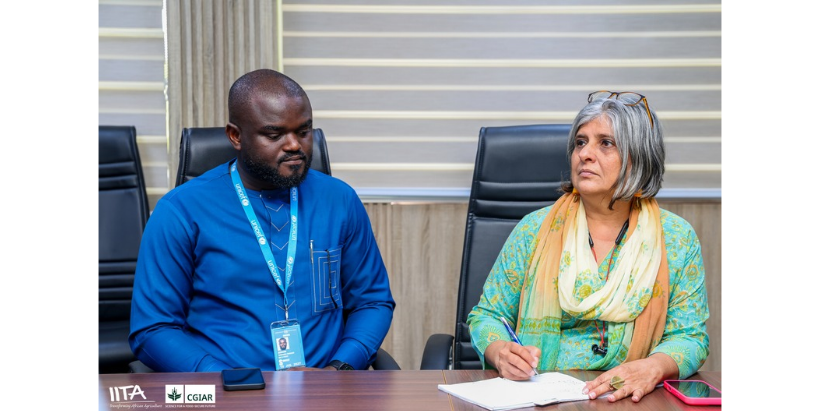
UNICEF delegates in an introductory meeting with the IITA management team.

IITA and the United Nations Children’s Fund (UNICEF) are exploring opportunities for stronger collaboration to address nutrition challenges in Nigeria through research, biofortification, food value chains, homestead production, and youth engagement in agribusiness.

The discussions took place during a visit by a UNICEF delegation led by Nemat Hajeebhoy, Chief of Nutrition, Child Nutrition and Development, UNICEF Nigeria, to IITA’s headquarters in Ibadan on September 23. The visit provided an opportunity for both organizations to share their priorities and identify areas where their expertise and programs could complement each other.

Welcoming the delegation, IITA’s Deputy Director General for Partnerships for Delivery and Scaling, Tahirou Abdoulaye, highlighted the Institute’s longstanding commitment to developing and scaling agricultural innovations to address food insecurity, poverty, and emerging challenges across Africa. He noted that IITA’s work increasingly places strong emphasis on nutrition and climate change, while partnerships remain critical to ensuring that research innovations reach the people who need them.

Hajeebhoy said nutrition had become one of UNICEF Nigeria’s major program priorities, particularly as economic pressures continue to affect access to nutritious and diverse diets. She noted that addressing malnutrition requires interventions that extend beyond the health sector to include food systems, agriculture, social protection, livelihoods, and other areas.

She identified three major areas of interest for possible collaboration with IITA. The first is the promotion of homestead production, including gardening, poultry, and fish production, to improve household access to nutritious foods. The second is the wider dissemination of biofortified crops, while the third focuses on strengthening local food value chains and the availability of nutritious raw materials for food production.

Hajeebhoy noted that UNICEF has previously collaborated with IITA in Bauchi State on biofortified crops, including orange-fleshed sweet potato, and expressed interest in exploring ways to reach more households and help improve dietary diversity.
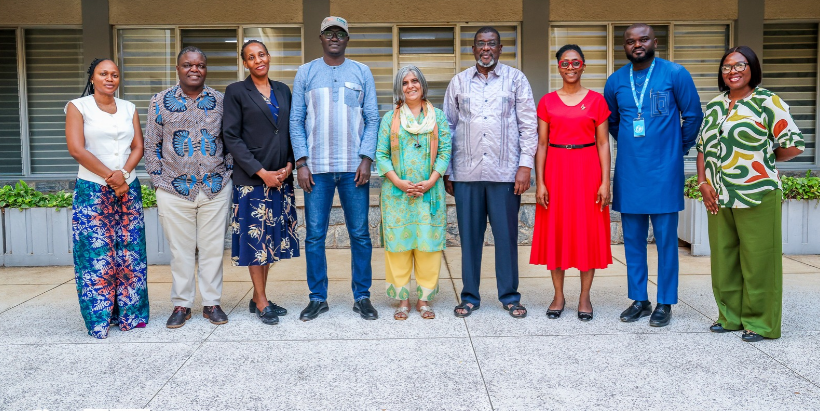
UNICEF delegates and the IITA team.

The discussions also examined opportunities to strengthen local supply chains for nutritious foods used in the prevention and treatment of malnutrition. Hajeebhoy highlighted the challenge of sourcing aflatoxin-free peanuts for the local production of ready-to-use therapeutic foods (RUTF), noting the need to develop reliable domestic supply chains that can meet quality and safety requirements.

She also expressed interest in exploring alternative locally available ingredients, including chickpeas and soy, for nutritious food products, emphasizing the importance of conducting value chain and cost analyses alongside acceptability studies to assess their potential viability in Nigeria.

The meeting further highlighted the importance of engaging young people in agriculture and agribusiness. UNICEF is currently developing its next program strategy, with a strong focus on the transition of young people from learning to earning. Hajeebhoy said UNICEF is interested in learning from IITA’s youth agribusiness program and exploring opportunities to equip young people with skills for employment and entrepreneurship.

Presenting IITA’s youth-focused interventions, the Institute’s youth agribusiness team explained that its programs support young people in establishing businesses, developing employability skills, and engaging in agricultural value chains. The programs also promote opportunities around enterprises such as vegetable production, poultry, and fish farming, which can contribute to household nutrition while generating income. Dr Abdoulaye added that the youth initiatives have expanded beyond Nigeria and are now being implemented in 19 African countries, with support from development and private-sector partners.

The discussion highlighted the shared interest of both organizations in linking agricultural research and innovation to practical solutions for nutrition, livelihoods, and youth employment challenges. The discussions also provided a platform to identify areas for further technical engagement, research, and potential joint initiatives aimed at strengthening Nigeria’s food and nutrition systems.

Both organizations expressed interest in continuing the conversation and exploring concrete opportunities for collaboration that can translate research and program innovations into improved nutrition outcomes and economic opportunities for communities, women, and young people.


Contributed by

Ochuwa Favour Daramola

Scroll to Top
Olaosebikan, Olamide

Olamide Deborah Nwanze is a Senior Research Associate specializing in gender mainstreaming research to inform participatory and inclusive breeding, variety development, and seed systems policies regarding root, tuber, and banana (RTB) crops in the International Institute of Tropical Agriculture Headquarters, Ibadan, Nigeria. She is a PhD candidate at the University of Ibadan and holds an MSc and B. Agric in Agricultural Extension and Rural Development. Olamide is a fellow of the African Women in Agricultural Research and Development – Gender Responsive Agricultural Systems Policy (AWARD-GRASP) and the Gender Responsive Researchers Equipped for Agricultural Transformation (GREAT). She seeks to apply her gender-mainstreaming learnings, gender-responsive research, and policy development, and review expertise to facilitate women, youth, children, and vulnerable social group’s access to and adoption of agricultural Innovations that guarantee food, nutrition, income, and livelihood security in Africa. Her current roles include mentoring research fellows, development of guides and training manuals, implementation and adaptation of gender frameworks and tools, value chain actors’ engagement as citizen science partners, policy review and redesign, data management, and analysis. Her current research explores mixed methods and participatory and interdisciplinary approaches to capture and highlight gender dynamics, needs, preferences, and challenges stakeholders face within the agricultural livelihood value chain to prioritize gender-inclusive strategies in breeding programs, policy design, and implementation.

At IITA, she contributes to the implementation of the CGIAR Accelerated Breeding Initiative and Genetic Innovation Programs; participatory and gender research within the NextGen Cassava, HarvestPlus, RTBFoods, and Tricot-ClimMob 1000Farms Projects; and gender knowledge communication via the G-LENS webinar series, video documentary, policy briefs, publications, and blogs.


Recent publications

de Sousa, K., van Etten, J., Manners, R. Bello, A., Teeken, B., Olaosebikan, O., et al. 2024. The tricot approach: an agile framework for decentralized on-farm testing supported by citizen science. A retrospective. Agron. Sustain. Dev. 44, 8. https://doi.org/10.1007/s13593-023-00937-1

Madu, T., Onwuka, S., Nwafor, S., Onyemauwa, N., Ejechi, M., Ofoeze, M., Ukeje, B., Eluagu, C., Olaosebikan, O., Okoye, B., 2024. Gender-Inclusive Consumer Studies Improve Cassava Breeding in Nigeria in: Frontiers in Sociology, volume 9, number: 1224504, doi: 10.3389/fsoc.2024.1224504

Olaosebikan, O.; Bello, A.; Utoblo, O.; Okoye, B.; Olutegbe, N.; Garner, E.; Teeken, B.; Bryan, E.; Forsythe, L.; Cole, S.; Madu, T. 2023.  Stressors and Resilience within the Cassava Value Chain in Nigeria: Preferred Cassava Variety Traits and Response Strategies of Men and Women to Inform Breeding. Sustainability 15, 7837. https://doi.org/10.3390/su15107837

Okoye, B., Ofoeze, M., Ejechi, M., Onwuka, S., Nwafor, S., Onyemauwa, N., Ukeje, B., Eluagu, C., Obidiegwu, J.*, Olaosebikan, O., Madu, T.* 2023. Prioritizing preferred traits in the yam value chain in Nigeria: a gender situation analysis in: Frontiers in Sociology, volume 8, number: 1232626, pages 1 – 9, ISSN 2297-7775, 2023. https://www.frontiersin.org/articles/10.3389/fsoc.2023.1232626/full

Olaosebikan, O., Bello, A. A., de Sousa, K., Ndjouenkeu, R., Adesokan, M., Alamu, E. O., Agbona, A., van Etten, J., Kegah, F. N.*, Dufour, D., Bouniol, A., Teeken, B. 2023. Consumer acceptability of cassava gari-eba food products across cultural and environmental settings using the triadic comparison of technologies approach (tricot) in: Journal of the Science of Food and Agriculture,

Teeken, B., Olaosebikan, O., Bello, A. A., Madu, T.*, Cole, S. M. 2023. Qualitative assessment on the positionality and preferences of dyads in relation to cassava-related activities: working with tricot trial citizen scientists https://hdl.handle.net/10568/138326 Type: Manual

Bouniol, A., Ceballos, H., Bello, A. A., Teeken, B., Olaosebikan, O., Owoade, D., Agbona, A., Fotso Kuate, A., Madu, T.*, Okoye, B.*, Ofoeze, M.*, Nwafor, S.*, Onyemauwa, N.*, Adinsi, L.*, Forsythe, L., Dufour, D. 2023. Varietal impact on women’s labour, workload and related drudgery in processing root, tuber and banana crops: focus on cassava in sub-Saharan Africa in: Journal of the Science of Food and Agriculture, pages 1 – 25, ISSN 0022-5142,

Bello, A. A., Agbona, A., Olaosebikan, O., Edughaen, G., Dufour, D., Bouniol, A., Iluebbey, P., Ndjouenkeu, R.*, Rabbi, I. Y., Teeken, B. 2023. Genetic and environmental effects on processing productivity and food product yield: drudgery of women’s work in: Journal of the Science of Food and Agriculture, pages 1 – 32, ISSN 0022-5142, 5

Cavicchioli, M., Zimbiti, T., Teeken, B., Nwanze, D.O., Liani, M., Parkes, E. & Bello, A. 2023. IITA-Gender Responsive Breeding Training Report. Genetic Resources Center, IITA-HQ, Ibadan, 21-23 September, 2022. Ibadan, Nigeria: IITA, (34 p.).https://hdl.handle.net/10568/131368

Agbona, A. Peteti P., Teeken B., Olaosebikan O. Bello, A. A., Parkes, E., Rabbi, I. Y., Mueller, L., Egesi, C., Kulakow, P. 2022. Data Management in Multi-disciplinary African RTB Crop Breeding Programs. In: Williamson, H.F., Leonelli, S. (eds) Towards Responsible Plant Data Linkage: Data Challenges for Agricultural Research and Development. Springer, Cham. https://doi.org/10.1007/978-3-031-13276-6_5

Lora Forsythe, Pricilla Marimo, Sarah Mayanja, Olamide D. Olaosebikan, Esme Stuart, Bela Teeken, Benjamin Okoye, Tessy Madu, (2021). Cross-product Gender Analysis of RTBfoods Step 2 Gendered Food Mapping on RTB Products. Understanding the Drivers of Trait Preferences and the Development of Multi-user RTB Product Profiles, WP1. London, UK: RTBfoods Field Scientific Report, 30 p.

Teeken, B., Garner, E., Agbona, A., Balogun, I., Olaosebikan, O., Bello, A., Madu, T., Okoye, B., Egesi, C., Kulakow, P. and Tufan, H.A. 2021. Beyond “Women’s Traits”: Exploring How Gender, Social Difference, and Household Characteristics Influence Trait Preferences. Frontiers Sustainable Food Systems 5:740926. https://doi.org/10.3389/fsufs.2021.740926

Teeken, B., Agbona, A., Bello, A., Olaosebikan, O., Alamu, E., Adesokan, M., Awoyale, W., Madu, T., Okoye, B., Chijioke, U., Owoade, D., Okoro, M., Bouniol, A., Dufour, D., Hershey, C., Rabbi, I., Maziya‐Dixon, B., Egesi, C., Tufan, H. and Kulakow, P. (020. Understanding cassava varietal preferences through pairwise ranking of gari‐eba and fufu prepared by local farmer–processors. Int J Food Sci Technol. https://doi.org/10.1111/ijfs.14862

Bela Teeken, Olamide Olaosebikan, Ireti Balogun, Benjamin Okoye, Tessy Madu, Steven Cole, Abolore Bello, Elizabeth Parkes. (2020). Piloting the G+ customer and product profile tools for gender-responsive cassava breeding in Nigeria. Nigeria: International Institute of Tropical Agriculture (IITA). https://hdl.handle.net/20.500.11766/13000