
Implementing partners for the Agro-Climatic Resilience in Semi-Arid Landscapes (ACReSAL) project have committed to stronger collaboration, harmonized implementation, and improved evidence-based reporting to accelerate the delivery of climate-resilient solutions and sustainable livelihoods across Nigeria’s semi-arid landscapes.
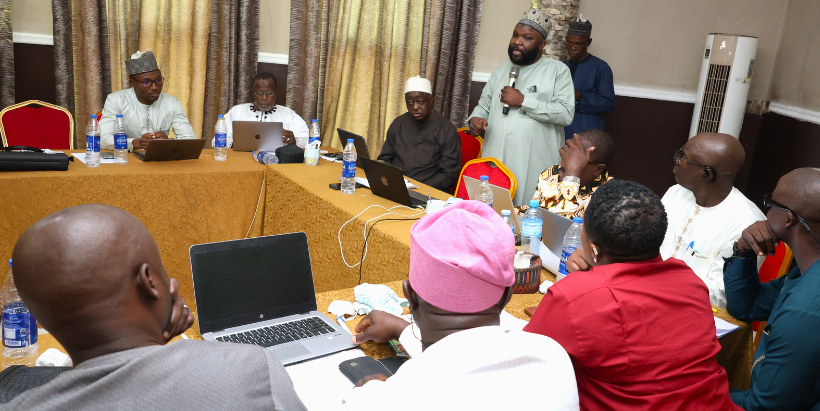
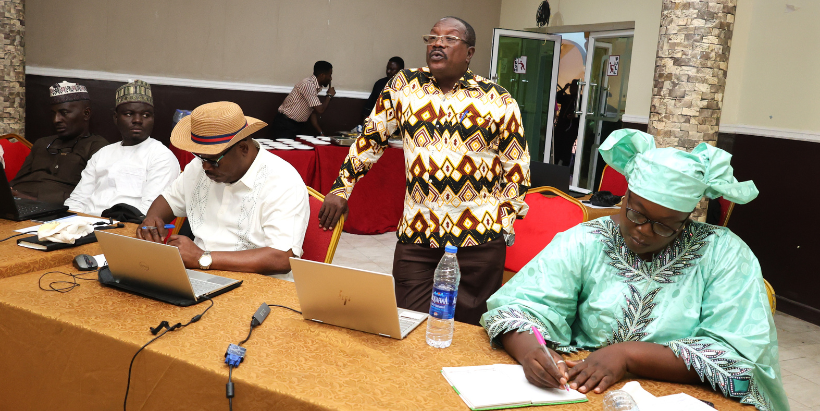
The commitment was made during a two-day workshop organized by the IITA on the “Harmonization of implementation strategy and reporting format,” held in Kaduna from 30 September to 1 October 2026. The workshop brought together IITA, national research and technical institutions, such as the Institute for Agricultural Research (IAR) Zaria, Center for Dryland Agriculture (CDA-BUK), International Crops Research Institute for Semi-Arid Tropics (ICRISAT), Federal College of Land Resources Technology (FECOLART), National Agricultural Extension Research Liaison Services (NAERLS), Lake Chad Research Institute (LCRI), and other implementing partners to review the first quarter implementation progress, address emerging challenges, and strengthen coordination for greater impact.
According to Dr Alpha Kamara, IITA’s technical lead for the ACReSAL project, to monitor progress across the different implementing partners, the workshop was convened to harmonize work plans. “We have been encouraging the diverse partners to work in multi-stakeholder platforms where they can pull resources and their strengths to implement activities and create bigger impact,” he said.
Dr Kamara noted that while some partners had recorded progress, others were implementing in isolation, thereby limiting the coordination needed to achieve the project’s objectives. He called for stronger engagement with state institutions, extension structures, and grassroots stakeholders, stressing that partners must ensure that their activities align with the resources available to them.
Taking climate-smart agriculture to farmers
The need for stronger coordination was reflected in the experiences shared by implementing partners. For the National Agricultural Extension and Research Liaison Services (NAERLS), Co-implementation of Work Package 2.2 on climate-smart agriculture has focused on taking improved crop varieties and good agronomic practices to farmers across seven states.
Giving an account of the progress of the work, Prof. Muhammad Musa Jaliya, Deputy Director, NAERLS, and coordinator of the ACReSAL project at the institution, said farmers have received improved varieties of maize, sorghum, groundnut, soybean, and cowpea, along with training in improved production practices. Beyond providing improved seeds, he said the intervention is helping farmers understand the importance of using improved varieties and where they can access them, laying a foundation for increased productivity and resilience. He also recounted the challenges faced in the early stages of the project’s implementation, including the late start of activities, which meant that many farmers had already planted on their available land. Insecurity also restricted access to certain locations, while delays in the release of funds posed difficulties, as crop production is time sensitive. Despite these challenges, NAERLS mobilized institutional resources to commence activities and keep implementation on track.
Responding to community priorities
At the community level, partners emphasized the importance of ensuring that interventions respond to local realities. Dr Folashade Mary Olaoye, Technical Lead at the Federal College of Land Resources Technology (FECOLART), Kuru, Jos, highlighted the institution’s work in soil health, agroforestry, women and youth engagement, and landscape-related interventions. She stressed the need for partners to work together, which is the foundation of a successful partnership, rather than operating independently. “Partners should sit around the table and harmonize principles and have a nice way of carrying out this work,” she said.
Her recent field engagement with communities in Nasarawa State also demonstrated the value of listening to local priorities. For example, communities identified non-timber forest products such as shea, raffia palm, and moringa as potential sources of income. Such opportunities could provide alternative livelihoods while encouraging communities to conserve trees and reduce pressure on forest resources.
Harmonizing reporting to strengthen accountability
A major outcome of the workshop was the emphasis on a unified approach to reporting and monitoring. Discussions revealed inconsistencies in the tools, indicators, definitions, and evidence used by partners to report activities, making it difficult to consolidate results and assess overall project performance. The harmonized framework will provide a common approach for tracking progress from inputs and activities through outputs and outcomes to impact, while strengthening the use of digital data, GPS coordinates, photographs, attendance records, and other source evidence.
Participants also stressed that sustainable impact requires more than training or demonstrations. Improved access to inputs, markets, processing facilities, technologies, extension services, and value-chain opportunities will be essential to ensuring that interventions translate into lasting benefits for communities.
As implementation progresses, ACReSAL partners are expected to strengthen communication, coordinate activities across work packages, deepen engagement with state and grassroots institutions, and improve the quality and timeliness of project reporting.
The workshop ultimately reinforced a shared vision: stronger partnerships, better evidence, and coordinated action are essential to taking climate-smart and landscape restoration solutions from individual interventions to impact at scale.