
A life-changing experience with I-Youth – Series 1
July 28, 2021
The Innovative Youth in Agriculture (I-Youth) project has completed year 1 activities across various project components in Kaduna, Kano, and Lagos states. IITA is implementing the I-Youth project in partnership with the Mastercard Foundation, cutting across six components: agricultural orientation, agribusiness internships, technical internships, young farmers’ cohort, Start Them Early Program (STEP), and e-commerce.
The beneficiaries of the project already have tales to tell. These stories will be presented in a series to highlight the project’s impact on beneficiaries across the six components within the next few weeks.
Oluwaseun Evelyn Areo is one of the project’s beneficiaries under the agribusiness internship component in Lagos State. The agribusiness interns expressed an interest in the entrepreneurship track, where they were coached on establishing agribusiness enterprises along chosen value chains.
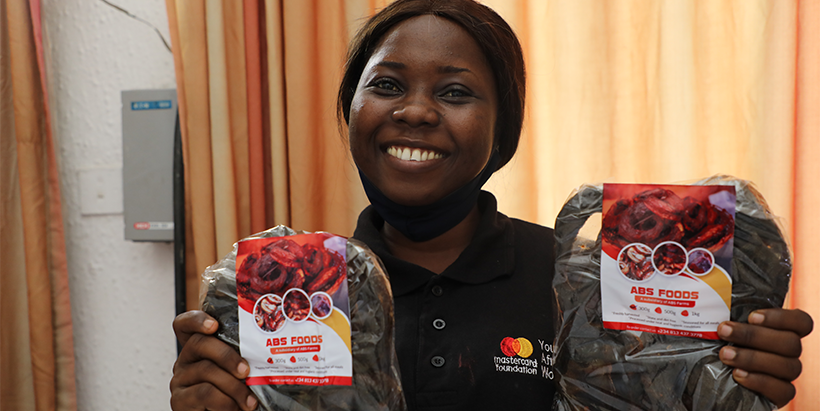 Areo, who studied animal nutrition and biotechnology at Ladoke Akintola University of Technology (LAUTECH), said the training was an eye-opener. She said she never knew she could achieve so much within a short period. Areo was trained in aquaculture, and during the training, she was already considering embarking on a small-scale fish smoking business.
“On the second week of the training, our facilitator trained us on fish value addition, and that was where I took an interest in catfish smoking. I approached the facilitator and mentioned that I would like to invest the initial 10,000 naira transport allowance given to us by the project into the business. She encouraged me, and that was how my journey into this business started,” she said.
Enthusiastic about what she does, she participated actively during practical sessions and gained experience that allowed her to venture into her own business within two weeks of the training. She started using social media to advertise what she does.
“When I started, I posted pictures of my packaged smoked catfish, and I advertised to people on my platform in jest. But I was amazed as people started contacting me and making inquiries about the price, location, and if I could deliver to them. The orders I got exceeded the 10,000 naira I invested and I added some personal funds and produced 20 kg of live catfish. I quickly made stickers and packaging nylon and started selling,” she said.
Areo, who studied animal nutrition and biotechnology at Ladoke Akintola University of Technology (LAUTECH), said the training was an eye-opener. She said she never knew she could achieve so much within a short period. Areo was trained in aquaculture, and during the training, she was already considering embarking on a small-scale fish smoking business.
“On the second week of the training, our facilitator trained us on fish value addition, and that was where I took an interest in catfish smoking. I approached the facilitator and mentioned that I would like to invest the initial 10,000 naira transport allowance given to us by the project into the business. She encouraged me, and that was how my journey into this business started,” she said.
Enthusiastic about what she does, she participated actively during practical sessions and gained experience that allowed her to venture into her own business within two weeks of the training. She started using social media to advertise what she does.
“When I started, I posted pictures of my packaged smoked catfish, and I advertised to people on my platform in jest. But I was amazed as people started contacting me and making inquiries about the price, location, and if I could deliver to them. The orders I got exceeded the 10,000 naira I invested and I added some personal funds and produced 20 kg of live catfish. I quickly made stickers and packaging nylon and started selling,” she said.
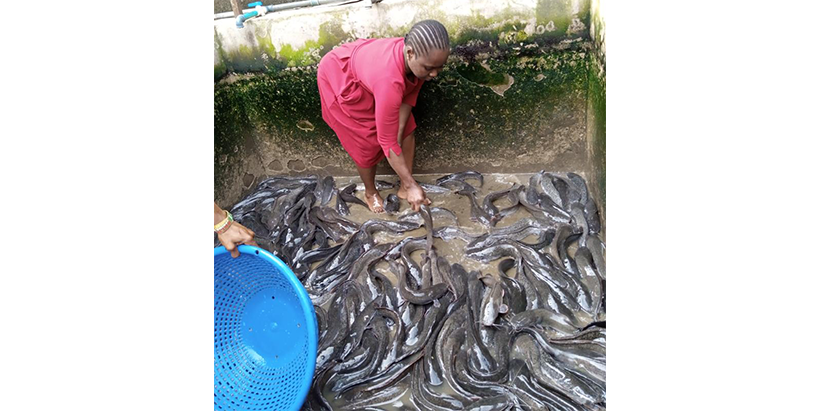 Within two weeks, Areo had sold out all she produced. With her customer base expanding, she produced an additional 25 kg and recorded exports to Ghana through her relatives.
“I am so glad that this training has afforded me the opportunity to see agriculture in another dimension. Despite the fact that I studied something related to agriculture, I had never seen it in this way. My plan is to purchase my own smoking kiln because I am currently using the one provided by the project for practical sessions. I will also get my NAFDAC registration. I will incorporate more products by producing smoked chicken, snail, etc.,” she added.
Within two weeks, Areo had sold out all she produced. With her customer base expanding, she produced an additional 25 kg and recorded exports to Ghana through her relatives.
“I am so glad that this training has afforded me the opportunity to see agriculture in another dimension. Despite the fact that I studied something related to agriculture, I had never seen it in this way. My plan is to purchase my own smoking kiln because I am currently using the one provided by the project for practical sessions. I will also get my NAFDAC registration. I will incorporate more products by producing smoked chicken, snail, etc.,” she added.
Oluwaseun Evelyn Areo displaying her product.
Evelyn Areo harvesting fish for smoking.
Contributed by
Recent stories
No items found